Explore diabetes prevention strategies for teens. Build healthy habits that support growth and reduce the risk of type 2 diabetes.
How to Prevent Type 2 Diabetes as a Teen

Estimated reading time: 19 minutes
Teen years are a powerful time for building healthy habits. Your body changes quickly during adolescence. Your muscles, bones, hormones, and brain continue developing. These changes also affect how your body handles glucose. Some teens have a higher risk of type 2 diabetes. Family history can increase that risk. So can certain changes in body composition. Low physical activity can also contribute to risk. Sleep and eating patterns matter as well. However, diabetes prevention is not about perfect choices. It is not about fearing carbohydrates or avoiding all treats. Instead, focus on healthy routines that support growth. Small habits can become strong habits over time. Above all, teens deserve supportive advice without shame. This guide explains practical ways to prevent type 2 diabetes.
Key Takeaways
- Move daily: Aim for at least 60 minutes of activity.
- Eat balanced meals: Include vegetables, fruit, grains, and protein.
- Choose water: Make water your usual drink.
- Sleep enough: Most teens need 8–10 hours nightly.
- Know family history: Genetics can affect diabetes risk.
- Support healthy growth: Avoid extreme diets and fasting.
- Break sitting: Add short movement breaks during study.
These habits work best when they feel realistic. You do not need perfection. Instead, choose changes you can maintain. With this in mind, prevention becomes less stressful.
What Does Type 2 Diabetes Mean for Teens?
Type 2 diabetes prevention affects how the body uses glucose, the main source of energy for cells. After you eat, glucose moves into your blood. Your pancreas then releases insulin, a hormone that helps glucose move from your blood into your cells. Over time, some cells may stop responding properly to insulin. This is called insulin resistance. At first, the pancreas makes more insulin to keep blood sugar at a normal level. Eventually, it may not make enough insulin. When this happens, glucose builds up in the blood, causing blood sugar levels to stay too high.
Many factors can increase the risk of type 2 diabetes. These include genetics, family history, lack of physical activity, body composition, sleep habits, and eating patterns. This means diabetes is not caused by eating sugar alone. A teen’s health is affected by many factors working together. The American Diabetes Association lists excess body fat and family history as risk factors. Puberty is also important because the body may temporarily become less sensitive to insulin during this stage of development. Because teens are still growing, they need health advice that fits their age and individual needs. Adult weight-loss plans may not be appropriate, and extreme dieting can harm healthy growth. Instead, teens should focus on healthy habits, such as regular physical activity, balanced meals, enough sleep, and routines they can maintain over time.
What Is Insulin Resistance?
Insulin resistance happens when the body’s cells do not respond well to insulin. At first, the pancreas may make extra insulin after meals. This can keep blood sugar at a normal level for a while. Over time, this process may not work as well. Blood sugar can then start to rise. This may lead to prediabetes and, later, type 2 diabetes.
Regular physical activity can help the body respond better to insulin. When people move, their muscles use glucose for energy. This may help control blood sugar. Eating balanced meals also supports good health. However, no single food can cure insulin resistance. Healthy habits, followed regularly, can lower the risk of type 2 diabetes and help prevent it in the long term.
Can Teens Prevent Type 2 Diabetes?
Teens can lower some of their risk factors for type 2 diabetes prevention. Regular exercise, balanced meals, and enough sleep can support healthy growth. Spending less time sitting may also improve metabolic health. However, healthy habits cannot prevent diabetes in every case. Genes can affect a person’s risk. These factors cannot simply be changed.
Research shows that lifestyle programs may help some young people. McCurley and colleagues reviewed 15 studies of Hispanic youth in the United States. Most programs included exercise, nutrition lessons, or both. Some studies found improvements in measures of health. However, the programs were very different from one another. Many studies also included small groups. Their follow-up periods were often short. More research is needed to learn about the long-term effects.
Still, the evidence supports healthy daily habits. These habits can help prevent type 2 diabetes. Programs may work best when families and communities offer support. Cultural preferences and daily life can also affect success. Prevention plans should fit each teen’s needs. One plan will not work for everyone. Supportive environments can make healthy choices easier to follow over time.
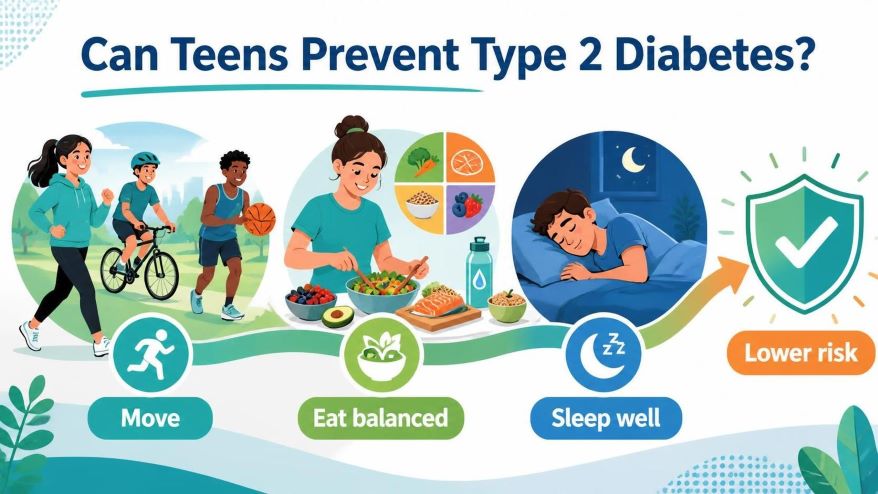
How to Prevent Type 2 Diabetes With Movement
Regular physical activity is important for teen health. It may also help prevent type 2 diabetes prevention. When muscles are active, they use glucose for energy. Movement can also help the body respond better to insulin. Exercise supports heart health, muscle strength, and strong bones. The American Diabetes Association recommends at least 60 minutes of moderate or intense activity each day. Teens should also do activities that strengthen muscles and bones at least three days a week.
A gym is not needed. Teens can walk with friends, ride bikes, dance, swim, or play sports. Bodyweight exercises can also help. Chores and other daily activities add movement too. Teens should choose activities they enjoy. They should also choose activities they can do often. Being consistent matters more than being perfect. Regular movement can support healthy habits and lower the risk of type 2 diabetes.
How to Prevent Type 2 Diabetes Through Exercise
Start with activities that match your fitness level. Slowly make them harder as your body gets used to them. Warm up before hard exercise. This helps prepare your muscles. Cool down afterward. This helps your body return to its normal pace. Drink water while you exercise. Take breaks when you need them. Do not suddenly begin an extreme workout plan. This can increase your risk of injury.
You can also add more movement to your daily routine. Walk when short trips make it practical. Take the stairs when it feels safe. Move around during study breaks. Play active games with friends or join a school sports team if you enjoy it. Small changes can add up. Over time, regular activity can become easier. It can also support healthy habits and help lower the risk of type 2 diabetes.
Break Up Long Sitting Periods
Schoolwork often means sitting for a long time. Gaming and phone use can add even more sitting. Try to take breaks whenever you can. Stand during short study breaks. Walk between homework tasks. Stretch after sitting for a long time. You can also move around during TV or gaming breaks.
Use study goals as reminders to move. After you finish an assignment or reach a goal, stand up. Walk around for a few minutes. Then return to your work. These small changes can increase daily movement. They can also make healthy habits part of your routine. Regular movement may help lower the risk of type 2 diabetes.
Make Exercise Fun Diabetes prevention
Physical activity is easier to keep doing when you enjoy it. Choose activities that fit your interests and daily life. Some teens like team sports. Others may enjoy biking, walking, dancing, swimming, or outdoor games. Family activities can also encourage movement. They can help families spend time together. Do not compare your fitness level with your classmates. Everyone builds strength, stamina, and coordination at a different speed. Instead, focus on how exercise makes you feel. You may have more energy or feel stronger.
Most importantly, exercise should support your health. It should not feel like punishment. Enjoyable activities can help you build healthy habits. They may also lower your risk of type 2 diabetes.
How to Prevent Type 2 Diabetes With Balanced Meals
Teens need enough nutrients to grow and develop. Strict diets and crash diets are usually not a good choice. They may cause unhealthy eating habits or a lack of important nutrients. Instead, eat a mix of healthy foods. Include vegetables and fruits often. Choose protein foods, such as beans, lentils, eggs, fish, and other lean foods. When possible, choose whole grains. Include dairy products or fortified alternatives that fit your needs. Healthy fats can also be part of a balanced diet. Water should usually be your main drink.
Healthy eating does not have to cost a lot. Traditional foods can provide many important nutrients. They can also reflect family and cultural traditions. For example, dal provides protein and fiber. Vegetables provide vitamins and minerals. Fruits add fiber and other nutrients. Whole-grain roti provides carbohydrates and fiber. Curd provides protein and calcium. A balanced diet supports long-term health. It is also more helpful for diabetes prevention than strict or trendy diets.
Build a Teen-Friendly Prevention Plate
The plate method can make balanced meals easier to plan. Try to fill about half your plate with vegetables. Add fruit if you can. Then, choose whole grains or other high-fiber foods. Add a protein food, such as beans, eggs, fish, or chicken. You can also include a small amount of healthy fat. The right portion size is different for each person. Growing teens do not need strict food rules.
Start with one simple change. Add vegetables to lunch or dinner. Include protein at breakfast. Choose whole grains more often. When one change feels easy, add another. Small changes can become lasting habits over time. Aim for a mix of foods and balanced meals to support good health and help prevent type 2 diabetes.
Choose More Fiber-Rich Foods Diabetes prevention
Fiber is found naturally in many plant foods. It can be part of a healthy diet to prevent diabetes. Vegetables provide fiber, vitamins, and minerals. Fruits provide fiber and other nutrients. Beans and lentils provide both fiber and protein. Whole grains often have more fiber than refined grains. Examples include oats, brown rice, and whole-grain roti.
Fiber alone cannot prevent diabetes. However, foods high in fiber can improve the quality of your diet. They can also help you feel full for longer. Try to eat different high-fiber foods during the week. Do not rely on just one food. A variety of healthy foods can help teens build lasting habits and may lower the risk of type 2 diabetes.
Choose Water More Often
Sugary drinks, such as soda and sweet tea, can add a lot of sugar to your diet. Some energy drinks also contain large amounts of sugar and caffeine. Drinking them often may add extra calories. Choose water more often. Unsweetened drinks can also be part of a healthy routine. When possible, choose whole fruit instead of fruit juice. Whole fruit usually has more fiber. An occasional treat will not cause diabetes. Focus on your usual eating habits instead.
Make changes slowly. For example, replace one sugary drink with water each day. Carry a water bottle to school. Over time, these small steps can become healthy habits. They can support your health and help lower the risk of type 2 diabetes.
Avoid Extreme Diets Diabetes control
Teens need enough energy and nutrients. Their bodies are still growing and developing. Severe calorie restriction can harm their health. Avoid it. Do not follow fasting plans without advice from a health professional. Avoid unproven weight-loss supplements too. Social media can promote unrealistic body images. This may cause stress about food and appearance. Instead, focus on balanced meals and healthy habits.
Talk to a registered dietitian or child health doctor if you have questions. They can give advice based on a teen’s growth and needs. Healthy growth should always come first. Good habits can also help lower the risk of type 2 diabetes and other health problems.
Sleep, Weight Management, and Family History
Sleep is an important part of a healthy routine. It may also help lower the risk of type 2 diabetes. Most teens need 8 to 10 hours of sleep each night. Enough sleep supports physical and mental health. It also gives teens energy for daily activities. Poor sleep can make healthy eating and regular exercise harder. Try to keep a regular bedtime. Limit screen use before bed. Keep your bedroom calm and comfortable. Good sleep habits can support a healthy lifestyle and help prevent type 2 diabetes.
How Sleep Can Help Prevent Type 2 Diabetes
Choose a regular bedtime. Try to wake up at about the same time each day. Limit screen use before bed. Keep your bedroom quiet and comfortable. Avoid caffeine late in the day. A calm bedtime routine can also help you get ready for sleep. Morning sunlight may help keep your sleep schedule on track. These steps can support better sleep habits. Morning sunlight may help keep your sleep schedule on track. These steps can support better sleep habits.
Getting enough rest can make it easier to stay active and eat balanced meals. Sleep should be part of a healthy lifestyle and a plan to help prevent type 2 diabetes.
Healthy Weight Management for Teens
Managing weight during the teen years needs special care. The body changes quickly during puberty. Height, muscle, and body fat can all change. Because of this, adult weight goals may not be right for teens. Health professionals look at growth over time. They may use BMI percentiles as one part of the checkup. One measurement cannot show a person’s overall health. Body weight also does not determine a person’s value. Teens should focus on healthy growth and habits they can keep. These habits can support long-term health and help prevent type 2 diabetes.
Do not compare your body with your classmates’ bodies. Puberty affects everyone differently. Genes also affect body size and shape. Healthy habits should build confidence. They should not cause shame or create unrealistic goals. Talk to a healthcare professional if you are worried about weight or growth. A pediatric clinician can check development over time. A registered dietitian can offer nutrition advice for teens. Parents and caregivers can help by creating healthy routines at home. They should also avoid criticism. Support and good advice can help teens build healthy habits in a positive setting.
How to Prevent Type 2 Diabetes With Family Support
Family routines can make healthy choices easier. Keep water available at home. Offer fruits and vegetables often. Serve balanced meals without pressure or criticism. Plan fun activities that the family can do together. Support regular sleep times too. When parents model healthy habits, teens may be more likely to follow them. These routines can support overall health and help prevent type 2 diabetes.
Schools also play an important role. Physical education classes give students time to be active. Healthy school meals can support balanced eating. Safe areas for play can encourage more activity. Support from friends may also help teens take part. Community programs can provide exercise, nutrition lessons, and other resources. Families, schools, and communities can work together. They can make healthy choices easier and more accessible. This may help lower the risk of type 2 diabetes.
Family History and Diabetes Risk Diabetes prevention
Family routines can make healthy choices easier. Keep water available at home. Offer fruits and vegetables often. Serve balanced meals without criticism or pressure. Plan fun activities for the whole family. Keep regular sleep times as well. When parents show healthy habits, teens may be more likely to follow them. These routines can support good health and help prevent type 2 diabetes. Schools also support teen health. Physical education classes give students time to exercise. Healthy school meals can support balanced eating.
Safe play areas can encourage teens to be active. Support from friends may also increase participation. Community programs can offer exercise, nutrition education, and other helpful resources. Families, schools, and communities can work together. They can make healthy choices easier and more practical. This may help lower the risk of type 2 diabetes.
Screening and Early Warning Signs Diabetes prevention
Prevention and screening are different but related. Prevention lowers the risk of developing diabetes later. Screening checks for possible diabetes before symptoms appear. Screening advice can differ between medical groups. Teens should talk with a qualified healthcare professional about their personal risk factors. The American Diabetes Association supports screening for some young people based on their risk. Testing may start after puberty or at age 10, whichever comes first. The teen must also have higherweight or obesity and at least one other risk factor.
A family history of diabetes is one example of an added risk factor. A healthcare professional can choose the right test based on the teen’s health history and risk level. Early screening and healthy habits may help lower the risk of type 2 diabetes.
Possible Symptoms of High Blood Glucose Diabetes control
Type 2 diabetes can develop with few noticeable symptoms. However, some people may experience frequent urination, increased thirst, unusual tiredness, blurred vision, or wounds that take longer than usual to heal. These symptoms may occur when blood glucose levels remain elevated.
Because similar symptoms can have many causes, they do not confirm diabetes. Therefore, anyone with concerning or persistent symptoms should seek an evaluation from a healthcare professional rather than rely on self-diagnosis. Timely assessment can support early care and effective diabetes prevention strategies.
In addition, darkened patches of skin may sometimes develop, particularly in areas such as the neck, armpits, or groin. This condition, known as acanthosis nigricans, can occur alongside insulin resistance. Nevertheless, skin changes alone cannot diagnose diabetes. A healthcare professional should assess any new or unexplained changes as part of a broader approach to type 2 diabetes risk reduction.
What Tests Can Detect Prediabetes?
Several blood tests can show how the body controls blood sugar. These include:
- A fasting blood sugar test
- An A1C test
- An oral glucose tolerance test
Each test has different uses. A healthcare professional will review the results along with symptoms, health history, and risk factors. Home blood sugar readings can offer helpful information. However, they cannot diagnose diabetes on their own. An unusual result may need to be checked with another test. Do not diagnose yourself using online information or one test result. Talk with a healthcare professional instead. Early care can help lower the risk of type 2 diabetes and support better health.
When Should Teens Talk With Clinicians?
Talk with a healthcare professional if you have unusual thirst or frequent urination. Also seek help if your weight changes without a clear reason. Tell the clinician if diabetes runs in your family. Share information about your medicines and health conditions. Mention sleep problems or changes in your physical activity too. This information can help the clinician understand your risk.
A healthcare professional can look for the cause of your symptoms. They can also decide if you need testing. Do not take diabetes medicine without medical advice. Avoid supplements that claim to prevent or treat diabetes without proof. Qualified healthcare professionals can give advice that fits your needs. They can also suggest ways to help prevent type 2 diabetes.
A Teen-Friendly Plan to Prevent Type 2 Diabetes
Diabetes prevention works best when healthy habits fit into daily life. You do not need to change everything at once. You also do not need to be perfect. Start with one realistic goal. Add another goal when you are ready. Family support can make changes easier. Spending time with friends can also make exercise more fun.
Avoid thinking in extremes. Missing one goal does not erase your progress. If you have a setback, return to your routine. Keep moving forward. Over time, regular healthy habits matter more than perfection. They can help lower the risk of type 2 diabetes.
A Simple School-Day Routine
Weekends offer extra opportunities to support diabetes prevention through enjoyable, everyday activities. For instance, walk with friends or family, try cycling or an outdoor sport, or help with household tasks. You can also prepare balanced meals together and take regular breaks from long periods of screen time. In addition, keeping sleep and wake times reasonably consistent can support overall health.
At the same time, occasional treats can be part of a healthy lifestyle. Nutritious eating does not require perfection or strict restriction. Instead, aim for balance by choosing nourishing foods most of the time while allowing room for foods you enjoy. These sustainable habits can contribute to type 2 diabetes risk reduction.
Evidence-Based Diabetes Prevention Tips for Teens
Healthy prevention involves several connected habits. No single food prevents diabetes. No single workout guarantees protection. Instead, combine movement with balanced nutrition. Add adequate sleep and supportive routines. Know your family history and personal risks.
McCurley and colleagues reviewed lifestyle interventions. Their review included 15 studies among Hispanic youth. Most interventions included nutrition or physical activity. Several reported improvements in BMI measures. Some reported improvements in glucose or insulin measures. However, results were not consistent across studies. Many studies had small samples. Follow-up periods were also limited.
Why Sustainable Habits Matter
Short-term challenges rarely build lifelong skills. Extreme plans can also create unnecessary stress. Sustainable habits fit school and family routines. Choose foods available within your household. Choose activities you enjoy. Set realistic sleep goals.
Use friends and family for support. Celebrate consistency rather than perfection. In the long term, sustainability matters. Healthy routines should fit real life.
What Parents Can Do
Parents can make healthy choices easier. Keep water available at home. Offer vegetables and fruits regularly. Provide balanced meals without food labels. Encourage enjoyable family movement. Support regular sleep schedules. Avoid negative comments about body size. Praise healthy behaviors instead. Listen to teen concerns about food. Social pressure can affect eating patterns. Body image concerns can also cause stress. Supportive conversations can reduce that pressure.
When needed, involve healthcare professionals. Early professional support can help families. It can also address growth concerns safely. Family support can make healthy habits easier. Try to make shorter sentences, using less difficult words to improve readability.Parents can make healthy choices easier. Keep water at home. Offer fruits and vegetables often. Serve balanced meals without judging food choices. Plan fun activities for the family. Support regular sleep times too. Avoid negative comments about body size. Praise healthy actions instead. Listen to teens when they share concerns about food.
Peer pressure can affect eating habits. Concerns about body image can also cause stress. Supportive talks can help reduce this pressure. Involve a healthcare professional when needed. Early support can help families handle growth concerns safely. Family support can make healthy habits easier to follow.
Conclusion Diabetes prevention
Learning how to prevent type 2 diabetes can help. You do not need a perfect lifestyle. Instead, build habits supporting healthy growth. Move regularly and reduce prolonged sitting. Choose balanced meals with varied nutritious foods. Drink water more often than sugary drinks. Aim for 8–10 hours of sleep nightly. Know your family history and personal risk. Ask professionals about symptoms or concerns.
Frequently Asked Questions Diabetes control
Can Teenagers Develop Type 2 Diabetes?
Yes, teenagers can develop type 2 diabetes. Youth-onset cases require specialized medical care. Risk varies between individuals. Family history can increase susceptibility. higherweight or obesity can also increase risk. Physical inactivity may contribute to risk. Therefore, individual assessment matters.
Is Type 2 Diabetes Caused Only By Sugar?
No, sugar is not the only factor. Type 2 diabetes has multiple contributors. Genetics can influence susceptibility. Body composition can influence risk. Physical activity also matters. Sleep and eating patterns can contribute.
Should Teens Avoid All Carbohydrates?
No, most teens do not need carbohydrate elimination. Carbohydrates provide energy for growing bodies. Choose nutritious carbohydrate sources more often. Examples include whole grains and legumes. Fruits and vegetables also contain carbohydrates.Avoiding entire food groups can cause nutrient gaps. A dietitian can provide personalized guidance. This is especially important during growth.
Does Higher Body Weight Guarantee Diabetes?
No, higher body weight does not guarantee diabetes. Diabetes risk depends on multiple factors. Genetics can influence individual susceptibility. Puberty can affect insulin sensitivity. Some people develop diabetes without obvious weight concerns.
References
- Soltero, E. G., Konopken, Y. P., Olson, M. A., et al. (2017). Preventing diabetes in higher-weight Latino youth with prediabetes: A study protocol for a randomised controlled trial. https://doi.org/10.1186/s12889-017-4174-2
- McCurley, J. L., Crawford, M. A., & others. (2017). Prevention of type 2 diabetes in U.S. Hispanic youth: A systematic review of lifestyle interventions. https://doi.org/10.1016/j.amepre.2017.05.020
Editorial Note: This article was written by Juveriya Khan and reviewed for editorial accuracy by our editorial team. It has not yet undergone independent review by a professional.
- Author
- Latest Posts

Ramya Dobbala is a pharmacist and science communicator dedicated to bridging the gap between complex pharmaceutical research and public understanding. A 2024 B.Pharmacy graduate, Ramya has a strong foundational background in formulation science, having spearheaded research into the evaluation and formulation of anti-acne creams. Her work focused on optimizing topical delivery systems to enhance treatment efficacy and skin health.
Transitioning from the laboratory to the forefront of scientific discourse, she now leverages her technical expertise to translate intricate healthcare concepts into accessible, engaging content. As an author and communicator, Ramya is passionate about empowering audiences with evidence-based insights, particularly in the realms of dermatology and pharmaceutical innovation.


