The NUS team created a new molecular layer that boosts the heat resistance of these solar cells.
Heat-Resistant Material Boosts Solar Cell Efficiency and Lifespan
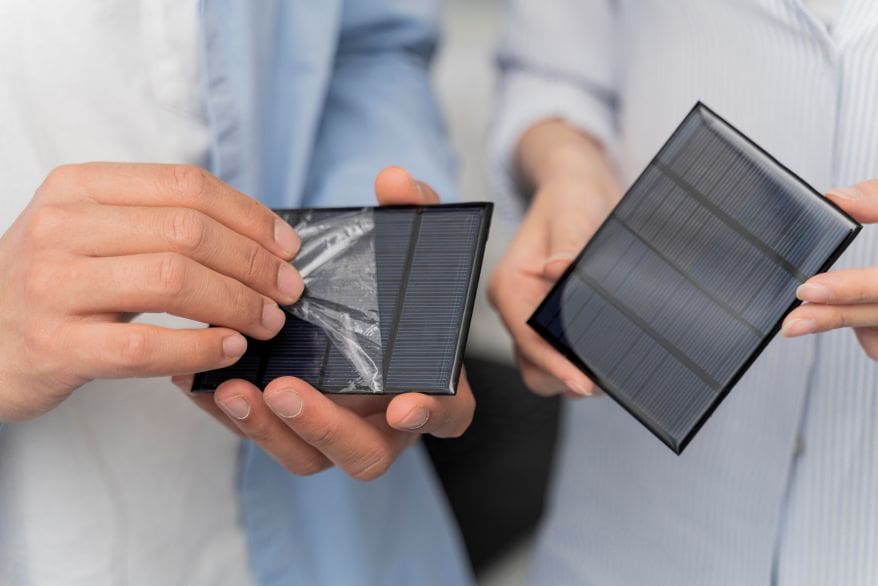
Scientists at the National University of Singapore (NUS) have developed a heat-resistant material that improves the performance of next-generation solar cells. This breakthrough helps solar panels work longer and produce more energy, even under high temperatures. This is important for making solar energy more reliable and efficient.
Enhancing Solar Cell Stability with New Heat-Resistant Material
What are Perovskite/Silicon Tandem Solar Cells?
Perovskite/silicon tandem solar cells combine two types of materials to capture more sunlight. They hold great promise due to their high energy output. In particular, these cells benefit significantly from innovations like heat-resistant material to withstand high temperatures, greatly improving durability.
However, high heat often causes them to degrade quickly. This degradation highlights why heat-resistant material is crucial, as it limits their use in many environments where temperatures rise sharply.
Heat-Resistant Material: The Role of the New Molecular Layer
The NUS team created a new molecular layer that boosts the heat resistance of these solar cells. As a result, incorporating this heat-resistant material ensures the tandem cells remain stable and efficient, even under harsh heat conditions.
This innovation could extend solar panel lifespans while maintaining strong performance. It also makes renewable energy from sunlight more cost-effective over time, particularly with advanced heat-resistant materials playing a significant role.
The Impact on Future Solar Technology
Heat-Resistant MaterialSustainability and Energy Output Benefits
The new material supports sustainable technology by allowing solar panels to last longer. This means fewer replacements are needed, reducing waste and resource use, with heat-resistant material playing a critical role in this sustainability.
Moreover, by enhancing stability, the panels deliver higher power output consistently. Developers can build better solar systems for homes, schools, and businesses worldwide, relying on advanced heat-resistant innovations.
A Step Toward More Reliable Renewable Energy Sources
This advancement pushes us closer to widespread adoption of clean energy sources. As solar panels become tougher against heat damage, including the integration of advanced heat-resistant material, they offer dependable electricity generation in many climates.
The NUS researchers’ work encourages further innovation in materials science linked to renewable technologies. Their approach aligns well with efforts toward global sustainability goals.
Additionally, to stay updated with the latest developments in STEM research, visit ENTECH Online. Basically, this is our digital magazine for science, technology, engineering, and mathematics. Further, at ENTECH Online, you’ll find a wealth of information.
Reference:
National University of Singapore. (2025, November 21). New molecular layer helps perovskite–silicon solar cells last longer under heat. New Molecular Layer Helps Perovskite–silicon Solar Cells Last Longer Under Heat. https://news.nus.edu.sg/new-molecular-layer-helps-solar-cells-last-longer-under-heat/
- Author
- Latest Posts

I’m a web developer and science writer with a Master’s degree in Computer Applications (MCA) from Pune University.
I work in tech, building websites and staying updated with the latest developments. I also love writing about physics, chemistry, technology, robotics, mathematics, and breakthrough innovations. My passion is breaking down complex scientific topics into simple, easy-to-understand stories.
My goal is to help everyone stay informed about the exciting changes happening in science and technology. I believe understanding science shouldn’t be complicated—it should be accessible to all.