Learn how eSIM technology works, its benefits over physical SIM cards, international connectivity, dual-SIM use and its role in connected devices.
How eSIM Technology Is Changing the Way Mobile Connectivity Works
Estimated reading time: 1 minute
For decades, connecting a mobile phone to a cellular network required a small physical component: the SIM card. Users would purchase a SIM, insert it into their phone, activate a mobile plan and replace it whenever they changed operators or travelled to another country. That process is now changing.
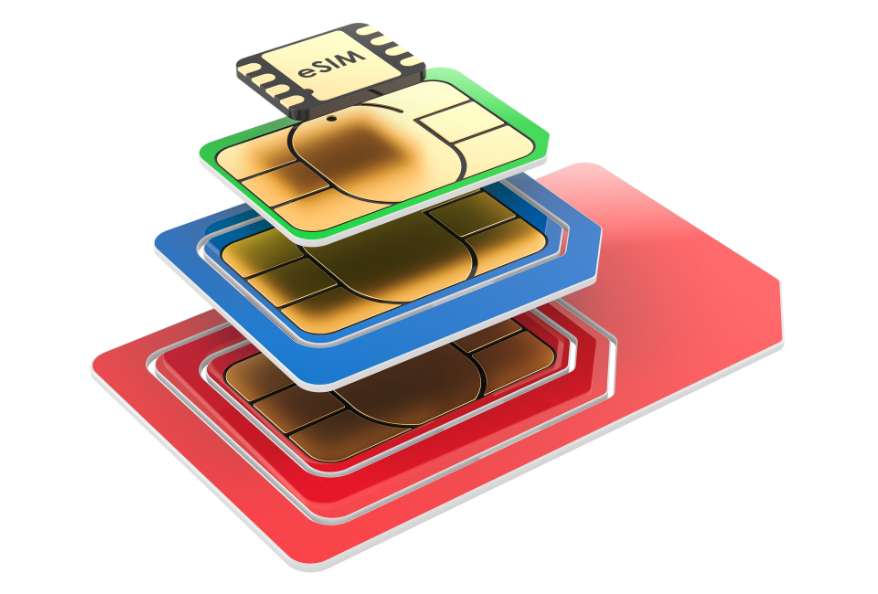
The introduction of embedded SIM technology, commonly known as eSIM, is gradually changing how devices connect to cellular networks. Instead of relying on a removable plastic card, an eSIM uses a programmable chip built directly into a compatible device.
This seemingly small hardware change has implications for smartphones, connected devices, international travel, IoT applications and also the broader telecommunications industry.
What Is an eSIM?
An eSIM, or embedded Subscriber Identity Module, builds a programmable component directly into a device.
Traditional SIM cards contain information that allows a mobile network to identify and authenticate a subscriber. An eSIM performs the same core role, but we can download and manage subscriber profiles digitally instead of swapping physical cards.
The technology does not eliminate the need for a mobile network or cellular subscription. Instead, it changes how the connection between the device and the operator is provisioned.
On a compatible smartphone, users can typically add a mobile plan by scanning a QR code, using an operator application or following a digital activation process.
This makes the physical SIM card less important in the process of connecting a device to a network.
How Does eSIM Technology Work?
The technical foundation of eSIM technology involves a secure hardware component and a digital profile-management system.
When a user activates an eSIM service, a mobile operator provides a digital subscriber profile. The device securely downloads the profile and stores it within the eSIM environment.
The device can then use that profile to authenticate with the cellular network.
One important concept behind this process is remote SIM provisioning. Instead of physically replacing a SIM card, we can provision network credentials remotely.
This approach allows compatible devices to support multiple profiles and gives users more flexibility in managing cellular subscriptions.
Although exact activation steps vary across manufacturers and mobile operators, the core concept stays the same: carriers can securely provision subscriber details without physically swapping a SIM card.
Also Read: How eSIM Technology Is Gaining Popularity Across Europe
eSIM vs Physical SIM
The most obvious difference between an eSIM and a traditional SIM is physical form.
Users can easily swap a physical SIM between compatible devices, whereas manufacturers embed an eSIM directly into the hardware.
However, the difference goes beyond convenience.
| Feature | Physical SIM | eSIM |
| Physical card | Required | Not required |
| Installation | Insert card manually | Digital activation |
| Replacement | Requires another SIM | Profile can be changed digitally |
| Multiple profiles | Limited by device | Multiple profiles may be stored |
| Device design | Requires SIM tray | Can reduce hardware requirements |
| Remote provisioning | No | Yes |
The availability of these features depends on the device, operator and region.
Why eSIM Matters for International Connectivity
International travel is one area where eSIM technology has become particularly useful.
Traditionally, travellers had several choices when arriving in another country.
A compatible eSIM introduces another option: arranging a cellular profile digitally before or during a trip.
For example, a traveller going from India to the USA, UK or Canada can potentially install a destination-specific eSIM without physically replacing the SIM card in the phone.
This feature practically helps travelers who need immediate connectivity after landing to access navigation, communication, transportation, or even online services.
Companies such as Unlimit Mobile provide eSIM and physical SIM options for multiple markets, including the USA, Canada and UK. This is an example of how the technology can be applied to international connectivity rather than an indication that one particular provider is suitable for every user.
Furthermore, this important technological shift enables carriers to provision network access digitally.
Also Read: Travel eSIM vs Local SIM: Which Option Fits Your Trip?
Dual SIM and eSIM
Another important feature of eSIM-compatible smartphones is dual-SIM functionality.
Depending on the device, a user may be able to maintain a physical SIM and an eSIM simultaneously.
This can be particularly useful for people who travel internationally.
For example, a person may keep their existing domestic number active while using a second eSIM profile for a destination country. This reduces the need to physically remove and store a SIM card.
However, dual-SIM capabilities vary significantly between smartphones. Some devices support multiple stored eSIM profiles but allow only a certain number to be active at the same time.
Therefore, users should always check the specifications of their particular device before assuming that every dual-SIM configuration will work.
Also Read: The Spark of New Mobile Edge Computing Connectivity
Advantages of eSIM Technology
Easier Digital Activation
Digital activation undoubtedly stands out as one of the biggest advantages of eSIM technology, allowing users to enable mobile plans instantly without physical cards.
There is no requirement to manufacture, package, ship or physically install a SIM card. For consumers, this can reduce the number of steps required to activate a mobile service.
Better Device Design
Removing the requirement for a physical SIM tray can provide smartphone manufacturers with additional design flexibility.
Removing the SIM tray frees up internal space for other hardware components while improving the device’s water and dust resistance. This does not mean every eSIM-only device automatically has better hardware, but removing physical components can provide manufacturers with more design options.
Easier Switching Between Profiles
An eSIM-compatible device can store multiple carrier profiles depending on the device’s capabilities.
This can make switching between different mobile subscriptions more convenient, particularly for people who regularly travel or maintain separate personal and professional connections.
Reduced Physical Logistics
Traditional SIM cards require manufacturing and distribution.
With eSIM technology, the subscriber profile can be delivered digitally. This reduces the dependence on physical distribution for the activation process.
For mobile operators, this can potentially simplify certain aspects of customer onboarding and international service delivery.
What Are the Limitations of eSIM Technology?
Despite its advantages, eSIM technology is not universally supported.
The first limitation is device compatibility. Older smartphones may not contain an eSIM component.
Operator support is another consideration. Even if a smartphone supports eSIM technology, a particular mobile operator may not offer eSIM activation in every market.
Regional variations can also affect functionality. A phone model sold in one country may have different SIM capabilities from the same model sold in another region.
Users also need to understand the difference between storing an eSIM profile and actively using it. A device may store multiple profiles but have restrictions on how many can be active simultaneously.
eSIM and the Internet of Things
The impact of eSIM technology extends beyond smartphones.
Connected cars, smartwatches, industrial sensors, tablets, laptops and other IoT devices can also use embedded cellular connectivity.
For IoT deployments, physical SIM replacement can become difficult when thousands of devices are distributed across different locations.
Remote provisioning can make managing these devices more practical.
For example, an organisation deploying connected sensors across multiple countries may need to manage cellular subscriptions remotely. Digital provisioning technologies can help reduce the dependence on physical SIM distribution and manual installation.
This makes eSIM-related technologies particularly relevant to the development of large-scale connected systems.
What Does the Future of eSIM Look Like?
The future of eSIM technology is closely connected to the broader development of connected devices.
As smartphones, wearables, vehicles and industrial equipment become increasingly connected, the ability to manage network subscriptions digitally becomes more valuable.
The technology may also contribute to greater flexibility in how consumers select and manage connectivity services.
However, adoption will depend on more than hardware.
Mobile operators, device manufacturers, regulators and technology providers all need compatible systems and standards. Consumer awareness is also important because users need to understand device compatibility, activation procedures and network limitations.
Mobile Connectivity with eSIM: Final Thoughts
eSIM technology represents a significant change in the way cellular subscriptions are delivered.
The basic purpose of a SIM remains the same: it helps identify and authenticate a subscriber on a mobile network. What has changed is the way that identity can be provisioned and managed.
By moving from a removable physical card to a programmable embedded component, eSIM technology enables digital activation, multiple profiles and more flexible approaches to mobile connectivity.
Its applications are already extending beyond smartphones into travel connectivity, wearables, connected vehicles and IoT systems.
As cellular technology continues to evolve, the SIM may become less visible to users while becoming an increasingly integrated part of the devices and networks that keep the world connected.
Reviewed by Satish Kulkarni on October 9, 2026Edited by Juveriya Khan
Note: The article includes external links to third-party services; readers should independently evaluate any referenced platforms before engaging.
- Author
- Latest Posts

I’m a web developer and science writer with a Master’s degree in Computer Applications (MCA) from Pune University.
I work in tech, building websites and staying updated with the latest developments. I also love writing about physics, chemistry, technology, robotics, mathematics, and breakthrough innovations. My passion is breaking down complex scientific topics into simple, easy-to-understand stories.
My goal is to help everyone stay informed about the exciting changes happening in science and technology. I believe understanding science shouldn’t be complicated—it should be accessible to all.