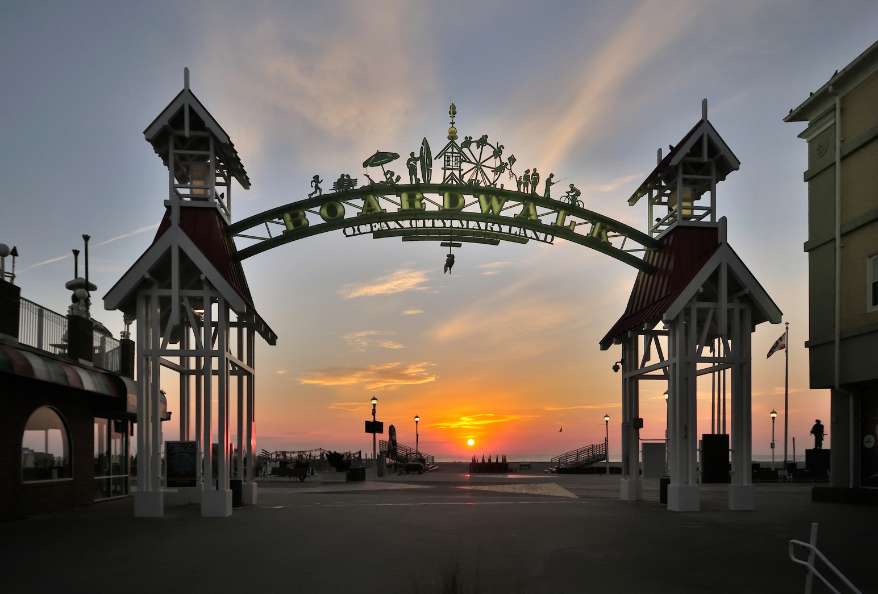
Experience the vibrant hustle of Boardwalk Crews who combine tradition with innovation to capture attention on the Ocean City Boardwalk.
Boardwalk Crews Still Need Talking Clips For Event Notices
Estimated reading time: 8 minutes
Sandwich boards still go up on the Ocean City Boardwalk near 11th Street when the aerobatic show or the night jump slides a few minutes, and a still photo of that hinged sign is the first thing volunteer crews send down the line. The chalk looks official until the wind off the beach lifts a flap or a hold moves the start, and by then the picture is already lying. Crews who need a talking clip of the same person who lettered the board have started using Lip sync ai so the corrected minute can be said out loud.
Day-trippers walking from the Music Pier toward the 11th Street beach do not turn around for a photograph of a sandwich board. They hear a voice or they miss the hold. The municipal airport on Bay Avenue is in the local conversation again for a new terminal, but the notice problem on the boards is older than that headline. A still of the sign loses the wind-shifted start time. A talking clip of the same volunteer, with only one mouth moving in a two-person frame, is how the minute actually reaches people who already parked and started walking.
Sandwich Boards Lose The Minute After The Wind
The hinged boards near 11th Street, and farther down toward Fifth, are built for a Shore breeze, not for a live clock. Volunteers letter a start time in the morning, take a phone photo, and push it into the same chat that also carries parking notes and a reminder about the airport festival off 26th Street and Bay Avenue. The first version of that photo often looks clean. Then a gust knocks the top flap, or the jump is held, and the picture still circulating is the wrong time.
Stringers walking the boards before the show see the same pattern on a busy event day. People ask for the start at the railing. The volunteer points at the board. Someone else holds up the photo from an hour earlier. Those two clocks do not match, and the crowd is already choosing a stretch of beach between Fifth and 14th. Rework on the board is cheap chalk. Rework in the crowd is an hour of walking people back from the wrong block. A photograph of the old lettering keeps traveling after the minute has changed.
Also Read: How AI Video Generation Actually Works: Inside Models Like Veo 3
Still Photos Leave Day-Trippers On The Wrong Beach
The old method is simple enough that crews keep using it after it burns a morning. Photograph the board. If two people are standing there, photograph both, because that is the picture that looks like a crew. Send the still. When the minute moves, send another still. The chat fills with nearly identical pictures of the same hinge and a new number, and nobody can tell which file is live without opening every one.
| What crews send | What a day-tripper gets | Where the notice breaks |
| A photo of the sandwich board | Chalked minutes on a hinged sign | Wind or a hold moves the start |
| A two-person still with both mouths live | Two people who appear to talk at once | The listener steals the minute |
| One audio on a two-person frame | One speaker, one silent holder | Only if the mask is painted after upload |
Put the outgoing file next to the live board on 11th Street before anyone forwards it. If the chalk and the voice do not match, the file is already waste. If two mouths are moving and only one person has the time, the file is already unreadable as a notice.
A Photo Of Chalk Cannot Carry A Hold
A hold is ordinary Shore weather. Gusts come off the water, a jump waits, and the start slides while families are still walking in from the parking decks. The sandwich board can be wiped and lettered again. The photograph cannot. It sits in a text thread, looking as official as the first version that looked fine until the flap lifted. People who drove down for the show have already picked a block. They do not refresh a still. The discarded still is a file nobody can defend once the live board has a different minute.
Two Mouths In One Frame Split The Notice
Event photos on the Boardwalk almost always have two people in them. One volunteer talks. The other holds the hinge so the wind does not fold the sign. That is a good still for a recap page. It is a bad talking notice if both mouths start to move. Day-trippers watching on a phone cannot tell which person has the start time, and the silent holder looks like a second announcer. The clip then has to be thrown out because the notice split. Crews who keep both people in the frame need the listener’s mouth shut while the speaker says the minute.
How One Voice On The Clip Reaches Crowds
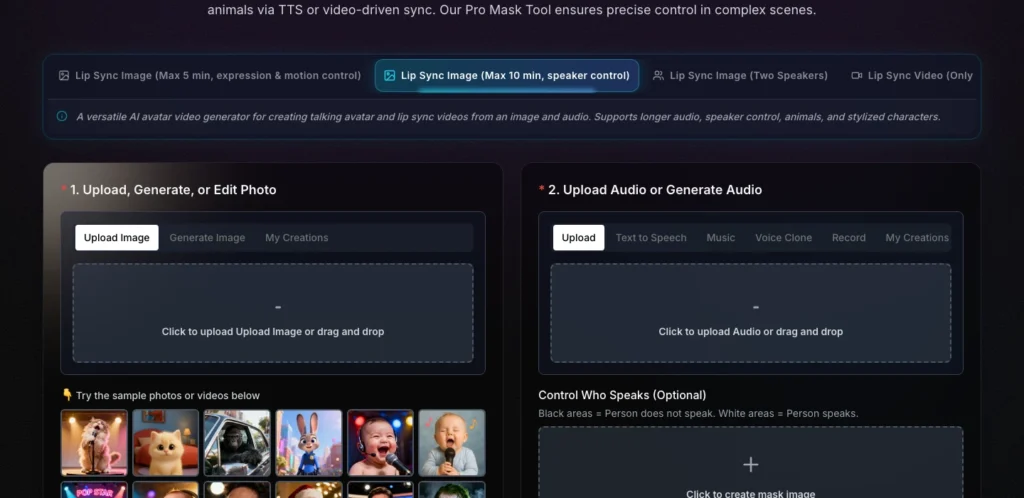
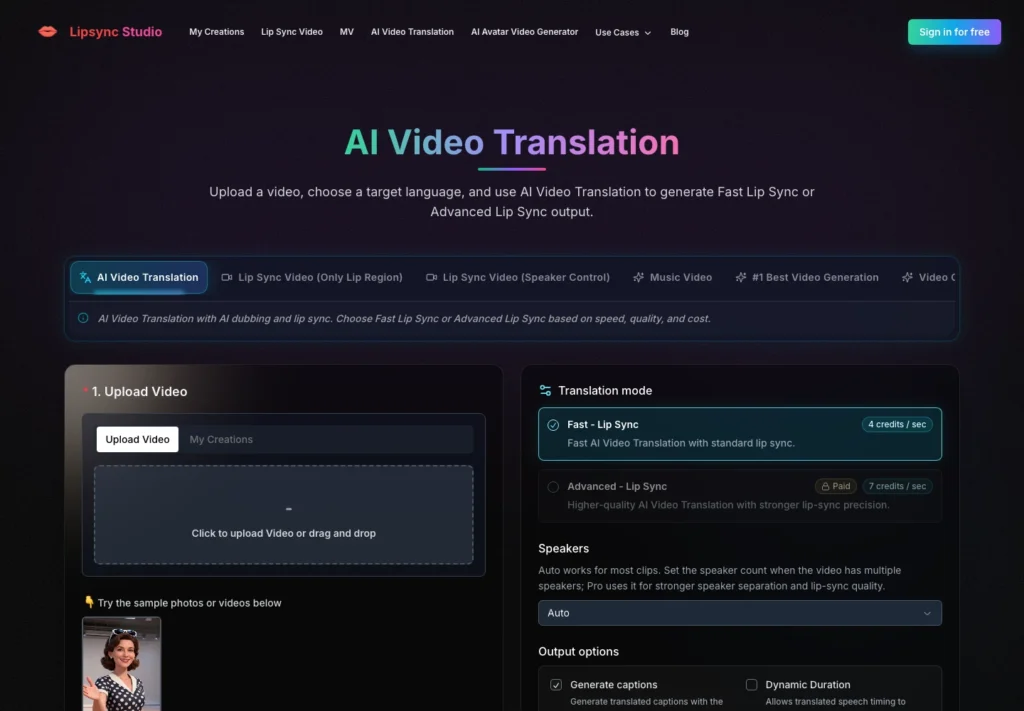
Lip Sync Studio is useful here only as a way to keep that two-person Boardwalk still and still have one voice. The exclusive control for a notice clip is Control Who Speaks. The two-person image goes up first. The mask is drawn after the upload, not before. White goes over the speaker. Black goes over the silent listener. One audio track on that frame means one person talks and the other holds the board.
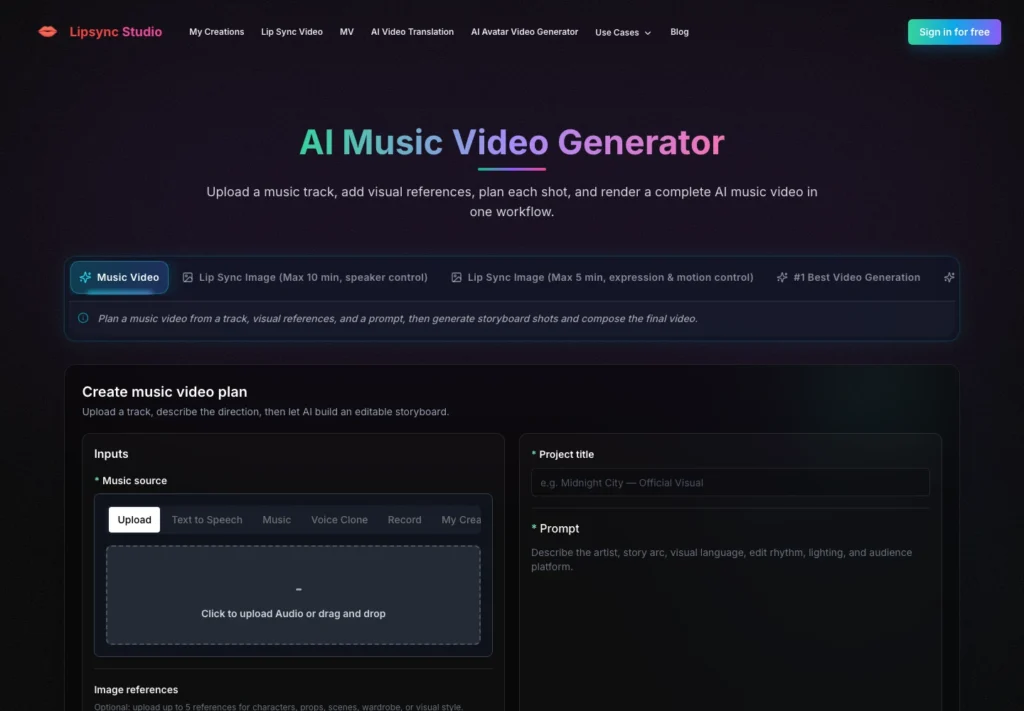
- Upload the two-person still of the volunteer and the board holder first.
- After the image lands, open Control Who Speaks and draw the mask.
- Paint white over the speaker’s mouth, face, and body; leave the listener black.
- Add the one audio track with the corrected minute and generate the clip.
The order matters because the mask is more accurate after the still has uploaded. Painting it early, or reversing the colors, puts speech on the holder and leaves the actual announcer still. That export does not survive a check beside the live board and gets discarded the same way a stale chalk photo gets discarded.
White Over The Speaker After The Upload
Control Who Speaks is a black-and-white mask, not a second recording session on the pier. White marks the person who should speak. Black marks the person who should stay quiet. After the Boardwalk still is in Lip Sync Studio, the mask can cover the speaker’s lips, face, and body so the lip sync stays on the volunteer who has the time. The holder and the lettering stay in the picture. They just do not talk. If the colors are swapped, the silent listener appears to deliver the notice and the real speaker’s mouth stays dead. The file looks lively until someone stands it next to the crew on 11th Street. Then it is unusable. Skip the mask and drop one audio onto two faces, and both mouths try to own the minute.
A Music Bed Recap Keeps The Same Crew
After the jump or the aerobatic pass, the same two volunteers are still the right faces for a short recap: the speaker, the holder, the board, and the stretch of boards they actually worked. A later cut can sit on a simple music bed so the clip can run on a shop screen without another chalkboard photo. An AI music video generator cut of that crew should keep the Ocean City street names and the corrected start time, not invent a stage show the Boardwalk did not host. The recap is useful only if the talking notice that went out during the hold was already clean: one mouth, one time, one listener who stays quiet.
Talking Notices Belong With The Pier Crews
Ocean City’s airshow days are built on ordinary Shore props: sandwich boards, pier volunteers, a packed Boardwalk, and people who already committed to a block of beach. The still photo of the board will keep getting taken, because the board is what the crew has in their hands. It should not be the file that travels after a hold. The file that travels is a talking clip of the same volunteer, with white over the speaker and black over the listener.
Check that clip beside the live lettering on 11th Street before it goes into the chat. If the voice and the chalk disagree, throw the file out and record the new minute. If both mouths are moving, throw it out and paint the mask again. Lip Sync Studio is only doing the mouth work. The notice still belongs to the pier crew and the people walking in from Bay Avenue who will not turn around for a photograph of a sign that already changed.
Edited by Juveriya Khan
Note: The article includes external links to third-party services; readers should independently evaluate any referenced platforms before engaging.
- Author
- Latest Posts

Deven Nandapurkar is a Software Engineer, Project Lead; working at the strategic intersection of software engineering, productivity science, and emerging technologies. Driven by a core philosophy of “building things worth building,” he leads cross-functional teams and drives end-to-end technical strategy—from early-stage conceptualization through production-grade deployment.
A Computer Engineering graduate from Pune University, Deven brings a sharp systems-thinking approach to technical leadership, honed by years of managing high-stakes engineering projects and leading teams to top placements in national and international hackathons, including the NASA Space Apps Challenge and the Peerlist GenAI Hackathon.
Deven explores how human cognition and emerging technology converge. He regularly writes about cognitive performance optimization, attention management, AI integration, and the evolving dynamics of the modern workforce – offering actionable frameworks for professionals seeking to maximize their productivity and thrive alongside intelligent systems.