While image-to-video models can generate short promotional clips, results are usually more reliable when the process begins with a clean, well-composed product image. Consequently, in the creation of AI image-to-video product ads, an advanced image generation model is first used to establish product appearance, lighting, and composition. Then, that image serves as the starting reference for an image-to-video model, which adds controlled camera movement and motion.
AI image-to-video product ads: Why Start with a Strong Product Image Before Adding Motion?
Fig. 1: Advanced Image Generation Model
An advanced image generation model is useful for creating or refining the product image before motion is added. It can adjust composition, lighting, background, product placement, and overall visual style, producing a cleaner foundation.
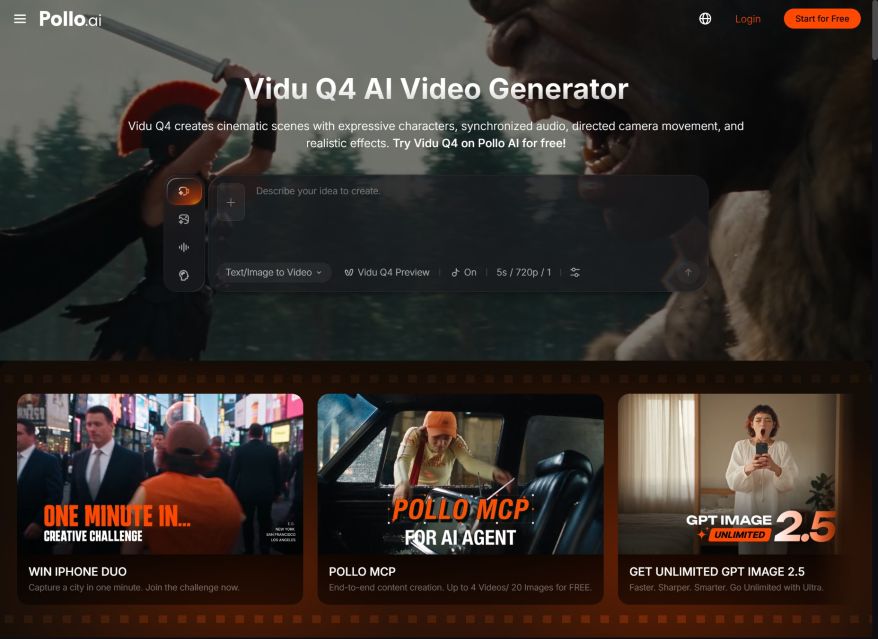
Fig. 2: Vidu q4 AI – Image to Video (source: Ali Azhar)
Once that image is ready, an image-to-video model can convert it into a short clip that includes camera movement, product reveals, pacing, synchronized audio, and visual effects. In practice, the image stage defines the product’s appearance while the video stage controls how it moves.
Advantages of a Combined Image and Video Workflow for AI Product Ads
Modern generative platforms often combine image and video models in a single environment. This can reduce the need to move files between separate tools when creating product visuals and short motion clips. Some platforms also include specialized marketing-oriented features for producing product showcases, short ads, or variations suitable for testing. The practical advantage is the ability to iterate on both the still image and the resulting video within the same workflow.
Step 1: How Do You Set Up the Workflow?
Begin with an advanced image generation model to create or refine the product image, then move to an image-to-video model once the visual direction is ready.
Step 2: How Do You Write Product Image and Video Prompts?
Use two prompt styles: one for the image stage and one for the video stage. The image stage needs composition and appearance details, while the video stage needs clear motion direction.
For Nano Banana 2.1, use: Product + Setting + Composition + Lighting + Brand Mood + Text Space
Example:
A premium glass skincare bottle on a pale stone surface, soft water reflections, minimal luxury bathroom background, warm natural light, centered composition, realistic commercial product photography, preserve the bottle shape and label design, leave empty space on the right for ad copy.
For Vidu Q4, use: Product + Action + Camera Movement + Setting + Lighting + Audio Direction + Ad Style
Try these examples:
Product reveal
A premium wireless headphone case opens slowly on a clean white pedestal. The camera makes a smooth push-in toward the product, with soft studio lighting, subtle reflections, and modern technology advertising style. Keep the product shape, logo, and colors consistent.
Lifestyle product ad
A reusable water bottle stands on a wooden table beside a hiking backpack. Sunlight moves gently across the scene, with a slow cinematic camera orbit, natural outdoor lighting, and premium lifestyle campaign style. Keep the bottle label sharp and unchanged.
Beauty product ad
A glass skincare bottle rests on pale stone surrounded by soft water droplets. The camera moves from a wide shot to a close-up of the product label, with warm morning light and clean luxury beauty commercial style. Preserve the bottle proportions and packaging details.
Step 3: How Can Image-to-Video Improve Product Ad Control?
Image-to-video improves control because the video model starts from a product reference that already defines the subject. Instead of asking the model to invent the product and animate it at the same time, you first provide a polished image created with an advanced image generation model.
Use an image with good lighting, a clear silhouette, and enough space around the product. Avoid blurry packaging, distorted logos, cluttered backgrounds, or several overlapping products in the same frame.
For the first generation, keep the motion simple. A slow push-in, orbit, product reveal, or gentle rotation is usually more reliable than several rapid actions in one short clip.
Step 4: Refining the Generated Clip into a Usable AI Product Ad
After generating the main clip, refine it into a usable campaign asset. A product video ad usually needs a clear hook, one product benefit, visual consistency, and a direct call to action.
You can adapt the same concept into several formats:
Keep the product visible early. If the viewer does not understand what is being sold in the first few seconds, the video may look polished but fail as an ad.
What Are the Best Pro Tips for Nano Banana 2.1 and Vidu Q4?
First, create several versions of the product image before choosing one for animation. A strong starting frame often matters more than a complex video prompt.
Second, match the camera movement to the product. Use a slow orbit for packaging, a close-up push-in for texture, and a tracking shot for products associated with speed or performance.
Third, generate multiple short variations with different hooks. One version can focus on the product design, another on its main benefit, and another on a lifestyle use case.
AI image-to-video product ads: Summary of the Workflow
The process consists of first creating a controlled product image with an advanced image generation model, then animating that image with an image-to-video model. Further refinement can include adjusting pacing, format, or emphasis for different distribution channels.
Starting with a single clear product and one primary message, then generating a small set of variations, is usually an efficient way to explore the approach.
The article correctly identifies the best ways to use AI for ad workflows, like pairing Nano Banana 2.1 for subject consistency with Vidu Q4 for reference-driven video. It also gives good, useful advice on prompt structure, motion control, and clean framing. However, it makes the process look too good to be true by downplaying common motion distortions on logos and text and leaving out important real-world factors such as generation costs, legal and moral risks, and comparisons of other tools. Readers should use it as a starting point, but they should plan to spend more time and work on editing afterward to deal with the model's flaws.
I am Anvita Kashikar, a Computer Engineering graduate with Honors in Data Science, specializing in Artificial Intelligence and Machine Learning. My academic and research interests lie in Artificial Intelligence, Machine Learning, Deep Learning, Explainable AI, Optimization Techniques, and Data Science. I am particularly passionate about leveraging AI to address complex challenges in healthcare, finance, and drug discovery.
My work is grounded in a strong foundation of mathematics, optimization, and computational intelligence. I have contributed to the development of book chapters on topics including Dijkstra's Algorithm, Necessary and Sufficient Conditions, Saddle Point Theory, Information Entropy, Taylor’s Series, Classification and Applications of Eigenvalues and Eigenvectors, MaxOne Problem, Topology Optimization, and Sensitivity Analysis. These contributions reflect my interest in the mathematical and optimization principles that underpin modern AI systems.
I have also been actively involved in research exploring emerging applications of Artificial Intelligence and Machine Learning. My research work includes studies on interpretable deep learning using Kolmogorov-Arnold Networks (KANs) for tabular data, AI-driven drug discovery and development, and generative optimization techniques for accelerating pharmaceutical research. Several of these research papers and book chapters have been published, while others are currently under review or in various stages of the publication process.
Through my academic and research endeavors, I strive to bridge theoretical concepts with practical applications, contributing to the development of transparent, efficient, and impactful AI solutions. As an early-career researcher, I am committed to continuous learning, interdisciplinary collaboration, and advancing the responsible use of Artificial Intelligence to address real-world challenges and create meaningful societal impact.