Human AI teams are shaping the future of work. This shift is not only about coding but also about psychology, ethics, trust, and design.
Human AI Teams: Is Your Co-Worker a Robot?
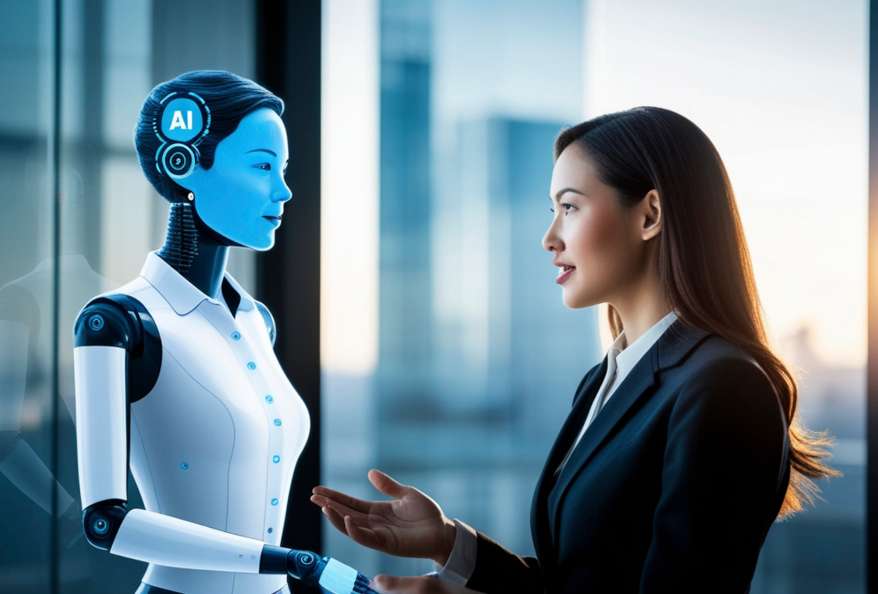
Human AI teams are no longer a futuristic idea—they are already part of everyday life. At the present time, artificial intelligence (AI) appears everywhere: in classrooms, homes, and workplaces. Tools such as ChatGPT, virtual assistants, and smart software now help people write, plan, and solve problems faster. As a result, students and professionals alike are asking an important question: will robots soon become our co-workers?
A recent scientific study suggests that the future of work is not about humans versus machines. Instead, it is about humans working together with AI in new and powerful ways.
The Big Confusion Around Human–AI Collaboration
Before this research, scientists struggled to clearly explain how humans and AI work together. When researchers reviewed thousands of academic papers, they found a major issue. Different authors used different words such as collaboration, interaction, teaming, and cooperation to describe similar ideas.
Because of this lack of shared language, progress became slow. Without clear definitions, it is difficult to compare studies or design better systems. This new research organizes the field and provides a clearer structure for understanding human AI teams.
Human AI Teams: Four Ways Humans Work with AI
After studying years of research, scientists identified four main ways humans and AI work together. Each type represents a different level of control and responsibility.
Symbiotic Intelligence
In symbiotic intelligence, humans and AI work as equal partners. Neither fully controls the other. Instead, they share goals, exchange information, and adapt together. This approach is common in advanced research and emerging technologies.
Augmented Intelligence
In augmented intelligence, humans remain in charge while AI enhances their abilities. Doctors using AI to analyze medical scans and engineers using AI to improve designs are good examples. This form of AI teamwork is already widespread today.
Assisted Intelligence
Assisted intelligence refers to AI systems that help with specific tasks without making major decisions. GPS navigation, spell checkers, and recommendation systems fall into this category. Here, AI supports humans rather than leading them.
Substituted Intelligence
In substituted intelligence, AI replaces humans for certain tasks. Robot vacuum cleaners, automated customer support chatbots, and self-checkout machines are examples. While efficient, this model raises important questions about jobs and ethics.
In short, your future career may depend on how you fit into one of these types of human–AI collaboration.
Why Human AI Teams Matter for Your Future
Understanding human AI teams is quickly becoming an essential skill. In engineering, science, healthcare, business, and creative fields, AI tools are now part of daily work. Therefore, students who learn how to collaborate with AI gain a strong advantage.
Knowing how AI teamwork functions allows you to choose careers where humans stay in control while technology boosts productivity and creativity. Learning the basics of artificial intelligence is a smart first step.
Trust, Ethics, and AI Teamwork
Working with AI is not just about technology. Trust plays a critical role. Humans must trust AI systems enough to use them effectively. However, trusting AI too much can lead to mistakes, especially when systems rely on biased or incomplete data.
For this reason, ethics matter. Engineers must design human AI teams that keep humans involved in decision-making. Good design allows AI to explain its actions, share information clearly, and reduce errors. Responsible AI protects people while improving outcomes.
At the same time, collaboration among humans is equally important. Scientists, engineers, and designers must work together. Currently, research on AI teamwork is fragmented, but better communication can lead to safer and smarter systems.
The Future of Work with AI
New careers are already emerging around AI teamwork. Companies need people who understand how humans and machines interact. You could help design intelligent assistants, build ethical AI systems, or improve collaboration tools.
Overall, careers involving human–AI collaboration are growing rapidly. Students who prepare early will be ready for the workplaces of tomorrow.
Conclusion: Learning to Work in Human AI Teams
To sum up, human AI teams are shaping the future of work. This shift is not only about coding but also about psychology, ethics, trust, and design. All things considered, we are still at the beginning of this transformation.
At the present time, staying curious is essential. Learn about AI, ask questions, and think critically about how humans and machines should work together. With the right approach, human AI teams can help build a smarter, more balanced future.
Additionally, to stay updated with the latest developments in STEM research, visit ENTECH Online. Basically, this is our digital magazine for science, technology, engineering, and mathematics. Further, at ENTECH Online, you’ll find a wealth of information.
Reference:
- Gómez-Cruz, N. A., Rodríguez Castro, D. Y., Rey-Sarmiento, F., Zarate-Torres, R., & Moncada Niño, A. (2025). Mapping Human–AI Relationships: Intellectual Structure and Conceptual Insights. Technologies, 14(2), 83. https://doi.org/10.3390/technologies14020083
- Author
- Latest Posts

Kottauppari Venkat Raghava
I am an Information Technology graduate (B.Tech) and a technology writer specialising in artificial intelligence, robotics, automation, and space technologies. I analyse complex scientific research and convert it into clear, practical insights for students, tech enthusiasts, and professionals. My work bridges the gap between academic research and real-world understanding by simplifying findings from peer-reviewed journals into engaging, easy-to-follow content. Alongside my writing, I have hands-on experience developing real-world projects, showcased on my GitHub, including an Expense Tracker web application for managing and visualising spending, and a Simple Video Summariser that generates concise insights from video content using automation techniques. I also produce research-driven articles on topics such as AI-powered corrosion detection, deep learning in engineering, and advanced automation systems. I follow a research-driven approach, ensuring every article is grounded in verified sources, industry knowledge, and practical applications. My goal is to make advanced technology accessible and meaningful, helping readers stay informed about innovations shaping the future.