Explore the stratospheric ozone layer and why its healing is slower than expected due to rising emissions from industrial chemicals.
Stratospheric Ozone Layer Recovery Delayed by Industrial Emissions
Estimated reading time: 5 minutes
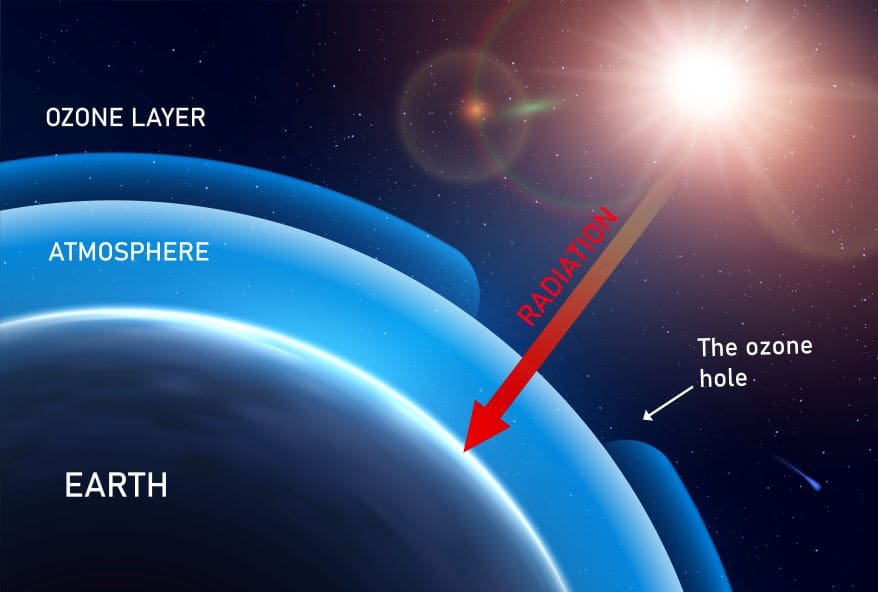
The stratospheric ozone layer shields Earth from harmful rays. Over time, scientists expected steady healing. In fact, new research shows slower recovery than predicted. Hidden emissions still rise across many regions. These emissions come from industrial chemical use. In this case, ozone healing faces fresh global pressure. With this in mind, emissions control needs stronger action today.
In this case, the finding links science with daily life. Students can see real effects of chemistry concepts. In fact, this issue connects to health and climate. With this in mind, learning science gains deeper meaning.
TL;DR ‘Stratospheric Ozone Layer’
In news April 2026, scientists report slower recovery of the stratospheric ozone layer due to rising industrial emissions. In fact, some feedstock chemicals still escape during production, which weakens ozone healing. With this in mind, current rules miss key sources, and, in other words, stronger emission control is needed to support faster recovery.
Key Takeaways
- Ozone recovery is slower than expected
- Industrial emissions still rise globally
- Policies need updates to address new sources
- Chemistry links directly to real-world issues
- Students can build careers in environmental science
Understanding Stratospheric Ozone Layer Problem
What Scientists Found
In general, researchers studied long-term atmospheric data trends. They tracked chemical compounds across many years. These compounds affect stratospheric ozone layer breakdown rates directly. Industrial chemicals showed steady increases over time. Recovery timelines shifted due to these changes.
To put it differently, many chemicals act as feedstocks. Industries use them to create useful products. Some gases escape during these processes. In effect, stratospheric ozone layer damage continues slowly.
As can be seen, small emissions still create large impacts. Monitoring tools now detect these hidden changes. Scientists stress better tracking systems worldwide.
Why Stratospheric Ozone Layer Matters for Students
In essence, stratospheric ozone layer connects with school chemistry lessons. Gas behavior and reactions play key roles. Students can apply classroom knowledge to global issues. Science learning becomes more practical and useful. Careers in research feel more relevant now.
Take the case of atmospheric scientists. They analyze air samples and build models. Their work guides policies and protects ecosystems.
How Industrial Emissions Affect Recovery of Stratospheric Ozone Layer
The Role of Feedstock Chemicals
To enumerate, feedstock chemicals support many industries today. These substances often leak during production stages. While this may be true, rules already exist. Yet, some emissions remain outside strict control.
Factories release gases during chemical processing steps. Leakage happens even with safety measures in place. These gases slowly harm the stratospheric ozone layer .
As has been noted, even minor leaks matter over time. Scientists estimate recovery delays by several years.
Real-Life Applications
Industries must adopt cleaner technologies to protect the stratospheric ozone layer. In fact, engineers design systems that reduce harmful emissions. With this in mind, students in STEM can work in this field. In other words, innovation helps solve environmental challenges. As can be seen, sustainability drives future industry growth.
With this purpose in mind, governments update environmental policies. This creates demand for skilled professionals worldwide.
3 Ways Students Can Explore This Field
- Study environmental chemistry concepts deeply
- Join school projects on air quality monitoring
- Follow scientific research updates regularly
In detail, these steps build strong knowledge foundations. Students gain both theory and practice together. They also improve problem-solving skills steadily.
All things considered, early exposure shapes career paths. Many scientists began with simple school experiments.
Global Policies and Future Challenges
The Montreal Protocol and Beyond: Stratospheric Ozone Layer
The Montreal Protocol reduced many harmful gases that damage the stratospheric ozone layer. In fact, it remains a strong global agreement today. Even so, new challenges still appear over time. With this in mind, policy updates now seem very important. In other words, global cooperation continues to play a major role.
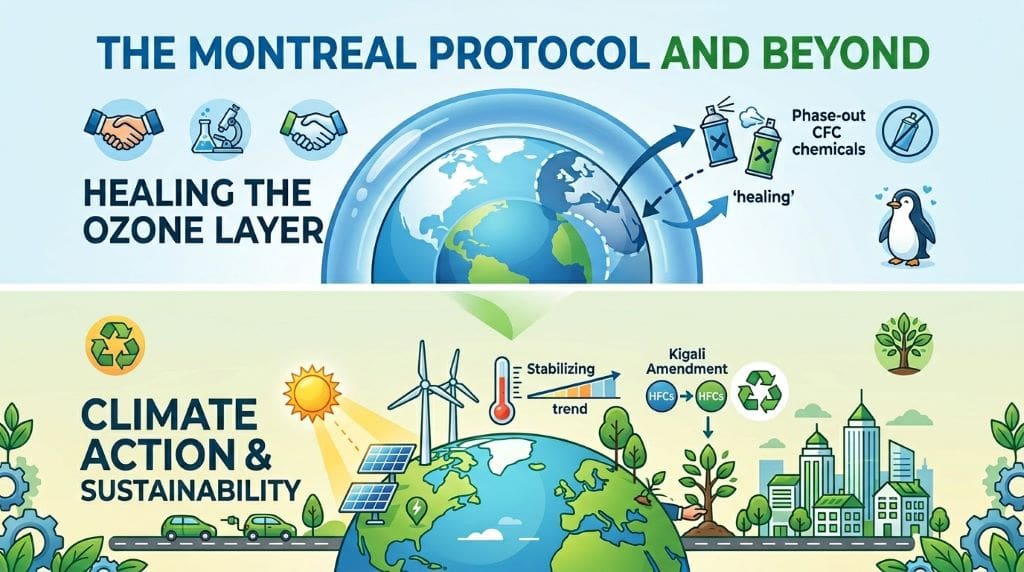
Feedstock emissions received less attention in the past. In fact, this gap now slows recovery of the stratospheric ozone layer. With this in mind, governments must revise rules quickly and carefully so that progress improves.
What Lies Ahead
In conclusion, scientists will keep tracking changes in the stratospheric ozone layer. In fact, new tools will improve detection and analysis. With this in mind, students today can shape future solutions. In other words, future careers will focus on climate science fields. As can be seen, the impact will spread across many industries worldwide.
In sum, this discovery shows science working in real life. It connects research with society and policy decisions.
3 Practical STEM Career Paths
- Atmospheric scientist studying climate systems
- Environmental engineer designing cleaner processes
- Policy analyst shaping environmental regulations
Each role uses science knowledge daily to protect the stratospheric ozone layer. In fact, students can choose paths based on their interests and strengths. In other words, these careers offer meaningful global impact. As can be seen, they also provide long-term growth opportunities.
3 Simple Classroom Connections
- Chemical reactions and gas laws
- Environmental monitoring techniques
- Data analysis and scientific modeling
To repeat, school lessons connect directly with research work. Learning becomes clearer and more engaging.
Frequently Asked Questions on Stratospheric Ozone Layer
What is the ozone layer?
The ozone layer is a gas layer in the atmosphere. It blocks harmful ultraviolet radiation from the Sun. Protection keeps ecosystems safe and stable. Health risks reduce due to this layer.
Why is recovery of ozone layer is slower now?
Recovery slows due to ongoing industrial emissions. Feedstock chemicals still release harmful gases. Emissions continue despite existing rules. Delay results from long-term accumulation effects
How can students contribute?
Students can study science and raise awareness locally. They can pursue careers in environmental fields. Knowledge leads to better solutions over time. Action starts with strong education.
Reference:
Reimann, S., Western, L. M., Lickley, M. J., Sherry, D., Daniel, J. S., Kuijpers, L. J. M., Montzka, S. A., Rigby, M., Velders, G. J. M., Vollmer, M. K., Emmenegger, L., Liang, Q., Park, S., & Solomon, S. (2026). Continuing industrial emissions are delaying the recovery of the stratospheric ozone layer. Nature Communications, 17(1), 3190. https://doi.org/10.1038/s41467-026-70533-w
- Author
- Latest Posts

I completed my Master of Science from the University of Allahabad in 2017 with a strong academic background in life sciences and chemistry. My specialization included Molecular Biology, Microbiology, Genetics, Plant Breeding, Phycology, Paleobotany, and Bioinformatics, along with Organic Chemistry, Inorganic Chemistry, and Physical Chemistry. This multidisciplinary training provided me with a comprehensive understanding of biological systems and analytical scientific approaches.
After completing my postgraduate studies, I gained valuable professional experience in both the education and social development sectors. I worked at A.M. Oxford Public School, where I was actively involved in guiding students toward academic excellence. In this role, I focused on creating an engaging learning environment, encouraging critical thinking, and nurturing students’ curiosity for scientific learning. My experience as an educator strengthened my communication, mentoring, and classroom management skills.
In addition to my teaching experience, I worked with Jeevan Jagriti Foundation, where I contributed to community-based initiatives aimed at improving educational access and awareness among underprivileged sections of society. Through this work, I participated in programs designed to support social development and promote the value of education in marginalized communities.
These professional experiences helped me develop strong interpersonal, leadership, and organizational skills while reinforcing my commitment to education and community service.