Ocean Plastic Recycling Advances Sustainable Infrastructure Development Globally
Ocean Plastic Recycling Turns Fishing Nets Into Roads
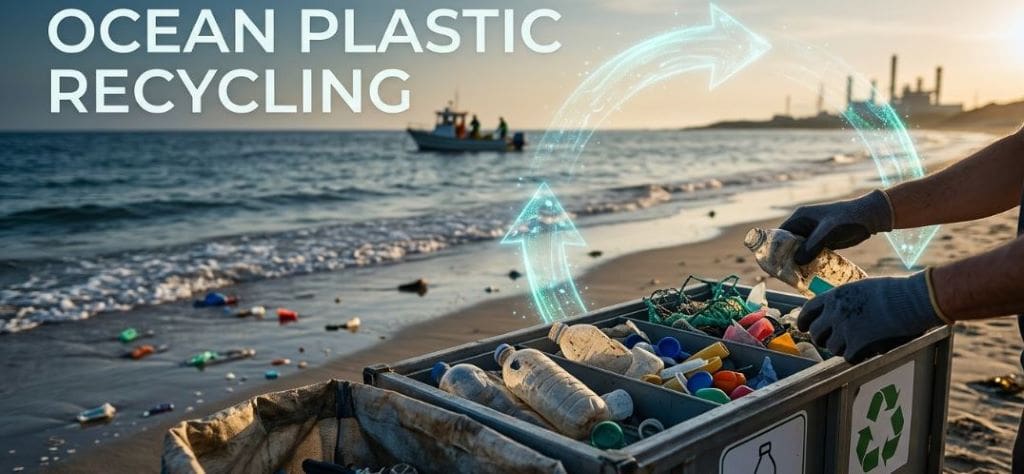
Plastic pollution is one of the world’s biggest environmental problems. Old fishing nets and everyday plastic waste continue to build up in oceans and landfills. Ocean plastic recycling is becoming increasingly important in addressing this issue. To help solve this problem, researchers in Hawaii have found a new use for plastic waste. They mix recycled marine debris and household plastics into asphalt for road construction. Early tests show that these plastic-enhanced roads perform as well as regular roads. They also release very few plastic particles into the environment. This simple and innovative method helps reduce plastic waste, supports recycling, and turns discarded materials into useful roads. It is a strong example of how a circular economy can protect the environment while creating valuable infrastructure.
Key Takeaways
- Hawaii has too much plastic. It costs a lot to ship waste off the islands. Landfills are full. And ocean currents dump huge amounts of old fishing nets on the beaches. So researchers had an idea: what if they put that plastic into road asphalt? This is where ocean plastic recycling can make a difference.
- Early tests show it works. Three test road strips were paved — one with standard asphalt, one mixing ground fishing nets, and one with recycled household plastic. None of them released more microplastics than a normal road. In fact, regular tire wear produces far more microplastic pollution than the plastic mixed into the road surface.
- The project is funded by Hawaii’s Department of Transportation. Scientists hope this could one day become standard practice — cleaning up oceans and beaches while building better roads. Moreover, ocean plastic recycling has the potential to improve road quality and environmental outcomes at the same time.
Marine Debris & Derelict Fishing Gear (DFG)

Marine debris is one of the biggest environmental problems in the world’s oceans. It includes many types of human-made waste, such as plastic, fishing gear, packaging, and other discarded items that end up in the sea. One of the most harmful forms of marine debris is derelict fishing gear (DFG). This includes fishing nets, ropes, traps, and lines that have been lost, abandoned, or thrown away. These materials can stay in the ocean for many years, harming marine life, damaging coastal habitats, and threatening ocean ecosystems.
Polymer-Modified Asphalt (PMA)
Polymer-Modified Asphalt (PMA) is a stronger and longer-lasting type of road material. It is made by adding special polymers to regular asphalt. These polymers make roads more durable and better able to handle heavy traffic. Since 2020, Hawaii has used PMA on most of its roads because it performs well in the state’s warm, rainy climate.
Regular asphalt can crack, form ruts, and wear down over time. PMA helps prevent these problems. It is more flexible, so it can better handle changes in temperature and constant vehicle traffic. It also resists water damage, which helps roads stay in good condition for a longer time and reduces the need for repairs.
Benefits of Using Recycled Plastics and Fishing Nets in Roads
- Recycled plastics and old fishing nets can be turned into useful road-building materials.
- This approach helps solve both environmental and economic problems. Ocean plastic recycling supports the reduction of waste and benefits communities.
- Hawaii collects large amounts of plastic waste every year, while recycling and transporting waste are costly.
- Using plastic waste in asphalt provides a practical and cost-effective way to manage this waste.
- Recycling old fishing gear and household plastics helps reduce marine debris.
- Discarded fishing nets and other plastic waste can remain in the environment for many years, harming marine life and ocean ecosystems.
- Turning this waste into asphalt keeps it out of the ocean and reduces the amount sent to landfills.
- The Center for Marine Debris Research’s Bounty Project has already removed about 84 tons of abandoned fishing gear from the Pacific Ocean.
- This recovered material can be recycled and used to build stronger, more sustainable roads.
- The project supports a circular economy by giving plastic waste a new purpose instead of throwing it away.
Frequently Asked Questions
What is the goal of Hawaii’s recycled-plastic road project?
The project aims to reduce marine debris, landfill waste, and plastic pollution. To achieve this goal, researchers collect discarded fishing nets and recycled household plastics and mix them into road asphalt. As a result, they keep plastic waste out of the oceans and landfills while creating stronger, more sustainable roads. In addition, this approach supports recycling and promotes a circular economy.
What types of plastic are being used in the roads?
Researchers test recycled high-density polyethylene (HDPE) from old fishing nets and household plastic waste to replace some of the new polymers in polymer-modified asphalt. This approach reduces plastic waste and helps create stronger, longer-lasting roads.
Do roads made with recycled plastics release more microplastics?
Early results show that roads made with recycled polyethylene do not release more plastic particles than regular polymer-modified asphalt. Researchers found only very small amounts of polyethylene in the road dust samples, suggesting that the recycled plastic remains securely trapped inside the asphalt
Reference
Our plastic planet. (n.d.). http://kinampark.com/T-Polymers/files/14.%20Our%20Plastic%20Planet.pdf
- Author
- Latest Posts

I completed my Master of Science from the University of Allahabad in 2017 with a strong academic background in life sciences and chemistry. My specialization included Molecular Biology, Microbiology, Genetics, Plant Breeding, Phycology, Paleobotany, and Bioinformatics, along with Organic Chemistry, Inorganic Chemistry, and Physical Chemistry. This multidisciplinary training provided me with a comprehensive understanding of biological systems and analytical scientific approaches.
After completing my postgraduate studies, I gained valuable professional experience in both the education and social development sectors. I worked at A.M. Oxford Public School, where I was actively involved in guiding students toward academic excellence. In this role, I focused on creating an engaging learning environment, encouraging critical thinking, and nurturing students’ curiosity for scientific learning. My experience as an educator strengthened my communication, mentoring, and classroom management skills.
In addition to my teaching experience, I worked with Jeevan Jagriti Foundation, where I contributed to community-based initiatives aimed at improving educational access and awareness among underprivileged sections of society. Through this work, I participated in programs designed to support social development and promote the value of education in marginalized communities.
These professional experiences helped me develop strong interpersonal, leadership, and organizational skills while reinforcing my commitment to education and community service.