Plant Flowering Time Shifts Signal Rapid Environmental Change
Plant Flowering Time Shifts Show Worldwide Climate Impacts
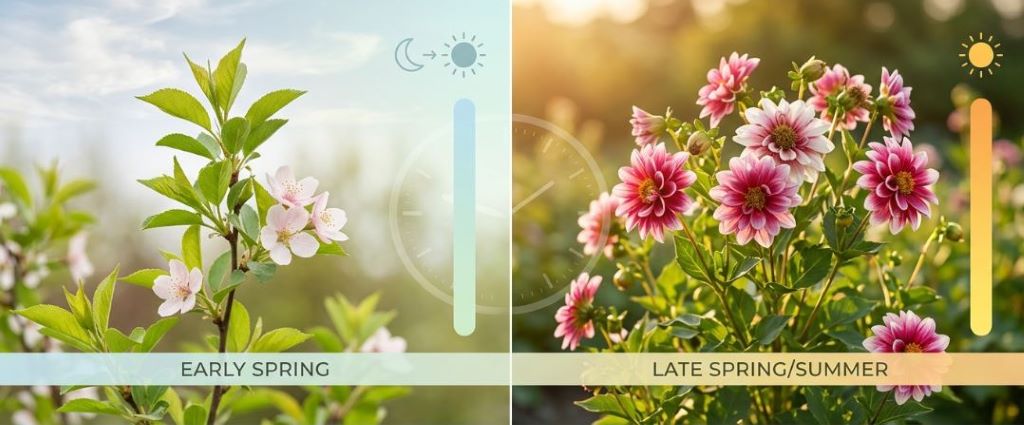
Stories about climate change and biodiversity often focus on damage and loss. However, new research brings some hope. Recent findings show that some coral reefs may be stronger against climate change than scientists once thought. At the same time, countries are working together to improve protection for the oceans. New tools, such as artificial intelligence and digital plant records, are also helping scientists study changes in flowering times, especially plant flowering time shifts around the world. These efforts are giving researchers a better understanding of how nature is changing. They also create new ways to protect plants, animals, and ecosystems in a warming world. In addition, plant flowering time shifts provide crucial evidence about how quickly species respond to different environmental pressures.
Key Takeaways
- The High Seas Treaty is gaining support around the world.
- African and Commonwealth countries called for stronger action at the ocean meeting in Kenya.
- The world’s oceans are under growing pressure.
- Climate change, pollution, overfishing, and the loss of marine life are major threats.
- Global fish and seafood production reached a record 235 million tonnes in 2024.
- This shows that demand for ocean resources continues to grow.
- Scientists warned against ending a key U.S. ocean-monitoring system.
- They said it would make weather and climate forecasts less accurate around the world.
- An AI-based study used eight million digital plant records.
- The study found that flowering times have changed greatly over the last 100 years, highlighting the importance of tracking plant flowering time shifts to understand the impacts of climate change.
- Some plants now flower earlier than before.
- Others flower later than before.
- On average, flowering times changed by about 2.5 days every decade.
- The changes occurred in both earlier and later directions.
Spotlight: Coral Reef ‘Hope’
For many years, scientists have warned that coral reefs are highly vulnerable to climate change. Warmer oceans, heatwaves, pollution, and coral bleaching have damaged reefs around the world. However, new research brings encouraging news. Scientists found about 166,000 square kilometers of coral reefs that may be able to survive and recover from climate stress. This area is about three times larger than earlier estimates. These resilient reefs are found across 71 countries and 100 territories. This shows that chances to protect coral reefs are more widespread than previously thought. The study suggests that many of these reefs have strong potential for long-term survival and recovery if they receive proper protection.
Plant Flowering Times ‘Shift’

Flowering time is one of the most important events in a plant’s life. It affects how plants reproduce, attract pollinators, and produce seeds and fruits. For many years, scientists have believed that climate change is changing the timing of flowering. New research now provides strong evidence that this is happening around the world. Using artificial intelligence (AI) and millions of digital plant records, researchers found large changes in flowering times across many plant species. These shifts show that plants are responding to changing climates. In fact, plant flowering time shifts help reveal how climate patterns influence biological events. The findings could have important effects on ecosystems, pollinators, and plant survival in the future.
The study examined about eight million digital plant specimens collected over the last 100 years. These specimens are preserved plant samples kept in museums and botanical collections. In the past, scientists had to study these samples by hand. This took a great deal of time and effort. New AI tools have changed this process. Scientists trained AI to detect flowers in plant specimens. As a result, they could examine large numbers of plant records much faster than before. This new method makes it easier to study how plants have changed over time. It also gives scientists a powerful tool for tracking long-term changes in nature, including detailed plant flowering time shifts.
Conclusion
- The study found that flowering times have changed by about 2.5 days every decade on average.
- The changes were not the same for all plants.
- Some plant species now flower earlier than they did in the past.
- Other species now flower later than before.
- These differences show that climate change affects plants in different ways.
- Factors such as temperature, rainfall, habitat, and plant biology can influence when plants flower.
- The results suggest that changing weather and climate patterns are affecting plant growth around the world.
- Scientists also found major changes in tropical regions.
- In the past, many researchers thought tropical plants would be less affected because temperatures stay fairly stable throughout the year.
- New evidence shows that this idea was incorrect.
- Many tropical plants are showing large shifts in flowering times, which further supports the significance of plant flowering time shifts as an indicator of environmental change.
- In some cases, plants flower weeks or even months earlier or later than they did in the past.
- These findings show that tropical ecosystems are highly sensitive to climate change.
- They also highlight the risks that climate change poses to tropical biodiversity.
Frequently Asked Questions
What is the main focus of the Carbon Brief article?
The article reviews recent advances in climate, biodiversity, and conservation research. It highlights coral reefs that may be more resilient to climate change than previously thought. It also discusses global efforts to protect the oceans and new findings on changing plant flowering times. Together, these developments improve our understanding of environmental change and support better ways to protect nature.
How are plant flowering times changing?
Using artificial intelligence and millions of digital plant records, scientists found that flowering times have changed over the last 100 years. Some plant species now flower earlier than before, while others flower later. These results show that plant life is responding to changes in climate.
Why are shifts in flowering times important?
Changes in flowering times can affect the link between plants and pollinators. This can reduce successful reproduction and harm biodiversity. It may also weaken ecosystem health and stability. These changes can help scientists track how climate change is affecting the natural world.
Reference
Carbon Brief. (2026, June 17). Cropped 17 June 2026: Coral reef ‘hope’ | Ocean talks | Plant flowering times ‘shift’. Carbon Brief. https://www.carbonbrief.org/cropped-17-june-2026-coral-reef-hope-ocean-talks-plant-flowering-times-shift/
- Author
- Latest Posts

I completed my Master of Science from the University of Allahabad in 2017 with a strong academic background in life sciences and chemistry. My specialization included Molecular Biology, Microbiology, Genetics, Plant Breeding, Phycology, Paleobotany, and Bioinformatics, along with Organic Chemistry, Inorganic Chemistry, and Physical Chemistry. This multidisciplinary training provided me with a comprehensive understanding of biological systems and analytical scientific approaches.
After completing my postgraduate studies, I gained valuable professional experience in both the education and social development sectors. I worked at A.M. Oxford Public School, where I was actively involved in guiding students toward academic excellence. In this role, I focused on creating an engaging learning environment, encouraging critical thinking, and nurturing students’ curiosity for scientific learning. My experience as an educator strengthened my communication, mentoring, and classroom management skills.
In addition to my teaching experience, I worked with Jeevan Jagriti Foundation, where I contributed to community-based initiatives aimed at improving educational access and awareness among underprivileged sections of society. Through this work, I participated in programs designed to support social development and promote the value of education in marginalized communities.
These professional experiences helped me develop strong interpersonal, leadership, and organizational skills while reinforcing my commitment to education and community service.