The research paper on photosynthesis to improve nitrogen efficiency showed that controlled‑release fertilizer (CRF) in sunflower fields improved leaf nitrogen allocation to photosynthetic tissues
Photosynthesis To Improve Nitrogen Efficiency And Yield In The Sunflower Field
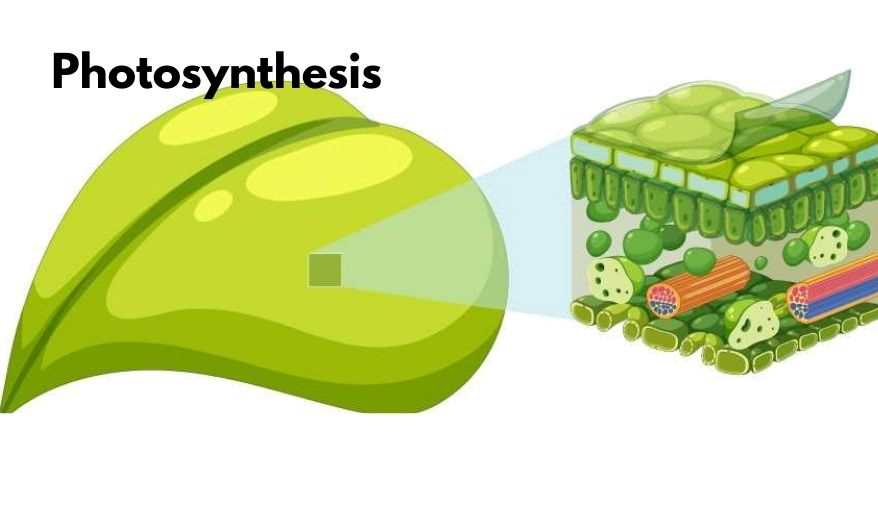
The research paper on photosynthesis to improve nitrogen efficiency showed that controlled‑release fertilizer (CRF) in sunflower fields improved leaf nitrogen allocation to photosynthetic tissues, enhancing photosynthetic nitrogen use efficiency, net photosynthesis, and stomatal conductance. This led to higher yield and nitrogen use efficiency compared with traditional fertilization, demonstrating a sustainable strategy for efficient nutrient management.
Wenhao Ren, Xianyue Li, Tingxi Liu, Ning Chen, Maoxin Xin, Qian Qi, Bin Liu. conducted the study and published it under the title “Controlled-release fertilizer affects leaf nitrogen allocation and photosynthesis to improve nitrogen use efficiency and yield in the sunflower field” in July 2025.
ENTECH STEM Magazine has included this research in its list of the Top 10 Botany Discoveries of 2025
Practical applications in day to day life
By applying controlled-release fertilizers (CRFs), farmers can enhance nitrogen use in sunflowers through photosynthesis to improve nitrogen efficiency. As a result, this approach leads to higher yields while supporting sustainable, productive everyday farming practices.
Home Gardening
Gardeners apply controlled-release fertilizers (CRFs) at planting, so that sunflowers receive a steady supply of nutrients over several months. Consequently, photosynthesis to improve, while simultaneously reducing the need for weekly fertilizing, conserving water, and promoting larger blooms with minimal nutrient waste.
Small Farms
Farmers incorporate controlled-release fertilizers (CRFs) into sunflower fields just once per season, thereby enhancing leaf health and photosynthesis, while simultaneously reducing nutrient runoff and pollution. As a result, seed harvests increase without extra labor, making the practice both efficient and environmentally sustainable.
Educational opportunity
Controlled-release fertilizer (CRF) studies in sunflowers offer students hands-on experience in agronomy and plant physiology, allowing them to explore how photosynthesis to improves nitrogen efficiency through field trials, while simultaneously conducting detailed laboratory analyses. In this way, theoretical knowledge is directly connected to practical agricultural applications.
Classroom Lessons
Courses teach CRF’s role in leaf nitrogen allocation and photosynthesis, allowing students to understand how nutrient management affects plant performance. During laboratory sessions, they measure gas exchange and nitrogen use efficiency (NUE), while simultaneously comparing CRF treatments with traditional fertilizers so as to evaluate their effects on plant growth and yield gains.
Practical Training
University programs run sunflower pot experiments with CRF coatings, demonstrating how photosynthesis improves nitrogen efficiency. Techniques include chlorophyll fluorescence and soil nutrient tracking, while simultaneously showing reductions in nutrient runoff and highlighting sustainable fertilizer practices.
Career opportunity
Career opportunities in controlled-release fertilizer (CRF) research for sunflowers span agronomy, materials science, and sustainable agriculture, focusing on how CRFs enhance photosynthesis and optimize crop productivity while promoting environmentally sustainable practices
Research Positions
Postdoctoral roles at universities like Mohammed VI Polytechnic focus on CRF coatings in order to enhance photosynthesis and improve nitrogen efficiency. In this context, tasks include conducting field trials, performing detailed photosynthesis analyses, and subsequently modeling yield responses to optimize sustainable sunflower production
Conclusion
This study demonstrates that controlled-release fertilizer (CRF) enhances photosynthesis to improve nitrogen efficiency and increases yield in sunflower fields. CRF directs more leaf nitrogen toward photosynthetic components such as chlorophyll and Rubisco during critical growth stages, boosting photosynthetic efficiency and maintaining higher rates of photosynthesis, stomatal conductance, and CO₂ assimilation compared with traditional fertilizers
Summary
CRF improved plant functions that boosted seed yield and biomass at 225 kg ha⁻¹. It raised nitrogen recovery. This matches nitrogen release to plant needs, enhancing photosynthesis to improve nitrogen efficiency and cutting environmental losses. CRF kept steady nitrogen supply late in growth, avoiding photosynthesis drops seen with traditional fertilizers for better nutrient use.
The study shows that controlled-release fertilizers (CRF) are a sustainable way to grow crops. CRF improves photosynthesis to enhance nitrogen efficiency and optimizes nitrogen allocation. This increases yield and reduces nitrogen leaching, protecting the environment. The results support using CRF in sunflowers and other crops. Future studies could combine CRF with precision irrigation or microbial inoculants to further improve photosynthesis, nitrogen efficiency, and crop resilience.
Additionally, to stay updated with the latest developments in STEM research, visit ENTECH Online. Basically, this is our digital magazine for science, technology, engineering, and mathematics. Also, at ENTECH Online, you’ll find a wealth of information.
Reference
Ren, W., Li, X., Liu, T., Chen, N., Xin, M., Qi, Q., & Liu, B. (2025). Controlled-release fertilizer affects leaf nitrogen allocation and photosynthesis to improve nitrogen use efficiency and yield in the sunflower field. Frontiers in Plant Science, 16, 1622766. https://doi.org/10.3389/fpls.2025.1622766
- Author
- Latest Posts

I completed my Master of Science from the University of Allahabad in 2017 with a strong academic background in life sciences and chemistry. My specialization included Molecular Biology, Microbiology, Genetics, Plant Breeding, Phycology, Paleobotany, and Bioinformatics, along with Organic Chemistry, Inorganic Chemistry, and Physical Chemistry. This multidisciplinary training provided me with a comprehensive understanding of biological systems and analytical scientific approaches.
After completing my postgraduate studies, I gained valuable professional experience in both the education and social development sectors. I worked at A.M. Oxford Public School, where I was actively involved in guiding students toward academic excellence. In this role, I focused on creating an engaging learning environment, encouraging critical thinking, and nurturing students’ curiosity for scientific learning. My experience as an educator strengthened my communication, mentoring, and classroom management skills.
In addition to my teaching experience, I worked with Jeevan Jagriti Foundation, where I contributed to community-based initiatives aimed at improving educational access and awareness among underprivileged sections of society. Through this work, I participated in programs designed to support social development and promote the value of education in marginalized communities.
These professional experiences helped me develop strong interpersonal, leadership, and organizational skills while reinforcing my commitment to education and community service.