From Genes to Fields: The Power of Plant Biotechnology
Plant Biotechnology: Transforming the Future of Agriculture
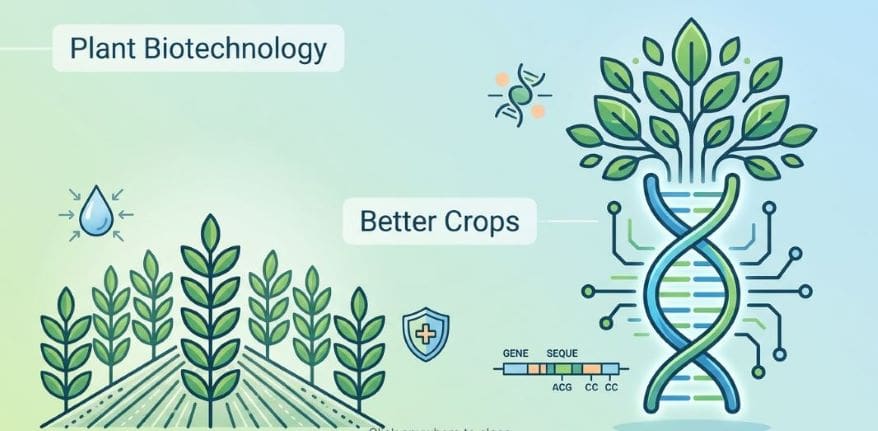
Plant biotechnology is changing how we grow and protect plants. It uses science to improve crops, increase food production, and help plants survive harsh conditions. Scientists can develop plants that resist pests, diseases, drought, and heat. This technology also helps farmers grow healthy crops while using fewer resources. As the world’s population grows, plant biotechnology offers new ways to meet food needs and support sustainable farming. From stronger crops to better nutrition, it is shaping the future of agriculture and helping create a more secure food supply for everyone.
Key Takeaways
- Plant biotechnology uses science to improve plants
- It helps crops grow better and produce more food.
- Scientists can make plants stronger against pests and diseases.
- Some plants can survive drought, heat, and poor soil.
- It can improve the nutrition found in crops.
- Farmers may use fewer chemicals and less water.
- Better crops can help increase food security.
- Plant biotechnology supports sustainable farming practices.
- New plant varieties can grow in changing climates.
- This field is helping shape the future of agriculture.
History and Development of Plant Biotechnology
Plant biotechnology has a long and important history. It has changed the way people grow crops and produce food. Today, it helps improve agriculture around the world.
In the beginning, farmers selected seeds from their best plants. As a result, crops became stronger and more productive. This simple practice was the first step in plant improvement.
Later, in the 1800s, scientists started to study heredity. At that time, Gregor Mendel discovered how traits pass from parents to offspring. Because of his work, scientists gained a better understanding of plant breeding.
Genetically Modified (GM) Crops
In Plant biotechnology, Genetically modified (GM) crops are plants whose DNA has been changed using modern biotechnology. These changes help plants gain useful traits. As a result, crops can grow better and produce higher yields.
In the beginning, farmers improved crops through selective breeding. However, this process often took many years. Later, scientists developed methods to change specific genes more quickly and accurately.
For example, some GM crops can resist harmful insects. As a result, farmers may need fewer insecticides. In addition, these crops can suffer less damage from pests
Genome Editing and CRISPR Technology
In plant biotechnology, Genome editing is a modern tool that helps scientists change DNA. It allows them to make precise changes in the genes of living organisms. As a result, researchers can improve plants, animals, and microorganisms more quickly than before.

In the past, changing traits often took many years of breeding. However, genome editing makes the process faster and more accurate. Therefore, scientists can focus on specific genes that control important traits.
One of the most powerful genome-editing tools is CRISPR. The name stands for Clustered Regularly Interspaced Short Palindromic Repeats. Although the full name is complex, the tool is simple to understand. It works like molecular scissors that can cut DNA at a chosen location.
Marker-Assisted Selection (MAS)
In plant biotechnology, Marker-Assisted Selection, or MAS, is a modern plant breeding method. It helps scientists choose plants with useful traits. As a result, new crop varieties can be developed more quickly and accurately.
In traditional breeding, farmers and scientists select plants based on visible traits. For example, they may choose plants that grow well or resist disease. However, some useful traits are difficult to see. Therefore, breeding can take a long time.
MAS solves this problem by using genetic markers. These markers are small pieces of DNA linked to specific traits. As a result, scientists can identify desirable plants at an early stage.
Synthetic Biology in Plants
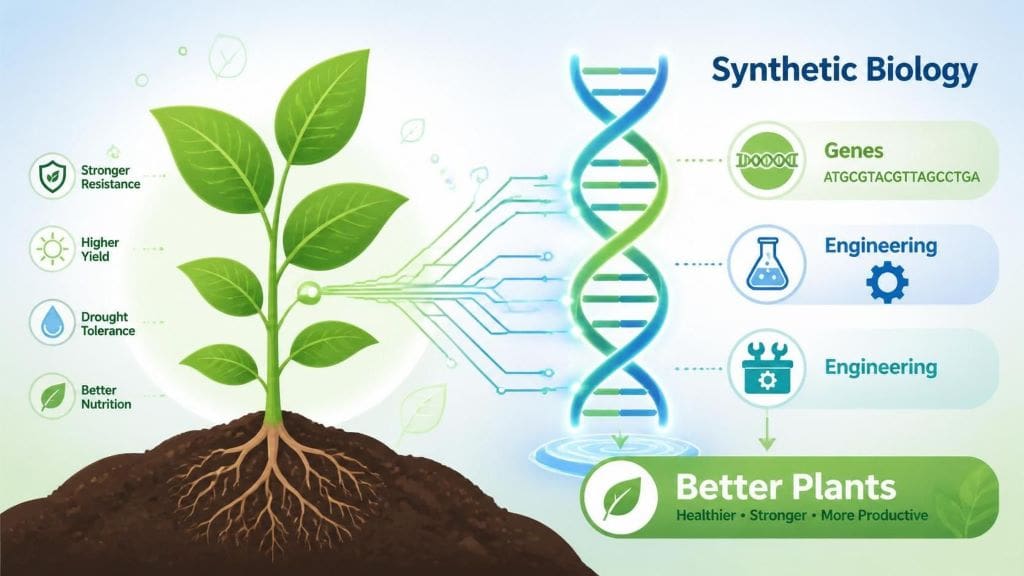
Synthetic biology is a new way to improve plants. It combines biology, genetics, and engineering. Scientists use it to build plants with useful traits.
In the past, people improved plants through breeding. This process took many years. Today, synthetic biology makes plant improvement faster and more precise. It helps scientists make changes with greater accuracy.
Scientists first study how plant genes work. They then find the genes that control important traits. Next, they change these genes or add new genetic parts. These changes help plants grow better and perform useful tasks. As a result, synthetic biology helps create stronger, healthier, and more productive plants.
Plant Proteomics and Metabolomics
Plant proteomics is the study of all the proteins in a plant. These proteins control many important jobs, such as growth, development, and defense against diseases. By studying proteins, scientists can better understand how plants work and respond to their environment.
Plant metabolomics is the study of the small molecules, called metabolites, that plants produce. These molecules help plants grow, store energy, fight pests, and survive stress. They also affect the taste, color, aroma, and nutritional value of crops.
Scientists use proteomics and metabolomics together to learn how plants grow and respond to drought, heat, diseases, and other stresses. This knowledge helps them develop healthier, stronger, and more productive crops. As a result, these tools support better farming, improve food quality, and promote sustainable agriculture.
Development of Disease-Resistant Crops
Disease-resistant crops can protect themselves from harmful diseases. They help farmers grow healthy plants and save more of their harvest. As a result, food production becomes more stable.
In the past, plant diseases destroyed many crops. Farmers often lost a large part of their harvest. This reduced crop yields and food supplies.
Scientists developed disease-resistant crops to solve this problem. They first found plants with natural disease resistance. They then used plant breeding to pass these helpful traits to new crop varieties. This produced stronger plants that could resist disease and grow better.
Drought and Heat Stress Tolerance
Drought and heat can harm plants. They slow plant growth and reduce crop yields. In very dry or hot weather, crops may fail. For this reason, scientists work to develop plants that can survive these harsh conditions.
Drought happens when plants do not get enough water. Heat stress happens when temperatures become too high. These conditions make it hard for plants to grow, flower, and produce food.
In the past, farmers selected naturally hardy plants for breeding. This took many years. Today, biotechnology helps scientists develop drought- and heat-tolerant crops faster and with greater accuracy. These crops can grow better under harsh conditions and help produce more food.
Salt-Tolerant Crop Development
Salt in the soil makes it difficult for many crops to grow. It slows growth and reduces crop yields. Too much salt can even stop plants from growing well.
Scientists develop salt-tolerant crops to solve this problem. They use plant breeding, gene editing, and biotechnology. They also study wild plants that grow well in salty soil. These plants help scientists find useful genes for salt tolerance.
Farmers can grow salt-tolerant crops on salty land where other crops may fail. This helps increase food production and makes better use of poor-quality land. These crops also improve food security and support farming in areas with high soil salinity. As soil becomes saltier because of climate change and poor irrigation, salt-tolerant crops will play an even bigger role in future agriculture.
Germplasm Preservation and Cryopreservation
Germplasm preservation means protecting the genetic material of plants. This material includes seeds, pollen, plant tissues, and other plant parts. These materials contain useful genes that scientists may need in the future.
Many plants face threats from diseases, pests, climate change, and habitat loss. These threats can reduce plant diversity. Some valuable plant varieties may even disappear. Germplasm preservation helps protect these important genetic resources.
Scientists collect plant materials from many places. They then store them in special facilities called gene banks. These collections keep valuable genes safe for future research and plant breeding. Germplasm preservation helps scientists develop better crops, protect biodiversity, and support food security for future generations..
Plant Biotechnology for Sustainable Agriculture
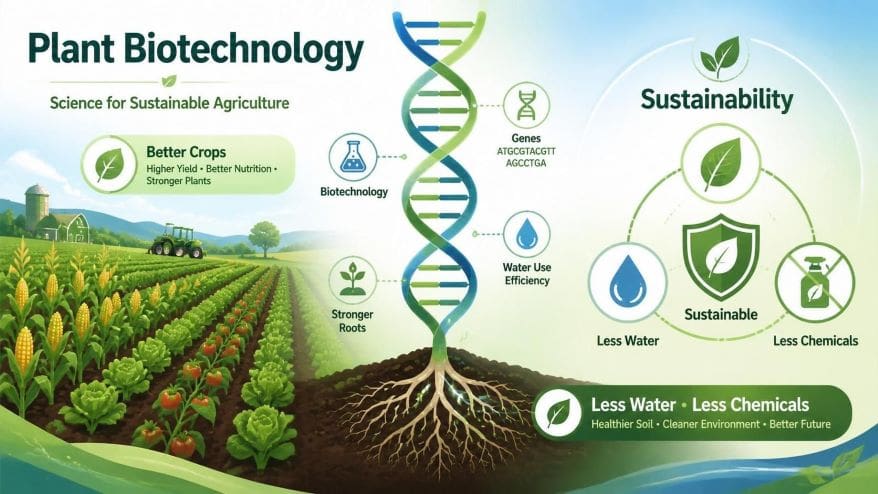
Plant biotechnology uses modern science to improve crops. It combines genetics, biology, and plant breeding to develop better plants. These improved crops help farmers grow more food with fewer resources.
Sustainable agriculture means growing enough food while protecting the environment. It also means using soil, water, and other natural resources wisely. This helps keep farms productive for future generations.
In the past, farmers often used large amounts of water, fertilizers, and pesticides to increase crop yields. These methods could harm soil, water, and wildlife. Today, plant biotechnology offers better solutions. It helps develop crops that use water more efficiently, resist pests and diseases, and grow well under difficult conditions. As a result, farmers can produce healthy crops while reducing harm to the environment..
Biotic and Abiotic Stress Management
Plants face many problems as they grow. These problems are called stresses. They can weaken plants and reduce crop yields. Good stress management helps farmers grow healthy crops.
There are two main types of plant stress. The first is biotic stress, which comes from living organisms such as insects, fungi, bacteria, viruses, and weeds. The second is abiotic stress, which comes from non-living factors such as drought, heat, cold, salty soil, and floods.
Biotic stress can damage plants and spread diseases. This can slow plant growth and reduce food production. Scientists develop disease- and pest-resistant crop varieties to solve this problem. These crops can better protect themselves from harmful organisms and produce higher yields.
Biotechnology in Horticultural Crops
Biotechnology helps improve horticultural crops such as fruits, vegetables, flowers, and ornamental plants. It helps scientists develop healthier, stronger, and more productive plants.
Scientists use methods such as tissue culture, genetic engineering, and gene editing to improve plant traits. These methods help increase crop yields, improve quality, and protect plants from pests and diseases. They also help plants grow better during drought, high temperatures, and salty soil conditions.
Biotechnology can improve the taste, color, nutrition, and shelf life of horticultural crops. It also helps farmers produce healthy plants more quickly and with fewer losses. As a result, biotechnology supports sustainable farming, increases food production, and provides safe, high-quality fruits, vegetables, and flowers for people around the world.
Agricultural Applications of Plant Biotechnology
Plant biotechnology helps improve modern agriculture. It uses science to develop better crops and improve farming methods. This helps farmers grow more food with fewer resources.
In the past, people improved crops through traditional plant breeding. This process often took many years. Today, biotechnology helps scientists improve plants faster and with greater accuracy. As a result, new crop varieties can be developed in less time.
One important use of biotechnology is crop improvement. Scientists develop plants that can resist pests and diseases. These crops stay healthier, reduce crop losses, and produce higher yields.
Biotechnology also helps develop crops that can survive drought, heat, cold, and salty soil. These crops grow better under harsh conditions and provide more reliable harvests. This is becoming more important as climate change creates new challenges for agriculture.
Future Trends and Challenges in Plant Biotechnology
Plant biotechnology is advancing rapidly. New tools and discoveries are creating exciting opportunities for agriculture. As a result, scientists can develop better crops and improve food production.
In the future, genome editing is expected to play a larger role. For example, tools such as CRISPR can make precise changes to plant DNA. Therefore, researchers can develop crops with useful traits more quickly than before.
In addition, advances in genomics and artificial intelligence are helping scientists understand plants in greater detail. As a result, crop improvement programs can become faster and more efficient.
Meanwhile, researchers are working on crops that can tolerate drought, heat, floods, and soil salinity. Therefore, agriculture may become more resilient to climate change. This is important because extreme weather events are becoming more common.
Another growing trend is biofortification. In this approach, scientists increase the levels of vitamins and minerals in crops. As a result, food can become more nutritious and help improve public health.
Furthermore, synthetic biology is opening new possibilities. Scientists can design plants with specific functions, such as producing medicines, biofuels, or valuable industrial products
Conclusion
Plant biotechnology offers new ways to support sustainable agriculture. A study on Colletotrichum tofieldiae and komatsuna showed that helpful microbes can improve plant growth and nutrient uptake.
The beneficial fungus helped plants absorb more phosphorus. It also increased plant growth and supported useful microbes around the roots. As a result, the plants grew better in both low-phosphorus and high-phosphorus soils.
This research shows that beneficial microbes can reduce the need for chemical fertilizers and improve crop production. These natural methods can help farmers grow healthy crops while protecting the environment. They also support the development of safe, innovative, and eco-friendly solutions for future agriculture.
Frequently Asked Questions
What is plant biotechnology?
Plant biotechnology uses science to improve plants. It helps scientists develop crops that produce more food and better nutrition. It also helps plants resist pests, diseases, drought, heat, and other environmental stresses. As a result, farmers can grow healthier, stronger, and more productive crops.
Why is plant biotechnology important?
Plant biotechnology helps farmers grow more food and improve crop quality. It helps develop crops that need less water, fewer pesticides, and fewer fertilizers. As a result, farming becomes more efficient, protects the environment, and supports sustainable agriculture..
How does CRISPR help in plant biotechnology?
CRISPR is a tool that helps scientists change plant DNA with great accuracy. It lets them make precise changes to specific genes. This helps scientists develop better crop varieties faster. These improved crops can produce more food, resist diseases, and grow better under difficult conditions..
Reference
Sarkodee-Addo, E., Tsujimoto, Y., Oo, A. Z., Nishigaki, T., Hiruma, K., & Sarr, P. S. (2025). Colletotrichum tofieldiae enhances phosphorus uptake and biomass production and alters the microbial interactions in the rhizosphere of Komatsuna (Brassica rapa var. perviridis) grown in phosphorus-deficient farm soils. Plant Biotechnology, 42(3), 371–382. https://doi.org/10.5511/plantbiotechnology.25.0529a
- Author
- Latest Posts

I completed my Master of Science from the University of Allahabad in 2017 with a strong academic background in life sciences and chemistry. My specialization included Molecular Biology, Microbiology, Genetics, Plant Breeding, Phycology, Paleobotany, and Bioinformatics, along with Organic Chemistry, Inorganic Chemistry, and Physical Chemistry. This multidisciplinary training provided me with a comprehensive understanding of biological systems and analytical scientific approaches.
After completing my postgraduate studies, I gained valuable professional experience in both the education and social development sectors. I worked at A.M. Oxford Public School, where I was actively involved in guiding students toward academic excellence. In this role, I focused on creating an engaging learning environment, encouraging critical thinking, and nurturing students’ curiosity for scientific learning. My experience as an educator strengthened my communication, mentoring, and classroom management skills.
In addition to my teaching experience, I worked with Jeevan Jagriti Foundation, where I contributed to community-based initiatives aimed at improving educational access and awareness among underprivileged sections of society. Through this work, I participated in programs designed to support social development and promote the value of education in marginalized communities.
These professional experiences helped me develop strong interpersonal, leadership, and organizational skills while reinforcing my commitment to education and community service.