Explore quantum computing explained. Learn how this revolutionary technology reshapes computations beyond traditional limits.
Quantum Computing Explained: A Complete Guide for Beginners
Estimated reading time: 10 minutes
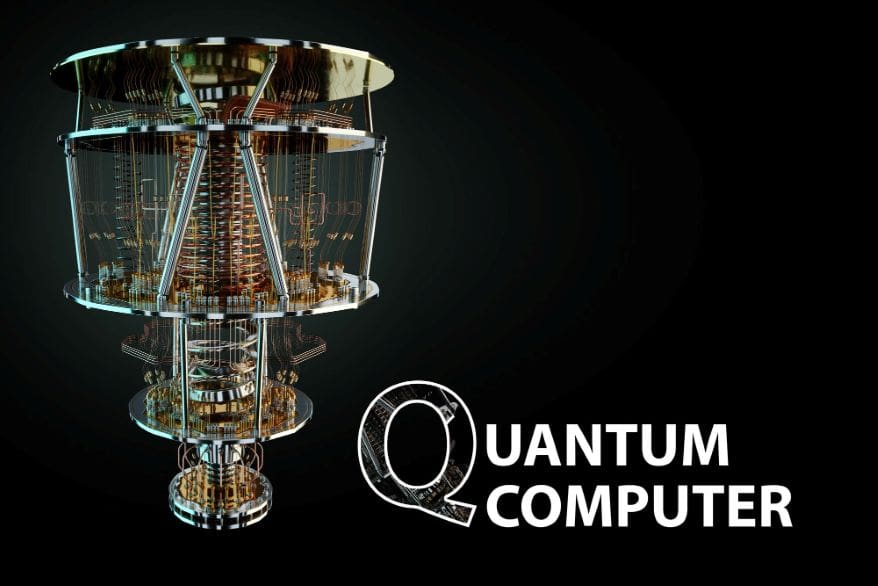
The world of computations stands at the edge of a massive shift, called Quantum Computing. For decades, we relied on silicon chips and binary code. This new technology is emerging by combining physics, mathematics and computer science in remarkable ways. Quantum Computers process information in fundamentally different way from the traditional computers. So, understanding quantum computing is essential for anyone interested in modern tech. This comprehensive guide will help you grasp the core concepts of quantum computing.
Quantum Computing Explained: Key Takeaways
- Quantum computing involves qubits, which can exist in multiple states due to superposition, offering speed advantages over traditional computing.
- Three pillars of quantum computing include superposition, entanglement, and interference, which enhance data processing capabilities.
- Practical applications of quantum computing range from drug discovery and financial modeling to machine learning and cybersecurity.
- Challenges include decoherence, temperature control, high costs, and complex error correction, limiting widespread use.
- Career opportunities in quantum technology grow, including roles like quantum software engineers, hardware researchers, and quantum algorithm designers.
What is Quantum Computing?
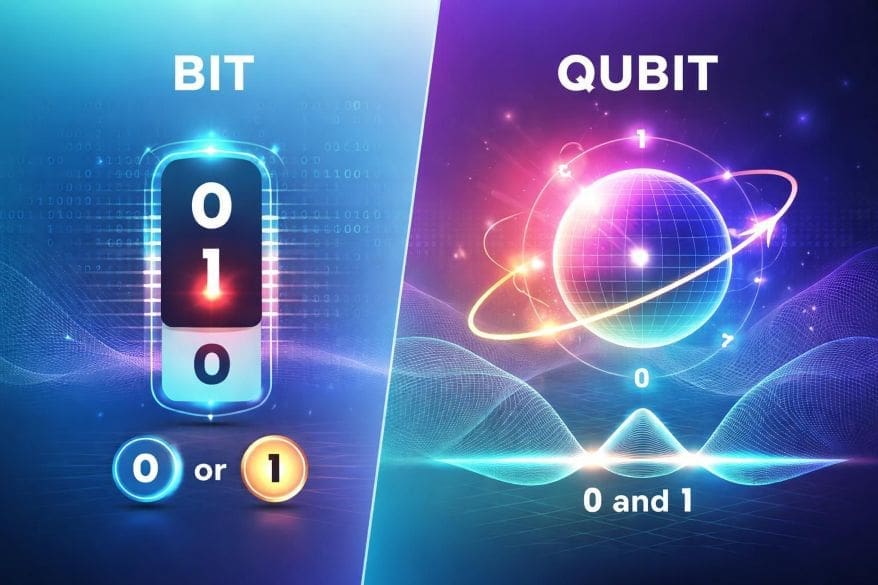
To explain quantum computing, we must look at how standard computers work. Your phone uses bits to process data. These bits are either a 0 or a 1. In light of this, think of a bit like a light switch. It is either on or off.
Quantum computing changes this basic rule. Instead of bits, these machines use qubits. A qubit can exist in multiple states at once due to a phenomenon called Superposition. To illustrate, imagine a spinning coin. While it spins, it is both heads and tails at the same time.
Three Main Pillars of Quantum Computing
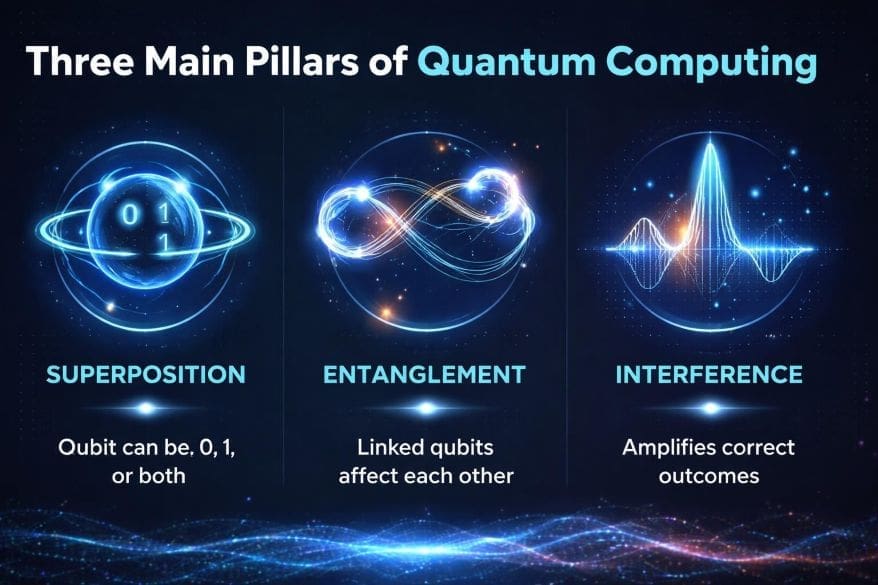
Quantum Computing basically rests on three main pillars:
Power of Superposition
First, we have superposition. This allows qubits to exist in multiple states at once. Superposition allows a quantum computer to hold vast amounts of data. A standard computer checks one path at a time. By comparison, a quantum system looks at all paths at once. This makes the quantum computing here much faster for specific tasks.
Magic of Entanglement
Another key point is entanglement. This links two qubits regardless of the distance between them. If you change one, the other changes instantly. When qubits become entangled, they form interconnected systems. The state of one qubit directly influences another. This creates powerful computational relationships. In light of this, quantum computers can solve certain problems exponentially faster. In other words, qubits work as a unified team.
Albert Einstein referred quantum entanglement as “spooky action at a distance”.
Interference
Interference represents the third pillar of quantum computing. In light of this, quantum algorithms amplify paths leading to correct answers. Simultaneously, they suppress paths leading to incorrect answers. This refinement increases probability toward useful solutions. After all, this is how quantum computers extract meaningful results.
Also Read: Scientists Achieve Long-Distance Quantum Memory Entanglement
Introduction to Quantum Computing Mechanics
Prior to diving deeper, let’s clarify what makes quantum mechanics so different. Classical physics describes our everyday world predictably. But quantum mechanics governs atomic and subatomic behavior differently. At the quantum level, particles behave probabilistically. They don’t have definite properties until measured. This strange behavior seemed purely theoretical for decades, but today, engineers harness these principles for computation.
We must also understand the hardware to see the full picture. These machines do not look like your laptop. Most quantum computers require extreme cold conditions to function. They often sit inside large cooling units, at times even colder than outer space.
Temperature: Why Cold Matters for Quantum Computing?
Heat creates noise for qubits. Even a tiny bit of heat can cause errors. So to prevent that, we use liquid helium to cool the processors. While this may be true, researchers are trying to build systems that can function at normal room temperatures, but so far the cold environments yield best results.
Quantum Gates
As we know, standard computers use logic gates like AND or OR. Similarly, quantum systems use quantum gates. These gates change the probability of a qubit state. As a result, the computer finds the answer by looking at interference patterns.
Also Read: Google Willow Chip Runs Quantum Echoes Algorithm Faster
Examples of Quantum Computing in the Real World
You might ask how this technology helps us today. While we are in the early stages, use cases are growing. Here are a few:
Drug Discovery
Creating new medicine takes years. Scientists must simulate how molecules behave. For the most part, today’s computers are too slow for this, which is where quantum computers come in. Quantum computing can model such molecular interactions with ease, speed up the research and help in faster, better drug discovery.
Financial Modeling
Banks often use complex math to predict markets. With this in mind, quantum algorithms could analyze thousands of scenarios instantly. This helps in reducing risk as well as maximizing returns more effectively.
Machine Learning
Machine learning applications also benefit from quantum computing. Quantum algorithms could train neural networks faster. For the most part, they could recognize patterns in massive datasets more efficiently.
Cyber Security
Quantum computers could break many current encryption methods. Concurrently, they enable quantum encryption, which is theoretically unbreakable. This dual nature makes quantum computing both threat and solution in security domain.
Logistics and Supply Chains
Shipping goods involves many variables. You must consider fuel, time, and weather. As quantum systems excel at optimization problems, they help in finding the best route among millions of options.
Future Scope of the Quantum Computing
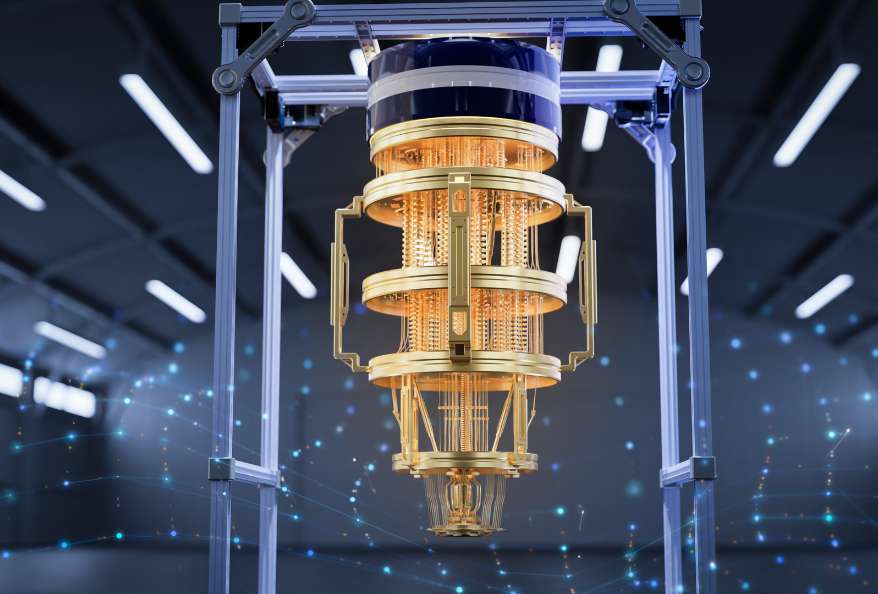
The future scope of this field is wide. We are moving toward the Quantum Advantage. This is the point where a quantum machine beats any standard supercomputer. Currently we are in early stages of quantum computing. The technology is still nascent but rapidly evolving. Experts anticipate widespread quantum computer deployment within next 10-20 years.
In the near term, quantum computers will tackle specific problems. Organizations may adopt hybrid systems combining classical and quantum processors. Classical computers handle daily routine tasks, while quantum computers will look after hard optimization and simulation problems. And as technology matures, we can expect to see major breakthroughs and innovation applications.
“Quantum computing is not just about doing things faster. It is about doing things that were previously impossible.”
Also Read: Microsoft Quantum Computer: Majorana 1
Current Challenges in Quantum Computing
While the potential is high, we face many hurdles. Building these machines is not easy.
Decoherence
Qubits are very fragile. Any vibration or change in temperature breaks their state. This is called decoherence. With this intention, engineers work to build better shielding. All things considered, keeping qubits stable is the biggest goal.
Temperature Control
Most quantum computers operate near absolute zero, around -273 degrees Celsius. Maintaining such extreme conditions requires sophisticated cooling systems. These systems are expensive and energy-intensive. For the most part, cooling costs represent a major barrier to quantum computing accessibility.
Error Correction
Because qubits are unstable, errors happen often. Standard computers have simple ways to fix bits. In contrast, quantum error correction is very complex. You need many “physical” qubits to make one “logical” qubit. At length, this increases the cost of the hardware.
High Costs
Building a quantum lab costs millions of dollars. The materials are rare. The energy needed for cooling is high. Provided that costs stay high, only large firms can use them. However, cloud-based quantum computing is making it more accessible.
Career Opportunities in Quantum Computing
As the field grows, the need for talent rises. This is an excellent time for a beginner to start learning. There are many paths you can take.
Quantum Software Engineer
These experts write the code for quantum machines. They use languages like Qiskit or Cirq. Prior to this, they usually study computer science or physics. You do not need a PhD to start, but it helps.
Hardware Researcher
If you like building things, this is for you. Hardware researchers design the superconducting circuits. They work with lasers and cooling systems. At this instant, hardware innovation is the main bottleneck.
Quantum Algorithm Designer
These people create the math that solves problems. They look for ways to apply quantum logic to business needs. To sum up, they find the “why” behind the “how.”
Data Scientists
Data scientists can transition into quantum machine learning roles. This emerging field combines quantum computing with artificial intelligence. In short, demand for quantum machine learning specialists will surge.
Getting Started with Quantum Computing
If you’re interested in pursuing quantum computing, several resources exist. To begin, learn fundamental physics and mathematics. Linear algebra, complex numbers, and probability theory form essential foundations. After that, explore quantum mechanics at an introductory level.
- Learn Python: This is the main language for quantum programming.
- Study Linear Algebra: This math is the foundation of quantum states.
- Use Cloud Platforms: IBM and Google offer free access to real quantum processors.
- Join Communities: Look for forums where experts share their work.
Learning resources:
IBM’s Qiskit represents an excellent learning platform. This free, open-source framework lets you write quantum programs. By comparison, Google’s Cirq offers another solid option. Microsoft provides Q# as their quantum programming language. All three platforms offer tutorials and community support.
Quantum Computing Explained: Conclusion
All in all, we are at the start of a new era. While it may be true that we have many bugs to fix, the progress is steady. Quantum computing explained in this article shows a world of endless potential. We will see breakthroughs in energy, medicine, and physics.
Sooner or later, these machines will become a part of our tech stack. They will work alongside our current computers in hybrid manner. For the purpose of solving the world’s hardest problems, we need both.
Summary of key Concepts:
| Concept | Description |
| Qubit | The basic unit of quantum information. |
| Superposition | The ability to be in multiple states at once. |
| Entanglement | A link between particles over any distance. |
| Decoherence | The loss of a quantum state due to noise. |
In conclusion, stay curious about this domain. The shift from classical to quantum is a rare event. It happens once in a lifetime.
Future belongs to those who understand the qubits.
Additionally, to stay updated with the latest developments in STEM research, visit ENTECH Online. Basically, this is our digital magazine for science, technology, engineering, and mathematics. Further, at ENTECH Online, you’ll find a wealth of information.
FAQs
1. What is quantum computing?
Quantity computing is a type of computing that uses principles of mechanics to perform operations on data. Quantum computers do not use binary bits like classical computers. Instead, they use bits, or qubits. Qubits can exist in multiple states at the same time.
2. How does a quantum computer differ from a classical computer?
Quantum computers leverage quantum mechanics to process information differently than classical computers. In contrast, classical computers use bits that are either 0 or 1. Meanwhile, quantum computers use qubits. Specifically, qubits can be in a state of 0, 1, or both at the same time. This is possible because of superposition and entanglement.
3. What are some practical applications?
Quantity computing could transform many fields. These include cybersecurity, drug discovery, optimization challenges, weather prediction, and artificial intelligence. Quantum computers may offer significant speedups for solving complex problems that are intractable for classical computers.
4. What is quantum supremacy?
Quantum supremacy refers to the milestone where a quantum computer can outperform the best classical computer in certain tasks. Achieving quantum supremacy demonstrates the potential of quantum computers to solve problems that are beyond the capabilities of classical computers.
5. What is quantum entanglement?
Quantum entanglement is a phenomenon involving qubits. These qubits are linked or correlated. The state of one qubit depends on the state of another. This dependency exists even if the qubits are physically apart. This property is fundamental and enables faster computations.
6. How do quantum computers make use of quantum interference?
Quantum interference happens when the probability amplitudes of different quantum states mix. This can result in either constructive or destructive interference. Quantum computers exploit interference to perform calculations and achieve computational advantage over classical computers.
References:
- Sahoo, S., Mandal, A. K., Samanta, P. K., Basu, I., & Roy, P. (2020). A critical overview on Quantum Computing. Journal of Quantum Computing, 2(4), 181–192. https://doi.org/10.32604/jqc.2020.015688
- Lund, B. D., & Shahriar, S. (2025). Quantum Computing: A concise Introduction. Encyclopedia, 5(4), 173. https://doi.org/10.3390/encyclopedia5040173
- Author
- Latest Posts

Deven Nandapurkar is a Software Engineer, Project Lead; working at the strategic intersection of software engineering, productivity science, and emerging technologies. Driven by a core philosophy of “building things worth building,” he leads cross-functional teams and drives end-to-end technical strategy—from early-stage conceptualization through production-grade deployment.
A Computer Engineering graduate from Pune University, Deven brings a sharp systems-thinking approach to technical leadership, honed by years of managing high-stakes engineering projects and leading teams to top placements in national and international hackathons, including the NASA Space Apps Challenge and the Peerlist GenAI Hackathon.
Deven explores how human cognition and emerging technology converge. He regularly writes about cognitive performance optimization, attention management, AI integration, and the evolving dynamics of the modern workforce – offering actionable frameworks for professionals seeking to maximize their productivity and thrive alongside intelligent systems.




Great article! Excited to see how this technology develops.
Thanks for your comment, keep visiting entechonline.com for more articles related to your interests.