Scientists connect prebiotic chemistry to biology via rare earth elements (REEs). These metals may spark life's origin.
Rare Earth Elements: Key Catalysts in Origin of Life Research
Estimated reading time: 4 minutes
Scientists continuously seek to connect prebiotic chemistry on early Earth with modern biology. One fascinating area is the role of rare earth elements (REEs) in prebiotic chemical reactions. These metals, often overlooked, might be crucial in life’s origin.
Introduction to the Role of Rare Earth Elements in Early Earth Chemistry
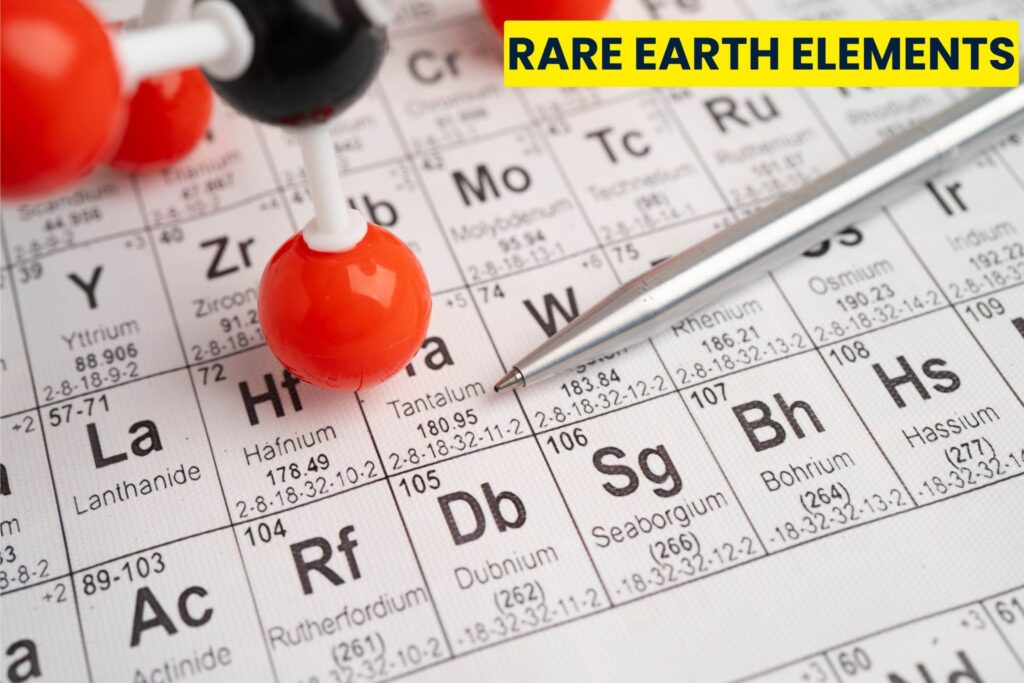
The Origin of Life (OoL) research aims to connect prebiotic chemical reactions with modern biochemistry. Surprisingly, one group of elements has seen limited study in this field: the rare earth elements (REEs). These include lanthanides, scandium, and yttrium. Contrary to their name, REEs are common in Earth’s crust today. For example, lanthanum (La) is present at about 39 parts per million (ppm), nearly the same as copper and zinc.
Understanding Rare Earth Elements and Their Importance
Rare earth elements include lanthanides, scandium, and yttrium. Despite their name, REEs occur abundantly, with levels comparable to copper and zinc. They play a significant role in modern biological systems. Certain bacteria use lanthanides in vital enzymes for carbon metabolism.
“The presence of rare earth metals suggests they played a crucial role since life’s earliest stages,” says Dr. Keltjens, a leading researcher in this field.
Why Are REEs Important for Origin of Life Studies?
REEs possess unique chemical properties that affect reaction rates and product formation. They act as strong Lewis acid catalysts, facilitating essential prebiotic reactions. Additionally, their presence in ancient rocks hints at their involvement during Earth’s formative times.
Linking Reaction Networks to Early Biochemistry
The Krebs cycle lies at the heart of cellular metabolism today. Scientists replicate parts of it using simple chemicals like pyruvate and glyoxylate under lab conditions mimicking early Earth environments, such as hydrothermal vents.
This approach provides insight into how life’s building blocks might form naturally without enzymes or organisms present.
A recent study tested several REE chloride salts against ferrous iron chloride in reactions involving glyoxylate and pyruvate at 70°C under nitrogen atmosphere. The focus was comparing product formation efficiency and variety between REEs and Fe2+ ions.
Main Findings on Reaction Products
- The study found that most REEs formed significant precipitates during reactions, except scandium (Sc3+).
- The pH dropped significantly when using REEs but rose with Fe2+ or no metals added.
- The products were quite similar across both REE- and Fe2+-mediated reactions but differed in proportions.
- Lactate production mainly occurred with Fe2+, while glycolate increased with larger rare earth ions like La3+.
- The smaller ionic radius REEs favored multi-step pathway products like α-ketoglutarate and isocitrate—key metabolic intermediates.
This suggests the size and charge density of rare earth ions influence reaction pathways and product yields significantly.
The Impact of Ionic Radii on Reaction Outcomes
Reactivity among REEs correlates strongly with ionic radius. Smaller ions tend to favor complex products such as α-ketoglutarate and isocitrate more than larger ones like lanthanum (La3+). This pattern suggests that size influences coordination chemistry during catalysis.
Comparisons Between Iron and Rare Earth Element Catalysis
Ionic radii aside, one key difference involves reduction reactions; iron promotes lactate formation from pyruvate more efficiently than REEs do. In contrast, larger REE ions produce higher amounts of glycolate by reducing glyoxylate.
This highlights how subtle changes in metal properties steer the prebiotic reaction network’s direction.
The Broader Implications for Origin of Life Research
This research broadens our understanding by highlighting an underexplored area involving rare earth metals. Since biological systems already use lanthanides for enzymatic functions today, their inclusion strengthens models explaining life’s earliest chemistry stages.
“The likely existence of many more Ln-dependent enzymes hints toward an essential role of rare earth metals from life’s inception.”
Additionally, to stay updated with the latest developments in STEM research, visit ENTECH Online. Basically, this is our digital magazine for science, technology, engineering, and mathematics. Also, at ENTECH Online, you’ll find a wealth of information.
Reference
- Gutenthaler‐Tietze, J., Heßler, C. G., & Daumann, L. J. (2025). Influence of rare earth elements on prebiotic reaction networks resembling the biologically relevant krebs cycle. Angewandte Chemie International Edition, e16853. https://doi.org/10.1002/anie.202516853
- Medeiros, F. F. d., Wentz, A. P., Castro, B. A. S., Rodrigues, F. D., Alves, S. S., Korn, M. d. G. A., Bettini, J., Anjos, J. P. d., & Guarieiro, L. L. N. (2025). Rare Earth Elements: A Review of Primary Sources, Applications, Business Investment, and Characterization Techniques. Applied Sciences, 15(20), 10949. https://doi.org/10.3390/app152010949
- Author
- Latest Posts

Ashwini Kshirsagar holds a graduate degree in Chemistry and a postgraduate degree in Environmental Science from Shivaji University, Kolhapur. With a strong foundation in scientific principles and a creative flair, she blends her expertise in environmental science with skills in technical writing, graphic design, and video editing. Proficient in Adobe software, Ashwini excels at transforming complex scientific concepts into clear, engaging, and visually compelling content. Her unique ability to merge science and storytelling allows her to create impactful communication materials that are both informative and accessible to a wide audience.