Smart lens technology is reshaping the future of vision by enabling optical systems that respond instantly to eye movements. Scientists have developed advanced smart lens solutions that can automatically change focus, closely mimicking the behavior…
Smart Lens Technology: Eye-Controlled Vision for the Future
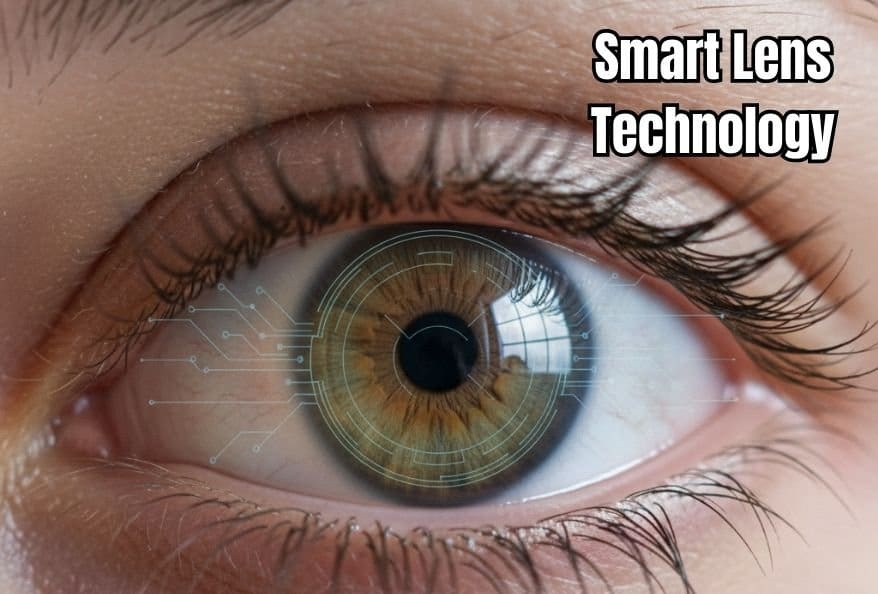
Smart lens technology is reshaping the future of vision by enabling optical systems that respond instantly to eye movements. Scientists have developed advanced smart lens solutions that can automatically change focus, closely mimicking the behavior of the human eye. This breakthrough relies on dielectric elastomers – special materials that act like artificial muscles. As a result, this emerging vision technology could revolutionize medical devices, augmented reality, and next-generation visual systems while opening new pathways in engineering and innovation.
The Science Behind Smart Vision
At the core of this innovation are dielectric elastomer actuators. These materials change shape when electricity flows through them, allowing eye-controlled lens systems to adjust focus dynamically. As can be seen, dielectric elastomers behave like artificial muscles that power adaptive optical solutions.
Previously, building responsive intelligent lens systems was extremely challenging. However, researchers separated the actuators from the optical lens itself. This design improvement resulted in clearer images, faster response times, and more reliable smart vision systems. Consequently, this advancement is now considered a major breakthrough in modern optical engineering.
Real-World Applications
The most immediate impact of smart lens technology is in medical devices. These adaptive lens systems could help people with vision impairments, age-related focusing issues, or neurological disorders. Assistive technologies powered by intelligent optical solutions may benefit millions of users worldwide.
Beyond healthcare, this technology shows enormous promise in entertainment and digital interaction. Augmented reality systems using eye-controlled lenses could allow users to control digital content simply by looking at it. Similarly, virtual reality experiences would feel more natural and immersive. Education, gaming, and simulation technologies stand to be completely transformed by advanced lens systems.
Career Opportunities in Smart Vision Systems
Engineering Pathways in Smart Lens Development
The growth of smart lens technology has created strong demand for skilled engineers. Mechanical engineers design adaptive lens structures, while electrical engineers develop control circuits and sensor systems. Materials scientists focus on improving dielectric elastomers for smarter, more durable optical devices.
Biomedical engineering brings these disciplines together by applying intelligent lens solutions to healthcare applications. Currently, demand for professionals in smart vision systems exceeds supply, making this an attractive career choice for STEM students.
Computer Science and Data Analysis in Smart Lenses Technology
Modern optical technologies depend heavily on software and data intelligence. Machine learning algorithms enable accurate eye tracking and focus prediction. Data scientists analyze user behavior patterns to improve system responsiveness, while software engineers build the real-time control systems behind intelligent lenses.
Artificial intelligence further enhances adaptive vision systems by predicting user intent and adjusting visual output automatically. Students interested in this field should focus on programming languages, algorithm design, and AI-driven applications in optical engineering.
The Technology Behind Adaptive Lenses
How Dielectric Elastomers Work
Dielectric elastomers act like soft robotic components within adaptive lens systems. When voltage is applied, these materials stretch and contract with extreme precision, mimicking the natural focusing muscles of the human eye. Their response time—measured in milliseconds—makes real-time focus adjustment possible.
Interactive imaging control systems coordinate all components, ensuring smooth and natural vision correction.
Data-Driven Control Systems
Sensors embedded in intelligent lens platforms continuously monitor eye position and movement patterns. Advanced algorithms process this data and send precise commands to the actuators. Over time, these systems learn individual viewing habits, becoming more accurate, personalized, and responsive.
The Future of Smart Vision Technology
The evolution of smart lens technology is just beginning. In the near future, smart contact lens devices may continuously monitor eye health and vital signs. Advanced robotic eyes powered by intelligent optical systems could even restore vision to the blind.
In conclusion, this research demonstrates how interdisciplinary innovation drives breakthroughs. Materials science, data science, robotics, and engineering work together to solve complex problems. As modern challenges grow more sophisticated, adaptive vision technologies will shape both industries and careers.
Additionally, to stay updated with the latest developments in STEM research, visit ENTECH Online. Basically, this is our digital magazine for science, technology, engineering, and mathematics. Further, at ENTECH Online, you’ll find a wealth of information.
Reference:
- Zhang, H., Xia, Z., Zhang, Z., & Zhu, J. (2026). Data-driven interactive lens control system based on dielectric elastomer. Technologies, 14(1), 68. https://doi.org/10.3390/technologies14010068
- Author
- Latest Posts

Kottauppari Venkat Raghava
I am an Information Technology graduate (B.Tech) and a technology writer specialising in artificial intelligence, robotics, automation, and space technologies. I analyse complex scientific research and convert it into clear, practical insights for students, tech enthusiasts, and professionals. My work bridges the gap between academic research and real-world understanding by simplifying findings from peer-reviewed journals into engaging, easy-to-follow content. Alongside my writing, I have hands-on experience developing real-world projects, showcased on my GitHub, including an Expense Tracker web application for managing and visualising spending, and a Simple Video Summariser that generates concise insights from video content using automation techniques. I also produce research-driven articles on topics such as AI-powered corrosion detection, deep learning in engineering, and advanced automation systems. I follow a research-driven approach, ensuring every article is grounded in verified sources, industry knowledge, and practical applications. My goal is to make advanced technology accessible and meaningful, helping readers stay informed about innovations shaping the future.