Scientists built a synthetic cell with a 90,000-letter genome.
Meet the World’s First Fully Artificial Cell That Grows and Divides
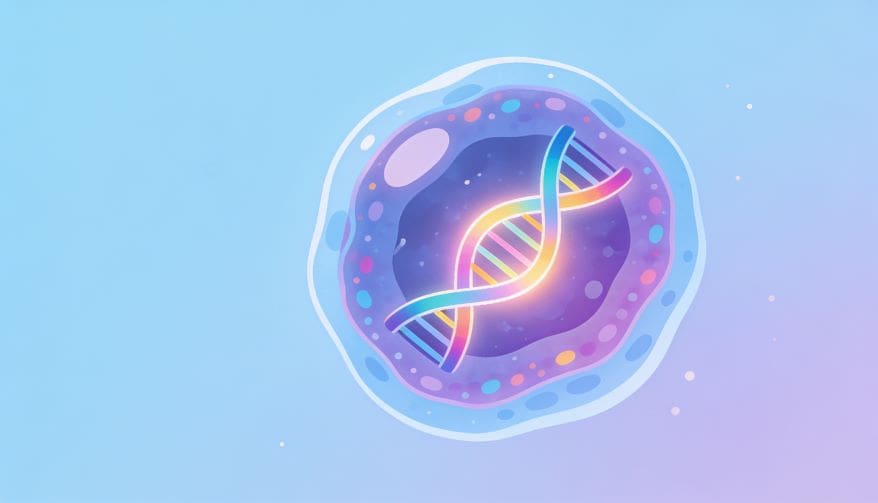
Scientists just built something incredible. They created a synthetic cell from scratch. However, This cell is not alive in the traditional sense. Yet it can feed, grow, and divide. Above all, it can pass genes to its offspring. Moreover, Researchers at the University of Minnesota led this work. As a matter of fact, this brings us closer to artificial life.
Key Takeaways of Synthetic Cell
- Scientists built a synthetic cell with a 90,000-letter genome.
- The cell can feed itself using tiny liposomes.
- It divides without any natural cell parts.
- A helpful mutation spread through five generations.
What Is a Synthetic Cell?
What is a synthetic cell? It is a lab-made version of life. Provided that all parts are chemically defined, scientists control everything. Additionally, This cell uses a DNA genome split into plasmids. So far, it completed five full generations. In similar fashion to bacteria, it feeds and multiplies.
How It Feeds and Grows
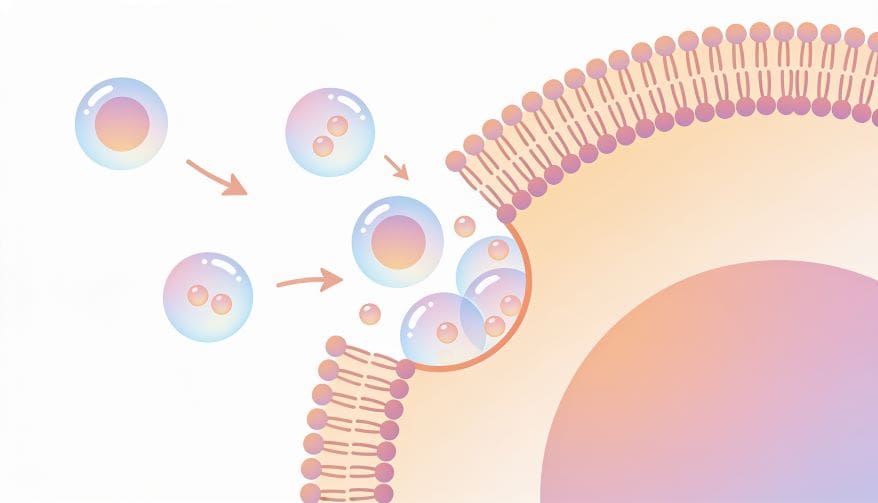
To illustrate the process, the cell uses tiny feeder liposomes. However, These liposomes supply lipids and molecules. As a result, the cell membrane grows larger. However, This mimics how real cells absorb nutrients.
Also Read: Your Stomach Might Be Attacking Itself — And Scientists Just Mapped the Whole Attacks
Frequently Asked Questions
1. What is a synthetic cell?
It is a cell built entirely in a lab. Scientists design every part chemically. It is not born naturally.
2. Is this synthetic cell truly alive?
Not exactly. It lacks full natural metabolism. However, it can feed, grow, and divide like living cells.
3. How does the this cell “eat”?
It absorbs nutrients from tiny feeder liposomes. These liposomes act like tiny food packets. This helps the cell membrane grow.
References
Gaut, N. J., Deich, C., Cash, B., Hoog, T., Engelhart, A. E., & Adamala, K. P. (2026). A chemically defined synthetic cell capable of growth and replication. bioRxiv. https://doi.org/10.64898/2026.07.01.735724
- Author
- Latest Posts

I am an inspirational writer and emerging science blogger with a deep-rooted passion for understanding and sharing the wonders of the world around us. My journey began with a Bachelor of Science in Chemistry from AKI’s Poona College of Arts, Commerce and Science, where I developed not only a strong foundation in scientific principles but also a mindset that values curiosity, observation, and critical thinking. Studying chemistry has taught me to approach problems with logic, to look beyond the obvious, and to see patterns where others might only see complexity. These experiences have shaped the way I perceive life and influence the way I express my thoughts, both scientifically and creatively.
I have always believed that knowledge is only as powerful as the way it is shared. This belief has guided me to create content that bridges the gap between science and everyday life. I aim to simplify complex scientific ideas so they become approachable, relatable, and engaging for everyone—whether someone has a formal background in science or is simply curious about the world. Science, in my view, is not confined to textbooks and laboratories; it is a way of thinking, understanding, and connecting with the world around us. By making science accessible, I hope to inspire curiosity, ignite learning, and encourage people to see the beauty and relevance of scientific discovery in their daily lives.
Alongside my love for science, I am deeply passionate about motivational writing. I believe words carry the power to transform perspectives, encourage self-reflection, and inspire action. By combining analytical thinking with creativity, I create content that is intellectually stimulating yet emotionally resonant. Whether I am breaking down a chemical concept, exploring a scientific phenomenon, or crafting motivational narratives, my goal is to communicate ideas in a way that is clear, meaningful, and impactful.
Through my work, I strive to empower my readers – not just by helping them understand the science around them, but by inspiring them to grow, learn, and realize their full potential. Every article, post, or story I write reflects my commitment to turning knowledge into inspiration. I want to spark curiosity, encourage self-improvement, and show that learning and personal growth are deeply connected. For me, writing is not just a craft; it is a way to touch minds, connect hearts, and make ideas come alive in a way that truly resonates.