Autoimmune gastritis happens when the immune system attacks stomach cells.
Your Stomach Might Be Attacking Itself — And Scientists Just Mapped the Whole Attack
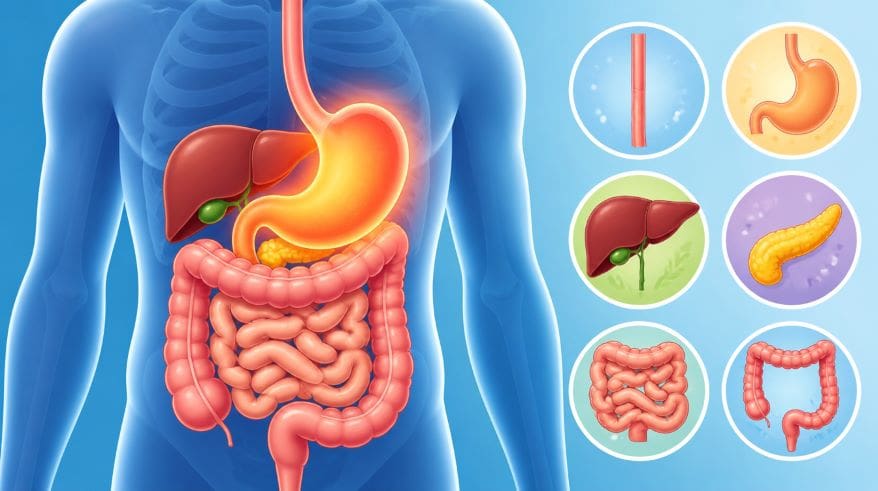
Your immune system protects you every single day. It fights viruses, bacteria, and infections. But sometimes, it makes a mistake. It attacks your own body. This is exactly what happens in autoimmune gastritis. explore to learn more about what is Autoimmune Gastritis.
Key Takeaways
- Autoimmune gastritis happens when the immune system attacks stomach cells.
- The attack targets parietal cells in the stomach lining.
- This damage reduces stomach acid and vitamin absorption.
- Early diagnosis can prevent serious long-term complications.
- The condition connects directly to pharmacy careers and drug research.
What Is Autoimmune Gastritis?
What is autoimmune gastritis? It is a chronic disease. Above all, it involves the immune system. The immune system mistakenly attacks the stomach’s parietal cells. These cells produce stomach acid and a special protein. That protein helps absorb vitamin B12. So far, researchers call this a “non-self-limiting” disorder. This means it does not go away on its own. To that end, patients need long-term monitoring.
How the Immune System Turns Against the Stomach
The main target is a protein pump. Scientists call it the H+, K+-ATPase. This pump sits on parietal cells. Provided that antibodies attack this pump, damage follows. As a result, acid production drops. What’s more, the damage stays limited to one stomach area. That area is called the oxyntic mucosa. In similar fashion to other autoimmune diseases, the body cannot stop itself.
To illustrate how this unfolds, consider this simple list:
- Immune cells mistake parietal cells for invaders.
- Antibodies attack the acid-producing pump.
- Acid levels drop over time.
- Vitamin B12 and iron absorption suffers.
- Stomach tissue slowly changes shape.
This process happens quietly at first. Prior to any symptoms, damage may already exist. That is to say, patients often feel fine for years. Sooner or later, though, signs begin to appear.
what is autoimmune gastritis and its Symptoms
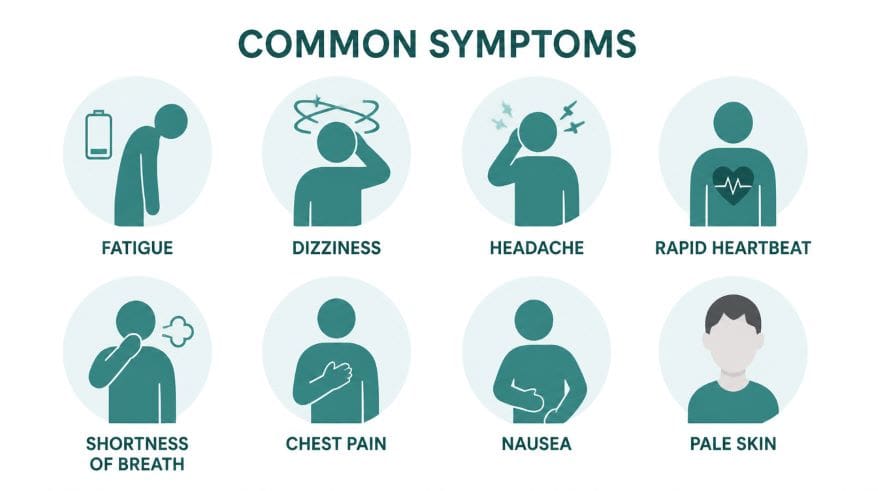
Symptoms often appear late, after all. By the time symptoms show, atrophy has occurred. Take the case of vitamin B12 deficiency. It can cause tiredness and nerve problems. Iron deficiency can cause weakness too. In contrast, some patients show no symptoms at all. This makes diagnosis tricky for doctors.
Here are common signs, to enumerate a few:
- Constant tiredness or weakness
- Pale skin or dizziness
- Numbness in hands or feet
- Digestive discomfort after eating
- Unexplained anemia found in blood tests
Why Diagnosis Has Been Difficult
For a long time, doctors missed this disease. In effect, patients received a generic gastritis label. This time, doctors have clearer diagnostic tools. So long as blood tests check for specific antibodies, diagnosis improves. Analogous to allergy testing, doctors now look for immune markers. In light of this, more patients get proper diagnoses today.
Risks If Left Untreated
Balanced against typical gastritis, this disease carries serious risks. To repeat, low stomach acid affects nutrient absorption. In sum, patients face higher risks over time. These risks include:
- Pernicious anemia, a severe vitamin B12 deficiency.
- Increased risk of neuroendocrine tumors in the stomach.
- Possible connection to gastric cancer in some cases.
- Long-term digestive discomfort and nutrient loss.
While this may be true for adults, children rarely develop it. All things considered, adults over 50 face the highest risk. Being that this population grows every year, research funding matters more than ever.
Also Read: Fatal Rabies in child
Frequently Asked Questions
What is autoimmune gastritis exactly?
It is a disease where the immune system attacks stomach cells. This reduces acid production and nutrient absorption.
Is autoimmune gastritis common?
It is considered underrecognized, meaning many cases go undiagnosed. Awareness is increasing, though, thanks to new research.
Can autoimmune gastritis be cured?
Currently, there is no cure. Treatment focuses on managing symptoms and preventing complications.
References
- Lahner, E., Lenti, M. V., Massironi, S., Zingone, F., Miceli, E., Della Bella, C., Facciotti, F., Pelizzaro, F., Annibale, B., D’Elios, M. M., & Di Sabatino, A. (2025). Autoimmune gastritis: Diagnosis, clinical management and natural history. A position paper by the Autoimmune gastRitis Italian netwOrk Study grOup (ARIOSO). Digestive and Liver Disease, 58(5), 706–707. https://doi.org/10.1016/j.dld.2025.10.015
- Massironi, S., Dispinzieri, G., Rossi, A., Cristoferi, L., Lenti, M. V., Gerussi, A., Elvevi, A., Carbone, M., Bonfichi, A., Di Sabatino, A., Danese, S., & Invernizzi, P. (2025). Immunological and clinical overlap between autoimmune gastritis and autoimmune liver diseases: A prospective cohort study. Frontiers in Immunology, 16, 1628478. https://doi.org/10.3389/fimmu.2025.1628478
- Author
- Latest Posts

I am an inspirational writer and emerging science blogger with a deep-rooted passion for understanding and sharing the wonders of the world around us. My journey began with a Bachelor of Science in Chemistry from AKI’s Poona College of Arts, Commerce and Science, where I developed not only a strong foundation in scientific principles but also a mindset that values curiosity, observation, and critical thinking. Studying chemistry has taught me to approach problems with logic, to look beyond the obvious, and to see patterns where others might only see complexity. These experiences have shaped the way I perceive life and influence the way I express my thoughts, both scientifically and creatively.
I have always believed that knowledge is only as powerful as the way it is shared. This belief has guided me to create content that bridges the gap between science and everyday life. I aim to simplify complex scientific ideas so they become approachable, relatable, and engaging for everyone—whether someone has a formal background in science or is simply curious about the world. Science, in my view, is not confined to textbooks and laboratories; it is a way of thinking, understanding, and connecting with the world around us. By making science accessible, I hope to inspire curiosity, ignite learning, and encourage people to see the beauty and relevance of scientific discovery in their daily lives.
Alongside my love for science, I am deeply passionate about motivational writing. I believe words carry the power to transform perspectives, encourage self-reflection, and inspire action. By combining analytical thinking with creativity, I create content that is intellectually stimulating yet emotionally resonant. Whether I am breaking down a chemical concept, exploring a scientific phenomenon, or crafting motivational narratives, my goal is to communicate ideas in a way that is clear, meaningful, and impactful.
Through my work, I strive to empower my readers – not just by helping them understand the science around them, but by inspiring them to grow, learn, and realize their full potential. Every article, post, or story I write reflects my commitment to turning knowledge into inspiration. I want to spark curiosity, encourage self-improvement, and show that learning and personal growth are deeply connected. For me, writing is not just a craft; it is a way to touch minds, connect hearts, and make ideas come alive in a way that truly resonates.