Explore what causes diabetes and the key factors influencing its development, from genetics to lifestyle choices.
What Causes Diabetes: The Real Risk Factors Behind Type 1 and Type 2

Estimated reading time: 10 minutes
Diabetes develops when the body either stops producing enough insulin or stops responding to the insulin it produces, so glucose stays in the blood instead of moving into cells. In type 1 diabetes the immune system destroys the insulin-producing beta cells. In type 2 diabetes, cells become resistant to insulin and the pancreas gradually cannot keep pace. Genetics, body-fat distribution, physical activity, sleep and certain medications all shift that balance.
Key Takeaways
- Type 1 diabetes is an autoimmune condition, not a consequence of diet or body weight.
- Type 2 diabetes develops from insulin resistance plus a pancreas that can no longer compensate.
- Visceral fat around the abdomen is the single strongest modifiable risk factor for type 2.
- Genes set your baseline risk; activity, weight, sleep and diet determine whether that risk becomes disease.
- Sugar alone does not cause diabetes — total calories, body composition and inactivity matter more.
- Some medications and other diseases can trigger diabetes independently of lifestyle.
How Insulin Is Supposed to Work
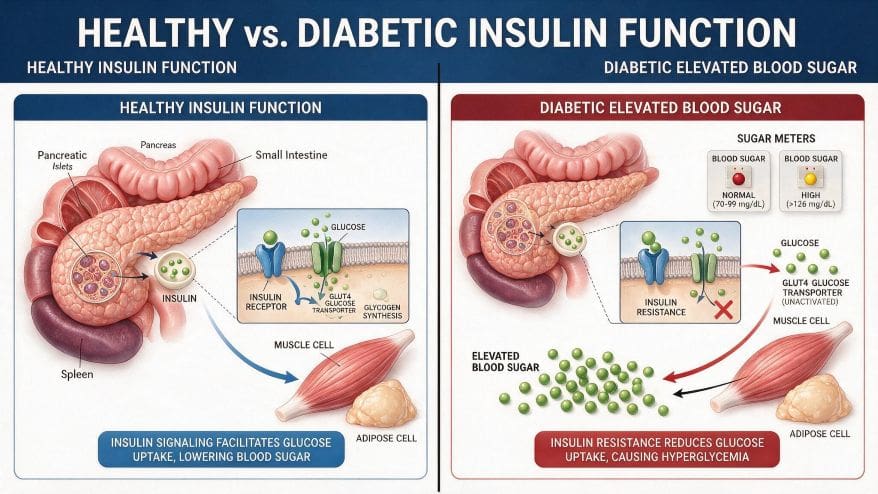
Every meal that includes carbohydrates raises blood glucose. Beta cells in the pancreas release insulin. Insulin helps glucose enter muscle, liver, and fat cells, where the body uses or stores it. Blood glucose returns to its normal range within a couple of hours.
Diabetes develops when one of two failures occurs. First, beta cells may get destroyed, so the body produces less insulin or no insulin—the “key” disappears. Next, cells may become insulin resistant, so the body cannot use insulin effectively—the “lock” stiffens even though insulin is present.
Because clinicians can identify which failure is happening, they can explain why type 1 and type 2 diabetes require different treatments, even though both types share the same symptom: high blood glucose.
Lifestyle Factors: What You Can Control
What causes diabetes in most people? It is a combination of habits. All things considered, daily choices matter most. Sitting too much is dangerous. A 2021 study in The Lancet found that sedentary time increased the risk.To enumerate, here are the top five lifestyle causes:
- Being Higher weight with belly fat (visceral fat).
- Not exercising (muscle uses glucose).
- Eating processed carbs (white bread, soda).
- Poor sleep (less than 6 hours per night).
- Chronic stress (raises cortisol and sugar).
What Causes Type 1 Diabetes
Type 1 diabetes is an autoimmune disease. The immune system misidentifies pancreatic beta cells as threats and destroys them, so the body can no longer produce insulin. Symptoms usually develop over weeks instead of years, including intense thirst, frequent urination, unexplained weight loss, and fatigue. About 5 to 10 percent of diabetes cases are type 1. Doctors often diagnose it in children, teenagers, and young adults, though it can also begin in adults.
The trigger is not fully understood. Current evidence suggests a genetic predisposition combined with an environmental event.
Researchers continue to study early immune programming, including infant feeding, gut microbial development, and vitamin D status. None of these factors has been confirmed as a cause. Meanwhile, older claims about cow’s milk remain unproven.
What Causes Type 2 Diabetes
Type 2 diabetes accounts for about 90 to 95 percent of all cases and develops over time rather than from a single event. What causes type 2 diabetes starts when cells become less responsive to insulin. In response, the pancreas produces more insulin, so blood glucose often stays near normal for years. This silent phase explains why many people receive a diagnosis only after complications appear. Eventually, beta cells can’t keep up with the extra demand, insulin production drops, and blood glucose rises into the diabetic range.
Insulin resistance and visceral fat
Fat stored around the abdominal organs behaves differently from fat under the skin. First, visceral fat releases free fatty acids and inflammatory chemicals into the portal blood flow. Then, these substances can interfere with how insulin works in the liver and muscles. As a result, waist circumference predicts type 2 risk better than weight alone. Also, some people with a normal BMI still develop the disease.
So, what causes type 2 diabetes often involves insulin resistance, and belly fat is one important driver. In addition, sugar food patterns—like sugary drinks, high-sugar snacks, and refined or processed carbs—can raise blood glucose repeatedly and make insulin harder to work effectively.
Loss of beta-cell function
Insulin resistance by itself does not automatically cause diabetes. Many people stay resistant for decades, and they never reach the diabetes range because their beta cells keep making enough insulin. However, type 2 diabetes happens when this compensation finally fails. As a result, two people with similar body weight can have very different outcomes.
Type 1 vs Type 2 vs Gestational Diabetes
| Feature | Type 1 | Type 2 | Gestational |
| Core mechanism | Autoimmune beta-cell destruction | Insulin resistance + beta-cell decline | Pregnancy hormones causing insulin resistance |
| Typical onset | Childhood to young adulthood | Usually after age 35, increasingly younger | Weeks 24–28 of pregnancy |
| Speed of onset | Days to weeks | Years, often silent | Detected by routine screening |
| Preventable? | No | Largely yes | Risk can be reduced |
| Primary treatment | Insulin for life | Lifestyle, oral agents, sometimes insulin | Diet, monitoring, insulin if needed |
| Share of cases | 5–10% | 90–95% | ~2–10% of pregnancies |
Risk Factors You Can Change
These factors influence whether inherited risk becomes clinical type 2 diabetes.
- Abdominal fat accumulation. Waist measurement is the strongest single modifiable predictor. Losing 5 to 7 percent of body weight measurably improves insulin sensitivity.
- Physical inactivity. Contracting muscle takes up glucose without needing much insulin, so regular movement lowers blood glucose directly. Prolonged sitting raises risk even in people who exercise, making short movement breaks valuable on their own.
- Diet quality rather than sugar alone. Highly refined carbohydrates, sugar-sweetened drinks and ultra-processed foods drive sharp glucose spikes and excess calorie intake. Fibre, whole grains, legumes, vegetables and adequate protein blunt the same response.
- Short or disrupted sleep. Sleeping under six hours reduces insulin sensitivity within days in controlled studies, and untreated sleep apnoea compounds the effect.
- Chronic stress. Sustained cortisol elevation raises hepatic glucose output and typically worsens sleep and eating patterns at the same time.
- Smoking and heavy alcohol use. Smoking increases insulin resistance; heavy drinking can damage the pancreas.
Risk Factors You Cannot Change
- Family history. Having a parent or sibling with type 2 diabetes substantially increases your risk, so screening should start earlier.
- Age. Risk climbs after 35 as muscle mass declines and visceral fat tends to increase.
- Ethnicity. South Asian, African, Hispanic, Indigenous and Pacific Islander populations develop type 2 at lower BMI thresholds and younger ages.
- Previous gestational diabetes. It raises lifetime type 2 risk for the mother and metabolic risk for the child.
- Polycystic ovary syndrome. PCOS commonly involves insulin resistance independent of body weight.
Inherited risk is not a verdict. Large prevention trials show that structured lifestyle change reduces progression from prediabetes to type 2 diabetes by roughly half, including in people with strong family history.
Prediabetes: The Stage Most People Miss
Most people go through prediabetes before type 2 diabetes is diagnosed. Prediabetes means blood sugar is above normal but not yet at the diabetes level, usually an HbA1c of 5.7 to 6.4%. It often causes no symptoms, so most people don’t know they have it. This is the best time to act, because weight loss, more activity, and food changes can bring glucose back to normal.
If you have a family history, a large waist, or past gestational diabetes, get an HbA1c test instead of waiting for symptoms.
Less Obvious Causes of Diabetes
Medications low insulin
Some medicines raise blood sugar or reveal insulin resistance. For example, systemic corticosteroids like prednisone can do it. Also, some thiazide diuretics, certain second-generation antipsychotics, and some transplant immunosuppressants can raise glucose.
Don’t stop a prescribed medicine on your own. Instead, talk to your prescriber about glucose monitoring or safer alternatives.
Other diseases and pancreatic damage low insulin
Diabetes can happen after another health problem. For example, chronic pancreatitis, pancreatic surgery, pancreatic cancer, cystic fibrosis, and haemochromatosis can reduce insulin-making.
Also, hormone problems can lead to insulin resistance. For example, Cushing syndrome and acromegaly cause excess hormone effects.
Monogenic and atypical forms
MODY comes from a single gene change. It usually starts before age 30. It also often runs in families. Because of this, doctors may misdiagnose it as type 1 or type 2. Then, it may not respond to the usual treatment.
LADA is adult autoimmune diabetes. It starts slowly. Because it develops over time, it is often mistaken for type 2.
If your diagnosis does not match the usual pattern, ask about antibody and genetic testing.
The gut microbiome and environmental exposures
New research links a less diverse gut microbiome to low-grade inflammation and worse insulin sensitivity. Some persistent pollutants also seem linked to more diabetes.
These are active research areas. They have possible explanations, but no clear clinical advice yet. Use them as background, not proven causes.
Common Myths, Corrected
- “Eating sugar causes diabetes.” Sugar does not directly cause it. Excess calories, weight gain and inactivity drive insulin resistance, and sugary drinks contribute mainly through that route.
- “Only people with higher weight get type 2.” Lean people develop type 2 diabetes, particularly where visceral fat, family history or certain ethnic backgrounds are involved.
- “Type 1 and type 2 are the same disease.” They share elevated blood glucose but have different causes and treatments.
- “Diabetes is contagious.” It cannot be transmitted between people.
- “A diagnosis means insulin immediately.” Most type 2 diabetes is first managed with lifestyle change and oral medication.
What You Can Do This Week
- Measure your waist and compare it against the threshold for your sex and ethnicity.
- Ask for an HbA1c test if you are over 35, have a family history, or have had gestational diabetes.
- Add two 20-minute walks and one resistance session; a 10-minute walk after your largest meal lowers post-meal glucose.
- Replace sugar-sweetened drinks with water or unsweetened alternatives.
- Set a consistent seven-to-eight-hour sleep window and get screened if you snore heavily or wake unrefreshed.
- Review any long-term medication that affects blood glucose with your pharmacist or doctor.
Conclusion
Type 1 happens when the immune system attacks the body. Scientists can’t yet prevent it.Type 2 develops when insulin doesn’t work well and the pancreas can’t keep up. Genetics play a role, but visceral fat, low activity, poor sleep, stress, and some medicines make it more likely.Because type 2 often builds slowly, the best move is early testing and steady changes in things you can control.
Frequently Asked Questions
Can stress alone cause diabetes?
Stress alone does not cause diabetes, but chronic stress raises cortisol, which increases blood glucose and worsens insulin resistance. It also tends to disrupt sleep, activity and eating patterns, and those combined effects meaningfully raise type 2 risk.
Is sugar the only cause of diabetes?
No. Sugar contributes mainly through excess calories and weight gain. Genetics, visceral fat, inactivity, poor sleep, age and certain medications all affect insulin sensitivity, and type 1 diabetes has no dietary cause at all.
Does eating too much fruit cause diabetes?
Whole fruit does not cause diabetes; its fibre slows sugar absorption, and higher fruit intake is generally linked to lower type 2 risk. Fruit juice and dried fruit concentrate sugar without fibre, so portion size matters more there.
Is diabetes contagious?
No. Diabetes cannot spread through contact, shared food or air. Some viral infections may trigger the autoimmune process behind type 1 in genetically susceptible people, but the diabetes itself is not transmissible.
Can thin people get type 2 diabetes?
Yes. Visceral fat around the organs, family history, ethnicity, low muscle mass, poor sleep and inactivity can produce insulin resistance at a normal BMI. Waist measurement and HbA1c are better indicators than weight alone.
Is type 2 diabetes reversible?
Type 2 diabetes can go into remission, with blood glucose returning to the normal range without medication, most often after significant weight loss. This is remission rather than a cure, since risk returns if the weight is regained.
How long does type 2 diabetes take to develop?
It usually develops over 5 to 10 years or longer. Insulin resistance and prediabetes typically precede diagnosis by years with no symptoms, which is why routine screening detects it earlier than waiting for signs.
References
- Quinn LM, Wong FS, Narendran P. Environmental Determinants of Type 1 Diabetes: From Association to Proving Causality. Frontiers in Immunology. 2021. https://www.frontiersin.org/journals/immunology/articles/10.3389/fimmu.2021.737964/full
- Zorena K, Michalska M, Kurpas M, et al. Environmental Factors and the Risk of Developing Type 1 Diabetes—Old Disease and New Data. Biology. 2022;11(4):608. https://www.mdpi.com/2079-7737/11/4/608
About the Author
Ramya Dobbala, B.Pharm, is a pharmacist and science communicator at ENTECH Magazine, where she translates pharmaceutical and clinical research into accessible, evidence-based explanations. She completed her Bachelor of Pharmacy in 2024 with formulation-science research on the evaluation and optimisation of topical anti-acne creams, focusing on delivery systems and skin health. Her writing covers dermatology, metabolic health and pharmaceutical innovation, and every health article she publishes is checked against current ADA, CDC and NIH guidance.
Editorial Note: This article was written by Ramya Dobbala and reviewed for editorial accuracy by our editorial team. It has not yet undergone independent review by a professional.
- Author
- Latest Posts

Ramya Dobbala is a pharmacist and science communicator dedicated to bridging the gap between complex pharmaceutical research and public understanding. A 2024 B.Pharmacy graduate, Ramya has a strong foundational background in formulation science, having spearheaded research into the evaluation and formulation of anti-acne creams. Her work focused on optimizing topical delivery systems to enhance treatment efficacy and skin health.
Transitioning from the laboratory to the forefront of scientific discourse, she now leverages her technical expertise to translate intricate healthcare concepts into accessible, engaging content. As an author and communicator, Ramya is passionate about empowering audiences with evidence-based insights, particularly in the realms of dermatology and pharmaceutical innovation.