Type 2 diabetes is a silent killer affecting millions. Learn the risks, prevention tips, and early signs of this condition.
Belly Fat and Diabetes: How Visceral Fat Affects Blood Sugar

Estimated reading time: 14 minutes
You may have heard that belly fat and diabetes are connected. There is some truth behind this idea, but the relationship is more complicated than simply having a larger waist. This is especially true when considering Type 2 diabetes and how it relates to body fat. Having belly fat does not mean that someone has diabetes.
Having belly fat does not mean that someone has diabetes. However, excess fat stored around internal organs, called visceral fat, is associated with metabolic changes that can contribute to insulin resistance. Over time, insulin resistance can make it harder for the body to keep blood glucose within a healthy range. As a result, excess visceral fat can be one factor associated with a higher risk of prediabetes and type 2 diabetes. The important point is that body shape alone cannot diagnose diabetes.
What Is Belly Fat?
What Is Belly Fat?
“Belly fat” is a common term for the fat stored around the stomach and waist. However, not all abdominal fat is the same. Some fat lies just under the skin, while other fat is stored deeper inside the body, around important organs. Because of this, belly fat can affect the body in different ways.
Although having some body fat is normal, too much belly fat may increase the risk of health problems. For example, it can be linked to heart disease, type 2 diabetes, and high blood pressure. Therefore, learning about belly fat can help people better understand their health and make informed lifestyle choice.
Subcutaneous Fat
Subcutaneous fat is the soft layer of fat that lies directly underneath the skin. It is found throughout the body, including the stomach, thighs, hips, arms, and buttocks. Because it is close to the surface of the skin, you can usually pinch this type of fat with your fingers.
Some subcutaneous fat is normal and helps protect the body. It also stores energy and helps keep the body warm. However, having too much of it may lead to weight gain and can affect a person’s health. For this reason, eating a balanced diet and staying physically active can help manage body fat.
Visceral fat
Visceral fat is stored deeper inside the abdomen around internal organs. Unlike subcutaneous fat, it cannot simply be measured by looking at the body. Visceral fat is metabolically active. It can release signaling molecules and fatty acids that influence metabolism. Therefore, researchers are particularly interested in visceral fat when studying insulin resistance and type 2 diabetes risk.
Belly Fat and Diabetes: What Is the Connection?
The relationship can be simplified as:
Excess visceral fat → metabolic changes → insulin resistance → increased diabetes risk
However, this is not the whole story.
Type 2 diabetes develops through a combination of factors. For example, genetics can influence how strongly someone responds to insulin. Physical inactivity can also contribute to insulin resistance. In addition, age, sleep, diet, certain medications, and other health conditions can affect metabolic health. Therefore, belly fat is a risk factor, not a diagnosis.
Visual: How Visceral Fat and Insulin Resistance Are Connected
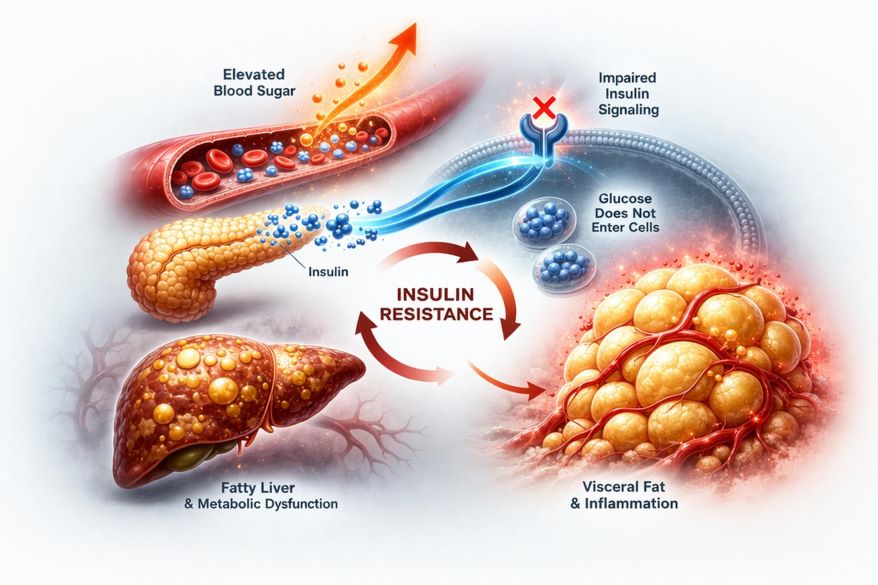
How Visceral Fat Can Affect Insulin
To understand the connection, it helps to understand insulin. Insulin is a hormone made by the pancreas. After you eat, carbohydrates are broken down into glucose. Glucose enters the bloodstream. The pancreas then releases insulin.
Insulin acts like a signal that helps body cells take up glucose from the blood.
Muscle cells, for example, can use glucose for energy.
However, when cells become less responsive to insulin, the pancreas may need to produce more insulin to achieve the same effect.
This condition is called insulin resistance.
What Is Insulin Resistance?
Insulin resistance occurs when cells do not respond to insulin as effectively as they normally should.
Imagine insulin as a key.
The key represents insulin.
The lock represents the insulin receptor and signaling system on a cell.
When the system works normally, insulin helps the cell take up glucose.
With insulin resistance, the “key” does not work as efficiently.
The pancreas may compensate by producing more insulin.
For a while, blood glucose may remain within the normal range.
However, if insulin resistance becomes more severe and the pancreas cannot compensate adequately, blood glucose can begin to rise.
This can contribute to prediabetes and eventually type 2 diabetes.
How Does Visceral Fat Contribute to Insulin Resistance?
Visceral fat is not simply an inactive energy store.
It is metabolically active tissue.
Excess visceral fat is associated with changes in the release of fatty acids and signaling molecules.
These changes can affect how the liver, muscles, and other tissues respond to insulin.
For example, increased fatty acid delivery to the liver can contribute to metabolic disturbances.
At the same time, changes in adipose tissue signaling can contribute to inflammation and impaired insulin signaling.
Consequently, the body may become less efficient at controlling blood glucose.
This is one reason researchers study the connection between visceral fat, insulin resistance, and type 2 diabetes.
Belly Fat Does Not Automatically Mean Diabetes
This distinction is essential.
A person can have abdominal fat without having diabetes.
Likewise, a person who does not appear to have excess belly fat can still develop type 2 diabetes.
Therefore, you cannot diagnose diabetes by looking at someone’s body.
Diabetes is diagnosed using blood glucose tests and other appropriate laboratory measures.
These may include:
- A1C
- Fasting plasma glucose
- Oral glucose tolerance testing
- Random plasma glucose in certain situations
If you are concerned about your diabetes risk, talk with a healthcare professional rather than relying on appearance.
Why Does Visceral Fat Matter for Metabolic Health?
Excess visceral fat is associated with several metabolic health concerns.
These can include:
- Insulin resistance
- Higher blood glucose
- Abnormal blood lipids
- High blood pressure
- Fatty liver disease
- Increased cardiovascular risk
However, these relationships vary between individuals.
Genetics, age, physical activity, nutrition, sleep, and other factors also matter.
The 2026 ADA Standards of Care describes obesity as a chronic disease associated with metabolic and cardiovascular complications and states that greater fat accumulation is associated with increased diabetes risk.
Can Belly Fat Increase the Risk of Type 2 Diabetes?
Yes, excess visceral fat is associated with a higher risk of insulin resistance and type 2 diabetes.
However, it is more accurate to say:
This distinction matters.
A person’s diabetes risk is influenced by multiple factors.
For example, someone with a strong family history of type 2 diabetes may have elevated risk even without obvious abdominal fat.
Likewise, improving metabolic health can be beneficial even when a person’s body weight does not change substantially.
Therefore, health should not be reduced to a number on a scale.
What Are the Signs of Insulin Resistance?
Insulin resistance often does not cause obvious symptoms.
That is one reason it can go unnoticed.
Some people may have:
- Increasing waist circumference
- Prediabetes
- High triglycerides
- Low HDL cholesterol
- High blood pressure
- Fatty liver
- A family history of type 2 diabetes
However, these findings do not prove insulin resistance by themselves.
A healthcare professional may assess the overall metabolic picture.
What Is Prediabetes?
Prediabetes means blood glucose is higher than normal but not yet in the diabetes range.
It is an important warning sign.
However, prediabetes does not mean that type 2 diabetes is inevitable.
Lifestyle changes and appropriate medical care can reduce the risk of progression.
The 2026 ADA Standards recommend diabetes prevention programs for adults at high risk, with goals that include maintaining a 5–7% reduction in initial body weight when appropriate, together with healthy eating and at least 150 minutes per week of moderate-intensity physical activity.
Importantly, prevention should be approached as a health goal rather than a punishment for body size.
How Can You Support Better Metabolic Health?
There is no single “belly fat cure.”
Instead, focus on sustainable habits that support overall health.
Be Physically Active
Regular physical activity can improve insulin sensitivity.
You do not need to begin with intense exercise.
Start with activities that are realistic for you.
Examples include:
- Brisk walking
- Cycling
- Swimming
- Dancing
- Strength training
- Gardening
- Active household tasks
Over time, gradually increase activity according to your abilities.
The ADA recommends at least 150 minutes of moderate-intensity physical activity per week for many adults at high risk of diabetes as part of prevention programs.
Choose a Balanced Eating Pattern A healthy eating pattern does not need to be extreme.
Instead, focus on nutrient-dense foods.
The 2026 ADA guidance emphasizes:
- Non-starchy vegetables
- Whole fruits
- Legumes
- Whole grains
- Lean protein sources
- Nuts and seeds
- Appropriate dairy or nondairy alternatives
It also recommends minimizing sugar-sweetened beverages, sweets, refined grains, and highly processed foods.
Therefore, instead of searching for a “belly fat diet,” focus on an eating pattern that supports long-term metabolic health.
Choose Water More Often
Sugary drinks can add substantial amounts of rapidly absorbed carbohydrate and calories.
Examples include:
- Soft drinks
- Sweetened energy drinks
- Sugary fruit drinks
- Sweetened teas
- Some flavored beverages
Replacing sugary drinks with water can be a practical change.
The 2026 ADA Standards specifically recommends water over other beverages for people with diabetes and those at risk for diabetes.
Include More Fiber-Rich Foods
Fiber can support digestive and metabolic health.
Good sources include:
- Beans
- Lentils
- Vegetables
- Whole fruits
- Oats
- Whole grains
- Nuts
- Seeds
The ADA recommends emphasizing minimally processed, nutrient-dense, high-fiber carbohydrate sources.
However, increasing fiber gradually can help reduce digestive discomfort.
Get Enough Sleep
Sleep is another part of metabolic health.
Poor sleep can affect appetite, activity, stress, and glucose regulation.
Therefore, healthy diabetes prevention should not focus only on food and exercise.
A broader approach includes:
Nutrition + activity + sleep + stress management + preventive healthcare
Avoid Smoking
Smoking is harmful to cardiovascular health and can add to the overall burden of diabetes-related risk.
If you smoke, consider speaking with a healthcare professional about evidence-based quitting support.
Manage Blood Pressure and Cholesterol
Diabetes prevention is not only about glucose.
Blood pressure and blood lipids also affect cardiovascular health.
Therefore, regular health checks are important, particularly for people with multiple risk factors.
Can Losing Weight Reduce Diabetes Risk?
For some people with overweight or obesity who are at high risk of type 2 diabetes, modest weight loss can improve metabolic health.
The 2026 ADA Standards state that a 5–7% reduction in baseline body weight can improve glycemia and other intermediate cardiovascular risk factors. Greater weight loss can provide additional benefits for some people.
However, this does not mean that everyone needs to pursue the same weight goal.
Health goals should be individualized.
Some people may improve their physical activity, blood pressure, glucose, or fitness without dramatic changes on the scale.
Therefore, avoid judging progress only by body weight.
What If You Cannot Lose Weight?
This is an important question.
Weight management is influenced by many factors.
These can include:
- Genetics
- Age
- Hormones
- Medications
- Sleep
- Stress
- Food access
- Physical environment
- Medical conditions
- Mental health
- Socioeconomic circumstances
Therefore, difficulty losing weight is not simply a matter of willpower.
The 2026 ADA guidance encourages individualized treatment and consideration of social, structural, and socioeconomic factors that can affect nutrition and physical activity.
If you are concerned about your metabolic health, speak with a healthcare professional.
How Can You Know Your Diabetes Risk?
A healthcare professional can assess your overall risk.
Depending on your age, health history, and risk factors, testing may include blood glucose measurements.
Common tests include:
A1C
A1C provides an estimate of average blood glucose over approximately the previous 2–3 months.
Fasting glucose
This measures blood glucose after a period of fasting.
Oral glucose tolerance test
This evaluates how the body handles a measured glucose load.
Testing decisions should be based on individual risk and clinical guidance.
When Should You Talk to a Doctor?
Consider discussing diabetes screening with a healthcare professional if you have risk factors such as:
- Family history of type 2 diabetes
- Previous prediabetes
- High blood pressure
- Abnormal cholesterol levels
- Physical inactivity
- History of gestational diabetes
- Increasing waist circumference
- Other conditions associated with metabolic risk
Also seek medical advice if you develop possible symptoms of diabetes.
These can include:
- Excessive thirst
- Frequent urination
- Unexplained weight loss
- Fatigue
- Blurred vision
- Recurrent infections
Symptoms alone cannot diagnose diabetes.
Blood testing is needed.
Belly Fat and Diabetes: The Simple Science
Here is the relationship in a simple pathway:
Excess visceral fat
↓
Changes in fatty acids and metabolic signaling
↓
Reduced insulin sensitivity
↓
Insulin resistance
↓
Pancreas works harder to maintain glucose control
↓
Blood glucose may begin to rise
↓
Prediabetes
↓
Type 2 diabetes risk may increase
This pathway is simplified.
Type 2 diabetes is a complex disease involving genetics, insulin resistance, pancreatic beta-cell function, lifestyle, age, and many other factors.
Recommended original ENTECH infographic:
Visceral fat
↓
Metabolic signaling changes
↓
Insulin resistance
↓
Reduced glucose uptake by cells
↓
Higher blood glucose
↓
Greater type 2 diabetes risk
Keep the infographic clean and avoid images that imply that a particular body shape is unhealthy.
Is Belly Fat the Only Risk Factor for Type 2 Diabetes?
No.
This is one of the most important points in this article.
Type 2 diabetes develops from multiple interacting factors.
These include:
Genetics
Family history can substantially influence diabetes risk.
Age
Risk generally increases with age, although type 2 diabetes can occur in younger people.
Physical inactivity
Regular physical activity supports insulin sensitivity and metabolic health.
Nutrition
Long-term dietary patterns can influence body weight, glucose regulation, and cardiovascular risk.
Sleep
Sleep quality and duration can influence metabolic health.
Medical history
Conditions such as previous gestational diabetes can increase future diabetes risk.
Medications
Some medicines can affect glucose metabolism or body weight.
Therefore, diabetes prevention should never be reduced to “get rid of belly fat.”
A Better Way to Think About Belly Fat and Diabetes
Instead of asking:
“Does my belly make me unhealthy?”
A more useful question is:
“What can I do to support my metabolic health?”
That shift matters.
Health is not determined by appearance.
Instead, focus on measurable health factors such as:
- Blood glucose
- Blood pressure
- Cholesterol
- Physical fitness
- Sleep
- Nutrition
- Physical activity
- Overall wellbeing
This approach is more respectful and more medically useful.
Frequently Asked Questions Type 2 diabetes
Does belly fat cause diabetes?
Belly fat itself does not automatically cause diabetes. However, excess visceral fat is associated with insulin resistance and a higher risk of type 2 diabetes. Many other genetic, metabolic, lifestyle, and environmental factors also contribute.
Is visceral fat worse than subcutaneous fat?
Visceral fat is metabolically active and is more strongly associated with several metabolic risks than subcutaneous fat. However, overall health cannot be determined from one type of body fat alone.
Can you have diabetes without belly fat?
Yes.
A person can develop type 2 diabetes without obvious abdominal fat. Genetics, age, insulin sensitivity, physical activity, medical conditions, and other factors can contribute.
Does losing belly fat reverse insulin resistance?
Reducing excess body fat can improve insulin sensitivity for some people. However, individual responses vary. Physical activity and healthy eating can also improve metabolic health, even when weight change is modest.
What is the best exercise for insulin resistance?
There is no single best exercise for everyone.
Walking, cycling, swimming, aerobic activity, and resistance training can all contribute to better metabolic health.
Choose activities that are safe, enjoyable, and sustainable.
Can walking help reduce diabetes risk?
Yes.
Regular walking contributes to physical activity and can support metabolic health. It is also a practical starting point for people who are not currently active.
Can belly fat be measured at home?
Waist circumference can provide information about abdominal adiposity, but it does not directly measure visceral fat.
More advanced methods can estimate body-fat distribution, but they are not necessary for everyone.
Speak with a healthcare professional about which measurements are appropriate.
Does belly fat mean I have prediabetes?
No.
Belly fat does not diagnose prediabetes.
A blood test is needed to determine whether glucose levels fall within the normal, prediabetes, or diabetes range.
Can type 2 diabetes be prevented?
Type 2 diabetes cannot always be prevented because some risk factors, such as genetics and age, cannot be changed.
However, lifestyle interventions can substantially reduce risk among people at high risk.
The Diabetes Prevention Program demonstrated that intensive lifestyle intervention can delay or prevent type 2 diabetes, and current ADA recommendations continue to support structured diabetes prevention programs.
Key Takeaway
The connection between belly fat and diabetes is mainly about metabolic health, not appearance.
Excess visceral fat is associated with insulin resistance and a higher risk of type 2 diabetes. However, having belly fat does not mean that someone has diabetes, and people of different body sizes can develop diabetes.
Therefore, prevention should focus on sustainable health behaviors rather than shame.
Regular physical activity, nutritious eating, adequate sleep, avoiding tobacco, and appropriate medical screening can all support metabolic health.
For people at high risk of type 2 diabetes, structured diabetes prevention programs can be particularly useful. The 2026 ADA Standards recommend lifestyle interventions that combine healthy eating, physical activity, and behavioral support.
Most importantly, you do not need to look a certain way to be healthy.
Instead, focus on what your body needs and work with a healthcare professional when you need personalized guidance.
References Type 2 diabetes
- American Diabetes Association Professional Practice Committee for Diabetes. 3. Prevention or Delay of Diabetes and Associated Comorbidities: Standards of Care in Diabetes—2026. Diabetes Care. 2026;49(Suppl 1).
- American Diabetes Association Professional Practice Committee for Diabetes. 8. Obesity and Weight Management for the Prevention and Treatment of Diabetes: Standards of Care in Diabetes—2026. Diabetes Care. 2026;49(Suppl 1):S166–S182.
- American Diabetes Association Professional Practice Committee for Diabetes. 5. Facilitating Positive Health Behaviors and Well-being to Improve Health Outcomes: Standards of Care in Diabetes—2026. Diabetes Care. 2026;49(Suppl 1).
- American Diabetes Association. Standards of Care in Diabetes—2026. ADA Standards of Care 2026
- World Health Organization Regional Office for Europe. Weight bias and obesity stigma: considerations for the WHO European Region.
Editorial Note: This article was written by Ramya Dobbala and reviewed for editorial accuracy by our editorial team. It has not yet undergone independent review by a professional.
- Author
- Latest Posts

Ramya Dobbala is a pharmacist and science communicator dedicated to bridging the gap between complex pharmaceutical research and public understanding. A 2024 B.Pharmacy graduate, Ramya has a strong foundational background in formulation science, having spearheaded research into the evaluation and formulation of anti-acne creams. Her work focused on optimizing topical delivery systems to enhance treatment efficacy and skin health.
Transitioning from the laboratory to the forefront of scientific discourse, she now leverages her technical expertise to translate intricate healthcare concepts into accessible, engaging content. As an author and communicator, Ramya is passionate about empowering audiences with evidence-based insights, particularly in the realms of dermatology and pharmaceutical innovation.