Breathing has two parts. First is inspiration, or breathing in. Your main muscle, the diaphragm, moves down. Your chest becomes bigger.
Breathing Mechanism and Respiratory Rhythm
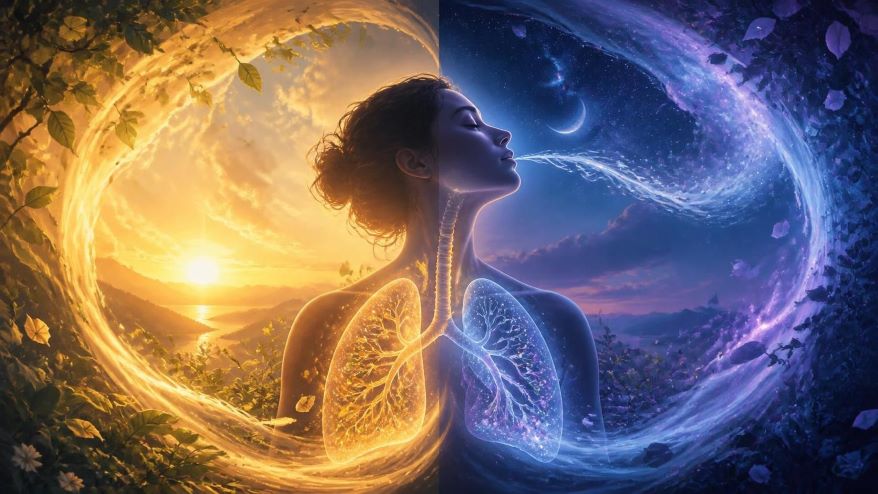
The breathing mechanism is simple. You breathe in, your chest goes up, and your belly goes out. Air goes into your lungs. This air has oxygen your body needs. Then you breathe out. Your chest goes down, your belly goes in. Air leaves your lungs. This air has waste gas your body does not need. That is the breathing mechanism.
Key Takeaways: Breathing Mechanism
- First, the diaphragm moves down. This pulls air into your lungs.
- Next, your ribs lift up and out. This makes your chest bigger.
- Then, air rushes into your lungs. This action brings oxygen to your body.
- Furthermore, your belly pushes out. This action shows the diaphragm works well.
- Thereafter, the diaphragm moves up. This pushes air out of your lungs.
- Finally, your ribs drop down. This makes your chest smaller.
- So, the breathing mechanism moves air in and out of your body
Inspiration and Expiration
Breathing has two parts. First is inspiration, or breathing in. Your main muscle, the diaphragm, moves down. Your chest becomes bigger. Air rushes into your lungs. The air has oxygen your body needs. Second is expiration, or breathing out. Your diaphragm moves up. Your chest becomes smaller. Air flows out of your lungs. The air has carbon dioxide your body does not need. This whole cycle is called the breathing mechanism.
Breathing Mechanism: Diaphragm
First, the diaphragm is a big muscle. It is shaped like a dome. It sits right below your lungs. But it is also forceful. It is made of muscle and a flat sheet of tissue. This tissue is called a tendon. The diaphragm separates your chest from your belly. Doctors call these the thoracic and abdominal cavities.
How Does a Diaphragm Work?
Next, let us see how it moves. When you breathe in, the diaphragm contracts. This means it pulls down. It becomes flat. This makes more space in your chest. Your ribs also move out. Air then rushes into your lungs. This is the first step of the breathing mechanism.
Then, when you breathe out, the diaphragm relaxes. It goes back up into a dome shape. Your chest becomes smaller. Air then leaves your lungs. You do not have to think about this. It just happens all day and all night.
What Are Intercostal Muscles?
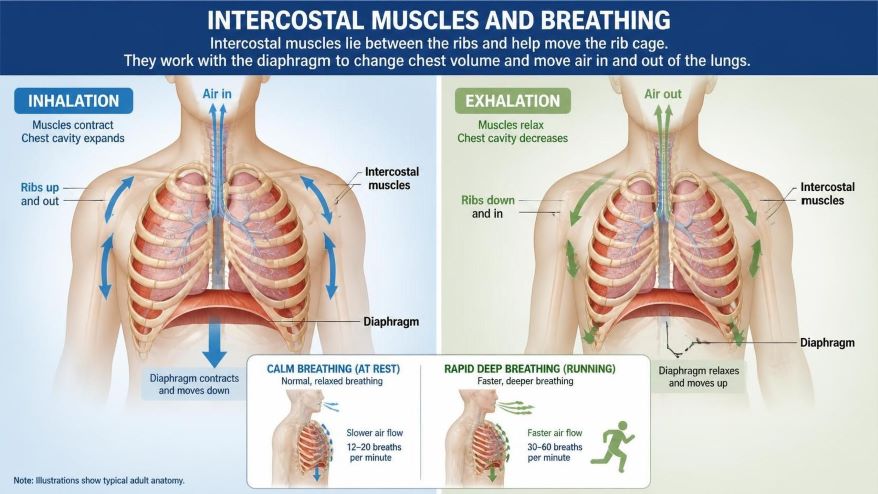
First, let us talk about intercostal muscles. These muscles sit between your ribs. They help your chest move. First, when you breathe in, these muscles pull your ribs up and out. This makes your chest bigger. As a result, air rushes into your lungs. Next, when you breathe out, these muscles help pull your ribs down and in. This makes your chest smaller. Then, air flows out of your lungs. These muscles work with your diaphragm. Together, they form your main breathing mechanism. For example, when you run fast, these muscles work harder. They lift your ribs quickly. So, you take fast, deep breaths. Furthermore, when you rest, they move slowly. They help you take calm, gentle breaths. Finally, strong intercostal muscles improve your entire breathing mechanism. You can exercise longer. You feel less tired. So, keep these muscles healthy.
Lung Expansion During Breathing
First, let us talk about lung expansion. Your lungs sit inside your chest. They are soft and spongy. First, when you breathe in, your diaphragm moves down. Your ribs move up and out. This makes your chest bigger. Then, your lungs expand. They fill up with air. Your breathing mechanism makes this happen. Next, air rushes into tiny air sacs. These sacs grab oxygen for your body. Thus, your cells get the fuel they need. Furthermore, when your lungs expand, your belly pushes out. This is a positive sign. It means your breathing mechanism works well. For example, when you exercise, you need more air. Thus, your lungs expand more. Your chest becomes very big. Your breathing mechanism works faster. Finally, strong lungs mean a healthy body. Breathe deeply often. Help your lungs expand fully. Your breathing mechanism will get stronger. You will feel better every day.
Respiratory Rhythm and Breathing Control
First, let us talk about respiratory rhythm. This is the steady beat of your breath. First, your brain sends a signal. It tells your muscles to breathe in. So, your diaphragm moves down. Your ribs lift up. Then, air fills your lungs. Next, your brain sends another signal. It tells your muscles to relax. So, your diaphragm moves up. Your ribs drop down. Then, air leaves your lungs. This cycle repeats over and over. Your breathing mechanism keeps a steady rhythm. For example, when you sleep, your rhythm is slow. You take about 12 breaths each minute. Furthermore, when you run, your rhythm speeds up. You take many fast breaths. Your breathing mechanism adjusts to your needs. Because the rhythm is automatic, you do not have to think. It just happens. So, a steady rhythm means a healthy body. Finally, you can intentionally change your rhythm.
Frequently Asked Questions: Breathing Mechanism
What is the breathing mechanism?
First, your brain sends a signal to your muscles. This signal tells your diaphragm to move down. So, your chest gets bigger. Next, air rushes into your lungs. Your lungs fill up with oxygen. Then, your brain sends another signal. This signal tells your diaphragm to move up. So, your chest gets smaller. Air then flows out of your lungs. Your lungs release waste gas
What happens when you breathe in?
First, your brain sends a signal. This signal tells your breathing mechanism to start working. Next, your diaphragm moves down. It flattens out. This makes your chest bigger. Then, your ribs lift up and out. Your chest gets even bigger. Also, your belly pushes out a little. This shows your diaphragm is working well. Because your chest is now bigger, air rushes into your lungs. Your lungs expand. They fill up with fresh air.
What happens when you breathe out?
First, your brain stops sending the “breathe in” signal. So, your breathing mechanism switches to the next step. Next, your diaphragm relaxes. It moves back up into a dome shape. Then, your ribs drop down and in. This makes your chest smaller. Because your chest gets smaller, it pushes on your lungs. So, air flows out of your lungs. Also, your belly goes back in. This shows your diaphragm has relaxed fully
References
Sharma, P., Veerareddy, V., Hong, I., Nycklemoe, M., Kandimalla, M., Sharma, V., Kung, T. L., Osman, R., Lim, S., Kandimalla, K. K., Lapid, M. I., & Min, P. H. (2026). Neurophysiological mechanisms of breathing-based well-being practices: a narrative review for clinical application. Frontiers in psychiatry, 17, 1774490. https://doi.org/10.3389/fpsyt.2026.1774490
Sharma, P., Veerareddy, V., Hong, I., Nycklemoe, M., Kandimalla, M., Sharma, V., Kung, T. L., Osman, R., Lim, S., Kandimalla, K. K., Lapid, M. I., Min, P. H., et al. (2026). Neurophysiological mechanisms of breathing-based well-being practices: A narrative review for clinical application. Frontiers in Psychiatry, 17. https://doi.org/10.3389/fpsyt.2026.1774490
- Author
- Latest Posts

I completed my Master of Science from the University of Allahabad in 2017 with a strong academic background in life sciences and chemistry. My specialization included Molecular Biology, Microbiology, Genetics, Plant Breeding, Phycology, Paleobotany, and Bioinformatics, along with Organic Chemistry, Inorganic Chemistry, and Physical Chemistry. This multidisciplinary training provided me with a comprehensive understanding of biological systems and analytical scientific approaches.
After completing my postgraduate studies, I gained valuable professional experience in both the education and social development sectors. I worked at A.M. Oxford Public School, where I was actively involved in guiding students toward academic excellence. In this role, I focused on creating an engaging learning environment, encouraging critical thinking, and nurturing students’ curiosity for scientific learning. My experience as an educator strengthened my communication, mentoring, and classroom management skills.
In addition to my teaching experience, I worked with Jeevan Jagriti Foundation, where I contributed to community-based initiatives aimed at improving educational access and awareness among underprivileged sections of society. Through this work, I participated in programs designed to support social development and promote the value of education in marginalized communities.
These professional experiences helped me develop strong interpersonal, leadership, and organizational skills while reinforcing my commitment to education and community service.