
Category: STEM Discoveries and Innovations of August 2026







Top 10 STEM Discoveries and Innovations of August 2026
August 2026 brought exciting STEM discoveries across many fields. Scientists published breakthrough research in open-access journals. Their work spans green chemistry and materials science. It also covers biotechnology and earth systems. Here is a look at the month’s most important innovations.
Green Ammonia From Waste Nitric Oxide
Copper catalysts now turn nitric oxide into ammonia. The reaction runs at room temperature. It needs only water and renewable electricity. The process produces zero carbon dioxide emissions. It also removes a harmful air pollutant. Researchers achieved 95% Faradaic efficiency for ammonia. The catalyst stayed stable for 24 hours. This method could replace the Haber-Bosch process. Chen and colleagues published this work in Chemistry (MDPI, 2026).
Microbial Factories Make Premium Raspberry Flavor
Engineered bacteria now produce raspberry ketone from sugar. E. coli cells act as tiny factories. They use plant-derived enzymes for the conversion. The final titer reached 5.2 grams per liter. This is a 20-fold improvement over initial strains. The product qualifies as a natural ingredient. It costs far less than extraction from real raspberries. Usui and team reported these results in BioTech (MDPI, 2026).
Orange Peel Waste Feeds Algae for Biofuels
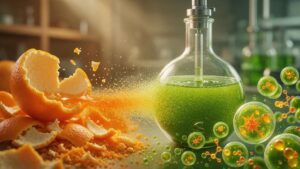
Orange peel extract replaced synthetic growth media for microalgae. In fact, the waste liquid contains sugars and minerals. Algal biomass increased by 40 percent. Lipid content also rose by 20 percent. The method cuts cultivation costs in half. Carotenoid pigments add extra value to the process. The approach supports a zero-waste biorefinery model. Esposito and colleagues published this study in BioTech (MDPI, 2026).
New Drug Targets for Resistant Bacterial Infections
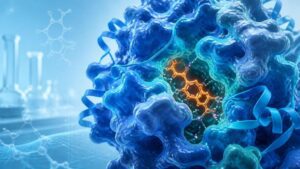
Scientists identified inhibitors of a key virulence enzyme. The target is phospholipase A1 in Pseudomonas aeruginosa. This pathogen resists many common antibiotics. Researchers used molecular docking and dynamics simulations. They found compounds that fit the enzyme’s narrow tunnels. The approach weakens bacteria rather than killing them. This anti-virulence strategy may slow resistance development. Vemula and team published these findings in Discover Chemistry (Springer, 2026).
Lignin Waste Captures Carbon Dioxide
Oxygen-rich carbon from lignin traps CO₂ molecules effectively. The material comes from paper industry waste. Potassium hydroxide activation creates tiny pores. Oxygen groups form weak chemical bonds with CO₂. The carbon captures up to 5.1 millimoles per gram. It regenerates with mild heating. Performance stays high after 10 reuse cycles. Sajjadi and colleagues reported this work in Chemistry (MDPI, 2024).
Strange Spin Textures Found in Ultrathin Films
Physicists observed two coexisting spin patterns in RuO₂ films. One pattern acts as a mirror image. The other behaves as a standard reflection. The films measure only a few nanometers thick. Epitaxial strain alters the crystal structure. These spin textures could enable energy-efficient electronics. Electric fields control the spins more easily than magnetic fields. Zhang and team published this discovery in Science Advances (2026).
Basalt Weathering Releases Less Carbon Capture Than Expected
Natural basalt systems export 30 to 50 percent less alkalinity. Soil thickness and water flow limit the process. As a result, secondary minerals trap weathering products underground. Current carbon removal models overestimate the benefit. Enhanced weathering projects need better predictions. Field measurements differ from laboratory results.
RNA Silencing Improves Crop Fungus Control
Optimized hairpin RNA constructs silence virulence genes. Minimum free energy predicts silencing success. The ideal range sits between minus 30 and minus 50 kilocalories per mole. Spacer length matters for Dicer processing. One target gene showed over 90 percent suppression. Azizi and del Río Mendoza published these results in Scientific Reports (2026).
References
- Chen, L., Sun, W., Li, Q., Wang, W., & Shen, D. (2026). Electrocatalytic reduction of NO to NH₃ using N-CQDs/TiO₂ with ohmic contact effect. Chemistry, 8(8), 108.
- Usui, K., Takaya, N., & Masuo, S. (2026). Optimizing MatB–MatC-dependent malonyl-CoA supply for enhanced raspberry ketone production in Escherichia coli. BioTech, 15(3), 71.
- Esposito, C., Aldini, G., Yin, Y., Gandolfi, S., Ottolina, G., & Secundo, F. (2026). Effects of orange peel-derived carbon sources on Nannochloropsis salina mixotrophic cultivation. BioTech, 15(3), 65.
- Vemula, D., Gulipalli, K. C., Bodige, S., Seelam, N., & Bhandari, V. (2026). Structure-based discovery of phospholipase A1 (PlaF) inhibitors in Pseudomonas aeruginosa. Discover Chemistry, 3, 457.
- Sajjadi, B., Chen, W. Y., & Egiebor, N. O. (2024). Oxygen-rich activated carbons from lignin for CO₂ capture. Chemistry, 8(8), 107.
- Zhang, Y., et al. (2026). Observation of mirror-odd and mirror-even spin texture in ultrathin epitaxially strained RuO₂ films. Science Advances, 12(31), eaec2917.
- Azizi, A., & del Río Mendoza, L. E. (2026). Effect of RNA minimum free energy and spacer on silencing of four Sclerotinia sclerotiorum virulence genes. Scientific Reports.