These diseases pose a major threat to global health, with malaria alone having an age-standardized prevalence rate of 2,336.8 per 100,000 people.
Common Vector Borne Diseases: Dengue, Zika, and Prevention

Estimated reading time: 7 minutes
A mosquito lands quietly on your skin, seemingly without consequence. Yet this small moment can sometimes change a life, because the insect may carry a dangerous pathogen. Some of these pathogens are responsible for common vector-borne diseases.
Among these threats, dengue and Zika viruses deserve particular attention. Especially for children and pregnant people, infection can pose serious risks. Fortunately, recent research is providing new insights into these diseases and pointing toward improved strategies for prevention and control.
Key Takeaways
- Common vector-borne diseases like dengue and Zika are expanding their global reach rapidly.
- New medical interventions, including specific vaccines, are finally available for some mosquito-borne pathogens.
- Zika virus infection during pregnancy can lead to severe birth defects in the developing foetus.
- Effective prevention relies on a combined strategy of community mosquito control, personal protection, and vaccination where applicable.
The Shifting Landscape of Insect-Transmitted Illnesses
The world is entering a new era of public health challenges, with mosquito-borne pathogens among the leading concerns. Although vector-borne illnesses are not new, their patterns are changing. For example, dengue fever is increasingly recognised as a global health concern. A 2022 study by Wong and colleagues, published in Paediatrics, describes dengue’s expanding reach. Once concentrated in tropical regions, the disease is now appearing in more temperate areas. In part, warmer temperatures can create more favourable conditions for Aedes mosquitoes, which transmit dengue. Additionally, these mosquitoes can spread Zika and chikungunya viruses.
Dengue’s Exponential Growth and New Prevention Tools
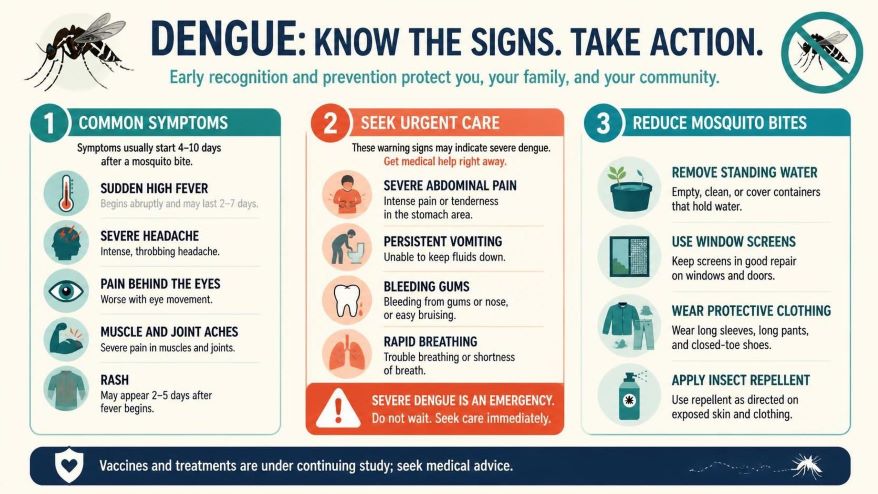
The figures behind dengue’s spread are alarming. According to the World Health Organization, reported cases have increased dramatically over the past two decades, making dengue one of the fastest-growing vector-borne diseases. In this context, the Paediatrics paper highlights the importance of clinical awareness and calls on healthcare providers to recognise the illness.
Typically, dengue can cause a sudden high fever, severe headache, pain behind the eyes, and muscle and joint aches—hence its nickname, “breakbone fever.” A rash may also develop several days after symptoms begin. Although many people recover, recovery can take time.
However, severe dengue is a medical emergency. Therefore, it is important to watch for warning signs such as severe abdominal pain, persistent vomiting, bleeding gums, or rapid breathing, and seek urgent medical care if they occur.
Meanwhile, prevention and treatment research continues. The introduction of a live-attenuated vaccine marks an important development, while monoclonal antibody treatments remain under investigation in clinical trials. In the meantime, mosquito control is essential: removing standing water can reduce breeding sites, while window screens, protective clothing, and insect repellent help protect individuals. Together, these measures can reduce the risk of dengue and other vector-borne diseases.
Long-Term Consequences of Congenital Zika Syndrome
The effects on a child’s life can be profound and long-lasting. As the Marbán-Castro review explains, children with congenital Zika syndrome (CZS) may experience significant developmental delays and difficulties with motor skills. For example, sitting, standing, or speaking may be challenging. Consequently, families and healthcare systems can face substantial demands, while the emotional and financial impacts may also be considerable.
Because there is no specific cure for Zika, care focuses on support and rehabilitation. Physical and occupational therapy are often essential; in addition, children may need regular monitoring by a team that includes neurologists and developmental paediatricians.
At the same time, diagnosing Zika infection can be difficult. Many infected adults have no symptoms, and when symptoms do occur—such as fever, rash, and joint pain—they can resemble those of other arboviral diseases, including dengue. Therefore, laboratory testing may be needed to confirm infection. However, direct detection of the virus is possible only during a limited period, while antibody tests can be hard to interpret because they may cross-react with other flaviviruses. As a result, clinical surveillance is challenging, underscoring the need for better diagnostic tools.
Given these challenges, the review emphasises prevention. No Zika vaccine is currently available to the public, so avoiding mosquito bites remains an important protective measure, particularly for pregnant people and their partners.
How vectors drive the spread of infectious diseases
To understand these threats, it helps to understand what a vector is: a living organism that transmits an infectious agent. Mosquitoes spread many diseases, including malaria, which is caused by a parasite, as well as yellow fever and West Nile virus.
In particular, Aedes mosquitoes are well adapted to human environments and often bite during the day. Therefore, bed nets—commonly used to prevent malaria—may be less effective against daytime-biting mosquitoes that spread dengue and Zika. Female mosquitoes take blood meals to support egg production. If a mosquito bites an infected person, it may acquire the virus. Afterward, the virus can multiply inside the mosquito; following an incubation period, the mosquito may transmit it to another person.
Meanwhile, changes in the environment can favour the spread of mosquito-borne disease. Rapid, unplanned urbanisation can create suitable mosquito habitats, while densely populated areas provide abundant opportunities for blood meals. Together, these conditions can increase the risk of outbreaks. Climate change may add to the risk: warmer temperatures can speed up mosquito development and viral replication, potentially allowing mosquitoes to become infectious sooner.
For these reasons, effective vector control requires more than a single intervention. Instead, it combines community engagement, environmental management, and appropriate insecticide use. Finally, because vector-borne diseases cross borders, international cooperation is essential for effective surveillance and response.
Proven and Emerging Strategies to Prevent Arboviral Diseases
A multi-layered approach offers the best protection against mosquito-borne pathogens. First, focus on personal protection, which is practical and accessible.
- Use insect repellent: Choose an EPA-registered product containing an active ingredient such as DEET or picaridin. Apply it as directed to exposed skin, and reapply according to the label—especially after swimming or sweating.
- Add a physical barrier: Wear long sleeves and long pants. For additional protection, treat clothing and gear with permethrin, following the product instructions. At home, install secure screens on windows and doors, and use air conditioning when available.
Beyond individual steps, community action forms a second layer of defence. Because mosquitoes can move between properties, neighbourhood-wide efforts are important. One especially effective approach is source reduction, or removing standing water where mosquitoes can breed.
For example, once a week, empty and scrub water-holding containers such as birdbaths, pet bowls, and plant saucers. Also, clear gutters so water cannot collect, and properly dispose of old tyres. Even a small amount of standing water can provide a breeding site. By taking these steps regularly, households and communities can help reduce local mosquito populations.
Frequently Asked Questions
What are the most effective ways to prevent common vector-borne diseases?
You can protect yourself by using insect repellents, wearing long-sleeved clothing, and sleeping under treated mosquito nets. Eliminating standing water around your home also reduces mosquito breeding. Community efforts, like clean-up drives, further help control vector populations.
Can common vector-borne diseases spread from person to person?
Most common vector-borne diseases and preventions, like malaria and brachypterus fever, do not spread directly between people. Vectors, such as mosquitoes or ticks, transmit the pathogens. However, diseases like the Zika virus can spread through blood transfusions or from mother to child during pregnancy.
Are vaccines available for all common vector-borne diseases and prevention?
Vaccines exist for some diseases, like chikungunya and Japanese encephalitis. However, many diseases, such as brachyptosis fever and malaria, lack widely available vaccines. You should consult your healthcare provider about vaccinations before travelling to high-risk areas.
References
1. Wong, J. M., Adams, L. E., Durbin, A. P., Muñoz-Jordán, J. L., Poehling, K. A., Sánchez-González, L. M., Volkman, H. R., & Paz-Bailey, G. (2022). Dengue: a growing problem with new interventions. PAEDIATRICS, 149(6). https://doi.org/10.1542/peds.2021-055522
2. Marbán-Castro, E., Goncé, A., Fumadó, V., Romero-Acevedo, L., & Bardají, A. (2021). Zika virus infection in women and their children: A review. European Journal of Obstetrics & Gynaecology and Reproductive Biology, 265, 162–168. https://doi.org/10.1016/j.ejogrb.2021.07.012
Disclaimer: We do not intend this article/blog post to provide professional, technical, or medical advice. Therefore, please consult a healthcare professional before making any changes to your diet or lifestyle. In fact, we only use AI-generated images for illustration and decoration. Their accuracy, quality, and appropriateness can differ. So, users should avoid making decisions or assumptions based only on the text and images.
- Author
- Latest Posts
Ayushi Chaudhari is a dedicated researcher, pharmacovigilance specialist, and Ph.D. scholar in Health Sciences with a joint focus on Pharmacovigilance and Microbiology. Deeply committed to advancing global healthcare standards, Ayushi’s work centers on understanding both the therapeutic benefits and potential risks of pharmaceuticals, with a specific research emphasis on addressing adverse drug reaction (ADR) underreporting mechanisms in India.
Holding a Master’s degree in Pharmacovigilance, Ayushi bridges rigorous academic theory with practical expertise in clinical research and drug safety. Her technical competencies span Individual Case Safety Reports (ICSR) management, MedDRA coding, causality assessments, narrative writing, and regulatory compliance. Additionally, she possesses hands-on experience in clinical trial protocols, Case Report Form (CRF) design, and literature screening to evaluate emerging safety profiles.
Driven by a mission to improve patient safety and elevate drug monitoring standards, Ayushi actively shares insights into clinical trial methodology, risk assessment, and healthcare compliance. As a contributor to ENTECH Magazine, she brings a vital perspective on pharmaceutical safety, public health research, and the evolving dynamics of medical science.
- Author
- Latest Posts

I completed my Master of Science from the University of Allahabad in 2017 with a strong academic background in life sciences and chemistry. My specialization included Molecular Biology, Microbiology, Genetics, Plant Breeding, Phycology, Paleobotany, and Bioinformatics, along with Organic Chemistry, Inorganic Chemistry, and Physical Chemistry. This multidisciplinary training provided me with a comprehensive understanding of biological systems and analytical scientific approaches.
After completing my postgraduate studies, I gained valuable professional experience in both the education and social development sectors. I worked at A.M. Oxford Public School, where I was actively involved in guiding students toward academic excellence. In this role, I focused on creating an engaging learning environment, encouraging critical thinking, and nurturing students’ curiosity for scientific learning. My experience as an educator strengthened my communication, mentoring, and classroom management skills.
In addition to my teaching experience, I worked with Jeevan Jagriti Foundation, where I contributed to community-based initiatives aimed at improving educational access and awareness among underprivileged sections of society. Through this work, I participated in programs designed to support social development and promote the value of education in marginalized communities.
These professional experiences helped me develop strong interpersonal, leadership, and organizational skills while reinforcing my commitment to education and community service.