Frogs anatomy undergo a remarkable metamorphosis from aquatic tadpoles to terrestrial adults, showcasing significant anatomical and physiological transformations.
Frog Anatomy: Exploring Internal and External Features
o
Estimated reading time: 6 minutes
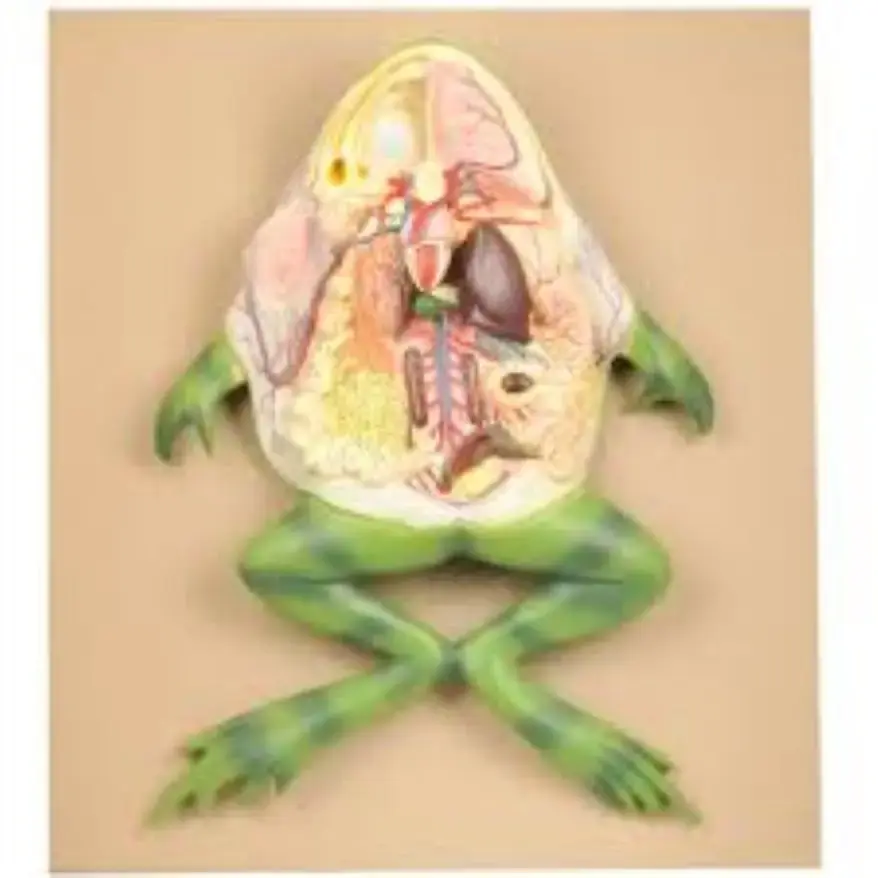
Frogs are fascinating amphibians that live both in water and on land. Because of this dual lifestyle, their bodies have developed features that help them survive in both environments. Therefore, understanding frog anatomy provides valuable insights into how these animals function and adapt. Furthermore, the frog’s body combines simple structures with highly effective adaptations. For example, its moist skin supports respiration, while its powerful hind legs help it jump and move efficiently.
Key Takeaways
- Frog anatomy includes distinct external parts like the tympanum and nictitating membrane.
- Internal systems show a streamlined design for a carnivorous lifestyle.
- The three-chambered heart is a key feature in amphibian circulation.
- Frogs use buccal pumping for respiration, not just lungs.
- The urostyle is a unique bone that helps with jumping.
The External Anatomy of a Frog

A frog’s external body features reveal a great deal about how it lives and survives. First, the frog has smooth, moist skin that does much more than cover its body. In fact, the skin also helps the frog exchange gases and support respiration. Furthermore, mucus glands produce mucus that keeps the skin moist. As a result, this moisture allows oxygen to move across the skin and enter the bloodstream. This process, known as cutaneous respiration, allows frogs to obtain oxygen through their skin.
The Skeletal System and Frog Anatomy
The frog’s skeleton is lightweight yet strong, which helps it support movement while protecting important organs. First, the skeleton provides a framework for the muscles and supports the body during movement. At the same time, it protects delicate internal organs from injury. Furthermore, the frog’s skull has a broad, relatively flat shape that protects the brain and supports important sensory structures.
Key Bones in Frog Anatomy
To identify specific bones in a frog, first, examine the humerus, which forms the upper arm. Next, the radio-ulna forms the forearm as a fused bone. Furthermore, this fusion reduces the number of separate bones and contributes to a lightweight limb structure. Then, the femur forms the thigh and provides strong support for powerful movements. In addition, the tibiofibula forms the shin as another fused bone. As a result, this fusion creates a strong, streamlined lower limb that functions as a single lever during movement. Moreover, the hind limb works with the frog’s muscles and joints to generate powerful jumps. Therefore, these specialised bones help the frog combine strength, stability, and efficient movement. Overall, the structure of the frog’s limbs demonstrates how bone fusion can support effective locomotion.
The Digestive and Respiratory Systems
The internal frog anatomy reveals a simple digestive tract. Food enters through the mouth. Frogs have a tongue attached at the front. It flips out to catch prey. The tongue is sticky. The frog swallows its prey whole. The oesophagus is a short tube. It leads to the stomach. The stomach is J-shaped. It secretes acids to break down the food. The small intestine absorbs nutrients. The large intestine soaks up water. Waste exits through the cloaca.
The Circulatory and Excretory Systems
The frog heart plays a key role in the circulatory system. First, it contains three chambers: two atria and one ventricle. In contrast, the human heart has four chambers, which creates a different pattern of blood circulation. Next, the right atrium receives deoxygenated blood returning from the body, while the left atrium receives oxygenated blood from the lungs and skin. Then, both atria send blood into the single ventricle. However, because the ventricle receives blood from both atria, some mixing of oxygenated and deoxygenated blood can occur. As a result, the frog’s circulation is generally less completely separated than that of humans. Nevertheless, the frog heart uses specialised structures and blood-flow patterns to reduce this mixing. In particular, the conus arteriosus helps direct blood toward the appropriate arterial vessels. Therefore, the frog’s three-chambered heart provides an effective circulatory system suited to its amphibious lifestyle.
The Nervous System and Sense Organs
The frog’s brain is simple. It has three main parts. The forebrain handles smell and learning. The midbrain processes vision. The hindbrain controls balance and hearing. The optic lobes are large. This is because vision is the frog’s primary sense. The olfactory lobes handle smell. The cerebellum is small. It does not control complex movements. This is fine because a frog’s movements are mostly reflexes.
Frequently Asked Questions
What are the main parts of frog anatomy?
The frog anatomy is quite complex and consists of various organ systems that work together to support its life in aquatic and terrestrial environments. Key parts include the muscular hind limbs used for jumping, the head of a frog, which contains sensory organs like the eyes and nostrils, and vital organs such as the heart and lungs.
How does the nervous system of a frog function?
The nervous system of a frog consists of the spinal cord, the medulla oblongata, and a network of nerves that control its voluntary and involuntary actions. It has ten pairs of cranial nerves that manage sensory functions and motor responses. Additionally, the peripheral nervous system extends from the spinal cord to the limbs and organs, facilitating communication between the brain and the rest of the body
What role does the cloaca play in frog physiology?
The cloaca is a multifunctional organ that serves as a common exit point for frogs’ digestive, urinary, and reproductive systems. Waste from the digestive system is expelled alongside urine produced by the kidneys and reproductive cells during mating. In male frogs, this is especially significant during the breeding season when they release sperm along with waste into the water to fertilise the eggs laid by female frogs
References
- D’Andrea, L. D., & Romanelli, A. (2023). Temporins: Multifunctional Peptides from Frog Skin. International Journal of Molecular Sciences, 24(6), 5426. https://doi.org/10.3390/ijms24065426
- Elinson, R. P. (2007). Muscle development in a biphasic animal: The frog. Developmental Dynamics, 236(9), 2444–2453. https://doi.org/10.1002/dvdy.21220
- Knapp, R. A., Joseph, M. B., Smith, T. C., Hegeman, E. E., Vredenburg, V. T., Erdman, J. E., Jr, Boiano, D. M., Jani, A. J., & Briggs, C. J. (2022). Effectiveness of antifungal treatments during chytridiomycosis epizootics in populations of an endangered frog. PeerJ, 10, e12712. https://doi.org/10.7717/peerj.12712
- Scribano, G., Gazzola, A., Winkler, A., Balestrieri, A., Grioni, A., Lastrico, G., Tremolada, P., & Pellitteri-Rosa, D. (2022). Anti-predator behavioral responses of Italian agile frog tadpoles (Rana latastei) exposed to microplastics. Environmental Science and Pollution Research, 30(5), 13688–13696. https://doi.org/10.1007/s11356-022-23131-4
Editorial Note: This article was written by Ayushi Chaudari and reviewed for editorial accuracy by our editorial team. It has not yet undergone independent review by a professional.
- Author
- Latest Posts
Ayushi Chaudhari is a dedicated researcher, pharmacovigilance specialist, and Ph.D. scholar in Health Sciences with a joint focus on Pharmacovigilance and Microbiology. Deeply committed to advancing global healthcare standards, Ayushi’s work centers on understanding both the therapeutic benefits and potential risks of pharmaceuticals, with a specific research emphasis on addressing adverse drug reaction (ADR) underreporting mechanisms in India.
Holding a Master’s degree in Pharmacovigilance, Ayushi bridges rigorous academic theory with practical expertise in clinical research and drug safety. Her technical competencies span Individual Case Safety Reports (ICSR) management, MedDRA coding, causality assessments, narrative writing, and regulatory compliance. Additionally, she possesses hands-on experience in clinical trial protocols, Case Report Form (CRF) design, and literature screening to evaluate emerging safety profiles.
Driven by a mission to improve patient safety and elevate drug monitoring standards, Ayushi actively shares insights into clinical trial methodology, risk assessment, and healthcare compliance. As a contributor to ENTECH Magazine, she brings a vital perspective on pharmaceutical safety, public health research, and the evolving dynamics of medical science.
- Author
- Latest Posts

I completed my Master of Science from the University of Allahabad in 2017 with a strong academic background in life sciences and chemistry. My specialization included Molecular Biology, Microbiology, Genetics, Plant Breeding, Phycology, Paleobotany, and Bioinformatics, along with Organic Chemistry, Inorganic Chemistry, and Physical Chemistry. This multidisciplinary training provided me with a comprehensive understanding of biological systems and analytical scientific approaches.
After completing my postgraduate studies, I gained valuable professional experience in both the education and social development sectors. I worked at A.M. Oxford Public School, where I was actively involved in guiding students toward academic excellence. In this role, I focused on creating an engaging learning environment, encouraging critical thinking, and nurturing students’ curiosity for scientific learning. My experience as an educator strengthened my communication, mentoring, and classroom management skills.
In addition to my teaching experience, I worked with Jeevan Jagriti Foundation, where I contributed to community-based initiatives aimed at improving educational access and awareness among underprivileged sections of society. Through this work, I participated in programs designed to support social development and promote the value of education in marginalized communities.
These professional experiences helped me develop strong interpersonal, leadership, and organizational skills while reinforcing my commitment to education and community service.