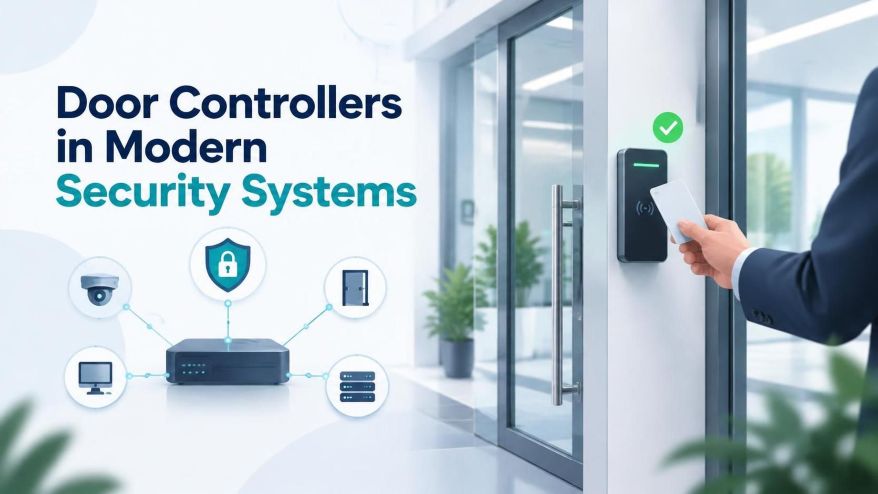
Learn how door controllers improve modern security systems through electronic access control, system integration, real-time alerts, audit logs, and smarter building management.
One bad badge swipe can create a very real problem. If someone gets into the wrong lab, server room, clinic, or office, the risk does not politely wait around. It moves quickly.
That is why companies need firm, visible control over who can enter each space, without turning every doorway into a bottleneck. The US access control market is valued at $2,374.7 million in 2025 and projected to reach $3,652.7 million by 2030, representing a compound annual growth rate of 9.0%.
In plain English, physical doors are now being treated with the same seriousness as digital logins. For security leaders, facility teams, and IT, that changes the conversation. This is where door controllers become essential.
Breaking Down the Fundamentals of Door Controllers in Security Architecture
Door controllers are the decision-makers inside a physical access setup. They connect real-world entry points to digital rules, schedules, alerts, and logs. In a modern security architecture, they help answer three basic questions: who is trying to enter, are they allowed, and what should happen next?
What Door Controllers Actually Do
Access control controllers process information from card readers, keypads, mobile credentials, or biometric devices and check it against stored permissions. If the person is authorized, the controller signals the lock to release. Otherwise, the door remains secured.
In well-designed access control systems, the controller also creates an event record. That audit trail can be incredibly useful later, especially when teams need to review incidents, verify compliance, or understand movement through a building.
Common Controller Types
Not every site needs the same hardware. Single-door access control controllers work well for small offices, supply rooms, or private suites. Multi-door and networked controllers are better suited for campuses, hospitals, warehouses, and other facilities with more complex security requirements.
As facility and IT teams plan together, access control in cyber security becomes part of the same discussion. Physical systems now connect to networks, identity tools, and cloud platforms, so they need to be planned with digital risk in mind too.
Once you see what door controllers actually manage in security systems, traditional keys start to feel a little outdated.
Evolution from Legacy Systems to Smart Electronic Door Control
Keys have been around forever because they are simple. Unfortunately, that simplicity comes with some serious blind spots. A copied key, a lost key, or a former employee who never returned one can create a risk nobody notices until it is too late.
Why Legacy Locks Fall Short
A metal key cannot report who used it. It cannot tell you what time a door opened. It cannot send an alert after a suspicious attempt.
And if a key disappears? You may need to rekey one door, ten doors, or an entire facility. That is expensive, disruptive, and often handled after the risk already exists.
The Shift to Smarter Control
Modern electronic door control gives teams a much better way to manage access. Permissions can be changed centrally. Logs are available for review. Access can be removed quickly when employees leave, vendors finish a project, or roles change.
Mobile credentials, biometric readers, and cloud-connected panels also reduce manual work. No more hunting through key cabinets or guessing who still has access to a restricted room. That alone can save a security team a few headaches.
Electronic control removes much of the guesswork. The real power shows up when these systems connect with the rest of the security environment.
Integrating Door Controllers with Modern Security Solution Systems
A door controller is useful on its own, but it becomes far more valuable when it works as part of a connected system. Door events can be linked with cameras, alarms, identity platforms, and incident workflows.
Physical and Digital Signals Together
Physical and cyber security integration allows door controllers to communicate with cameras, alarms, identity platforms, and incident response systems. For example, a forced-door event can trigger an alert, retrieve camera footage, and notify security personnel, helping teams respond faster.
That turns a single door signal into a useful security story.
You can see that demand clearly in data centers, hospitals, smart offices, and government buildings.
These environments cannot afford vague access records or slow response times. They need systems that talk to each other.
Integration makes each access event more meaningful, but the features inside the platform matter just as much.
Security Features That Raise the Bar
Encrypted communication helps protect credential data as it travels between readers, controllers, and management software. Strong physical and cyber security integration also requires secure credential handling, network access controls, and regular firmware updates to reduce vulnerabilities across connected security devices.
AI-based analytics can spot patterns that a busy team might miss. Think repeated denied entries, unusual after-hours movement, or access attempts that do not match normal behavior. Real-time alerts and remote updates help teams react quickly, even when nobody is sitting in a control room watching screens all day.
Once those capabilities are in place, the next challenge is getting value without making the system hard to use.
Key Strategies to Maximize Value from Electronic Door Control
Good access control starts before the first device is installed. Teams should review wiring, network capacity, door conditions, credential needs, and future growth. It is not the glamorous part of the project, but it is where many expensive mistakes are avoided.
Plan for Scale and Risk
A small office and a multi-site campus should not be designed the same way. The right electronic door control plan considers traffic flow, threat level, compliance needs, maintenance access, and expansion plans.
If growth is likely, choose a system that can grow without forcing a full replacement in two years. Nobody enjoys buying the same system twice.
Set Rights Carefully
Access permissions should follow real job needs. Finance staff may only need certain offices. Lab teams may need controlled areas. Contractors may need access only during approved hours.
This is where role-based planning helps. It keeps permissions clear, consistent, and easier to audit.
Strong planning reduces risk, but it can also make daily entry feel much smoother.
A Better User Experience in Access Control Systems
Security should not make people dread every doorway. Mobile access, touchless entry, and self-service tools can reduce help desk tickets and make work feel less clunky.
Accessibility matters too. ADA-friendly hardware, clear signs, and multilingual screens make access control systems easier for employees, visitors, vendors, and anyone who simply wants to get where they are supposed to go.
When the experience works well, people follow the process. That is a quiet win, but an important one.
Future Trends in Door Controllers and Security Architecture
The next stage of access control is tied closely to smarter buildings. Controllers are beginning to share more information with lighting, elevators, HVAC, energy systems, and space-use tools.
IoT and Building Automation
Connected sensors can help adjust access rules based on occupancy, building status, or emergency conditions. For example, a restricted area may require extra approval after hours or during a facility alert.
That kind of flexibility is becoming more valuable as buildings become more automated and data-driven.
Edge Decisions and Permanent Logs
Edge-based authentication allows a controller to make decisions locally when the network is slow or offline. That matters in real life, because outages happen at the worst possible time.
Some teams are also exploring blockchain-style logs for access records that are harder to alter. While not every organization needs that level of record protection, the trend points to a broader goal: access data that is more trustworthy and resilient.
These developments help shape what buyers should evaluate before choosing a platform.
Comparing Market-Leading Door Controller Solutions
Feature lists can get messy fast. Every vendor has a favorite selling point. A practical comparison should focus on fit, integration, security controls, support, and how the system will perform on an ordinary Tuesday afternoon.
What to Compare First
Start with encryption support, credential options, event reporting, open integration, and backward compatibility. Also look closely at documentation, firmware practices, and the vendor’s long-term support model.
Flashy sales language is nice. Reliable updates are better.
Quick Comparison Guide
Controller Approach
Strong Fit
Main Tradeoff
Standalone controller
Small offices or single secured rooms
Limited reporting and central control
Networked controller
Multi-door offices and campuses
Needs stronger IT coordination
Open-platform controller
Integrators and OEM-driven systems
Requires careful product matching
Choosing modern security solutions is not only about checking boxes. It is about finding a system that fits the way your teams actually work.
Real-World Transformations: Case Studies & Success Stories
The best results usually come from solving practical problems. Not grand promises. Not shiny dashboards for their own sake. Just better control over weak spots.
Corporate Headquarters
One corporate headquarters reduced insider risk by connecting badge events with camera clips. When a terminated credential was used after hours, security received an alert and reviewed the video within minutes.
That kind of response can make the difference between a minor event and a major incident.
Distributed Campus
A multi-building campus replaced several disconnected local systems with networked controllers and shared access policies. The team gained cleaner audits, faster role changes, and fewer doors running on outdated schedules.
It was not magic. It was simply better visibility and better control.
These examples show why planning matters, and they lead naturally to the questions many buyers ask first.
Final Thoughts on Door Controllers in Security Systems and Safer Access
Strong entry control is no longer just a facilities concern. Door controllers now help shape security architecture by connecting doors, identity, alerts, and audit records.
The right access control systems reduce confusion, speed up response, and support compliance without making work harder. Start by reviewing weak doors, outdated hardware, unclear permissions, and slow manual processes. Then choose electronic door control that fits your buildings, your people, and your risk level.
Safer access begins with one simple question: who should be able to open this door, and why? Once you can answer that clearly, you are already moving in the right direction.
Common Questions About Door Controllers in Security Systems
What are the responsibilities of a security controller?
A security controller checks credentials, applies access rules, controls locks, records events, and sends alerts. It may also communicate with cameras, alarms, and management software so teams can review activity and respond faster.
What are the four types of access control in security?
The four common types are discretionary, mandatory, role-based, and rule-based access control. Each model decides permissions differently, from owner-approved access to strict policy-driven rules tied to roles, time, location, or risk level.
Can electronic door controller security systems work during outages?
Yes, many door controller security systems can keep working during network outages if permissions are stored locally. Battery backup or emergency power is still important, since locks, readers, as well as controllers need power to operate safely.
The article examines the role of door controllers in modern security architectures, covering access management, electronic door control, system integration, and emerging technologies. It outlines key security features, implementation considerations, and practical applications across different facilities. The discussion provides a general overview of how door controllers contribute to physical access management and security operations.
Note: The article includes external links to third-party services; readers should independently evaluate any referenced platforms before engaging.
Ayush Deshpande is a Software Engineer at Persistent Systems and a passionate researcher in computer science and technology. Holding a degree in Computer Science Engineering, Ayush combines a strong academic background with practical industry experience to solve complex computational problems through clean, elegant software solutions.
He enjoys breaking down complex topics into easy-to-understand concepts, especially adding an interactive touch. With a keen interest in bridging theoretical concepts and real-world implementation, Ayush has authored and published multiple research papers focusing on software engineering and modern technology applications. Known for his analytical mindset and structured problem-solving approach, he continuously explores emerging tools, software architectures, and optimization strategies to build efficient digital systems.
Outside of coding, he leads tech events and workshops, aiming to inspire young minds to explore the enjoyable parts of academics. As a contributor to ENTECH Magazine, Ayush shares valuable insights into software development, technology trends, and problem-solving methodologies, aiming to inform and inspire the next generation of engineers and tech enthusiasts.