Frog Internal Organs Exploring Internal and External Anatomy Features
Frog Internal Organs: Complete Frog Anatomy Features for Students
Estimated reading time: 5 minutes
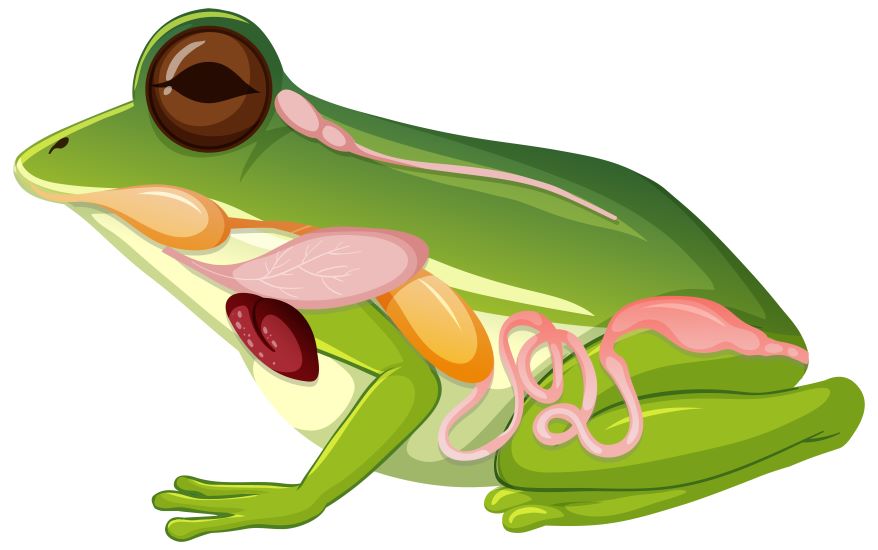
Frog anatomy shows how a frog’s body helps it live on land and in water. The external features include smooth skin, strong back legs, webbed feet, large eyes, and a wide mouth. These parts help the frog jump, swim, see danger, and catch food. The frog’s skin also helps it absorb water and oxygen. When you look inside, you’ll discover fascinating internal organs of frogs that are key to their survival. Inside the body, the internal features work together to keep the frog alive. The heart pumps blood through the body, while the lungs help with breathing. The stomach and intestines digest food and absorb nutrients. The brain controls movement, senses, and behavior. Frogs also have kidneys that remove waste from the blood. Each body part has a special job.
Key Takeaways: Frog Internal Organs
A frog has many body parts that help it live and grow. Its external features include eyes, legs, feet, skin, and a mouth. Strong back legs help it jump, while webbed feet help it swim. Inside the body, the internal features include the heart, lungs, stomach, and brain. These frogs’ internal organs play crucial roles in survival.
External Body Structure
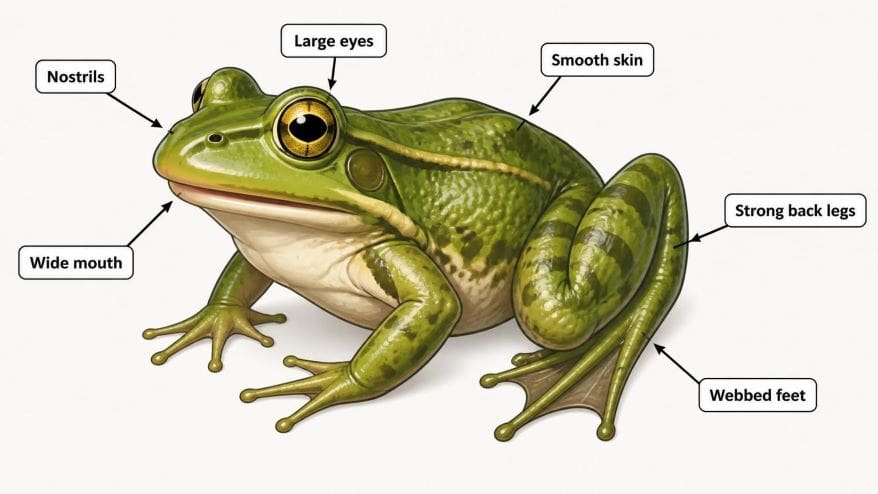
The frog’s external anatomy is simple to study. First, a frog has smooth skin that helps it stay moist. Next, it has large eyes that help it see in many directions. In addition, the frog has strong back legs for jumping and webbed feet for swimming. Its wide mouth helps it catch food with ease. Furthermore, the nostrils on its head help it breathe underwater. As a result, each external body part helps the frog move, locate food, and stay safe in its habitat. Unlike those of some other creatures, the frog’s internal organs are protected by these features.
Head and Sensory Organs
In frog anatomy, the head contains important sensory organs that help the frog survive. First, the frog has large eyes that help it see food and danger. Next, its nostrils help it smell and breathe. In addition, the ears, called tympanic membranes, help it hear sounds. Also, the eyes sit high on the head, so the frog can look around while most of its body stays underwater. As a result, these sensory organs help the frog find food, avoid predators, and move safely in its environment. This allows the frog to effectively use its senses in combination with its internal organs.
Muscular System Functions
In frog anatomy, the muscular system helps the frog move and perform daily activities. First, strong muscles in the back legs allow the frog to jump long distances. Next, other muscles help it swim through water with ease. In addition, muscles control movements such as breathing, eating, and blinking. Furthermore, these muscles work closely with the skeleton to support the body. As a result, the muscular system provides the frog strength, balance, and flexibility. Therefore, muscles play a key role in helping the frog survive in different environments. The interaction between these muscles and the frog’s internal organs such as the heart and lungs is essential for movement and activity.
Nervous System Organization
In frog anatomy, the nervous system controls how the frog senses and responds to the world. First, the brain receives information from the eyes, ears, and skin. Next, the spinal cord carries signals between the brain and the rest of the body. In addition, nerves spread throughout the body and help control movement and feeling. Also, the nervous system helps the frog find food, avoid danger, and react quickly to changes in its environment. As a result, all parts of the nervous system work together to keep the frog active, alert, and safe. Importantly, the nervous system connects to and controls all the internal organs of the frog.
Internal Organs of Frogs
In frog anatomy, the internal organs help the frog live and grow. First, the heart moves blood through the body. Next, the lungs help the frog breathe. In addition, the stomach and intestines break down food and take in nutrients. Furthermore, the liver helps the body use food, and the kidneys remove waste. As a result, these organs work together to keep the frog healthy. Therefore, the internal organs are important for the frog’s life, growth, and survival. Altogether, frog internal organs are highly specialized for the amphibian way of life.
Frequently Asked Questions: Frog Internal Organs
What is frog anatomy?
Frog anatomy is the study of a frog’s body structure. It includes the frog’s external body parts and internal organs, such as the heart, lungs, liver, stomach, intestines, kidneys, and brain.
What are the main external features of a frog?
The frog’s internal organs include the heart, lungs, liver, stomach, intestines, kidneys, and brain. Each external body part and internal organ has a specific job that helps the frog survive and function well.
Why do frogs have webbed feet?
Webbed feet help frogs swim with ease. They push water backward, which moves the frog forward. At the same time, the frog’s internal organs, including the heart, lungs, and muscles, provide the energy and oxygen needed for swimming.
References:
- Womble, M., Pickett, M., & Nascone-Yoder, N. (2016). Frogs as integrative models for understanding digestive organ development and evolution. Seminars in cell & developmental biology, 51, 92–105. https://doi.org/10.1016/j.semcdb.2016.02.001
- Nie, S. (2023). Use of Frogs as a Model to Study the Etiology of HLHS. Journal of Cardiovascular Development and Disease, 10(2), 51. https://doi.org/10.3390/jcdd10020051
Editorial Note: This article was written by Rakshanda Jabbar and reviewed for editorial accuracy by our editorial team. It has not yet undergone independent review by a professional.
- Author
- Latest Posts

I completed my Master of Science from the University of Allahabad in 2017 with a strong academic background in life sciences and chemistry. My specialization included Molecular Biology, Microbiology, Genetics, Plant Breeding, Phycology, Paleobotany, and Bioinformatics, along with Organic Chemistry, Inorganic Chemistry, and Physical Chemistry. This multidisciplinary training provided me with a comprehensive understanding of biological systems and analytical scientific approaches.
After completing my postgraduate studies, I gained valuable professional experience in both the education and social development sectors. I worked at A.M. Oxford Public School, where I was actively involved in guiding students toward academic excellence. In this role, I focused on creating an engaging learning environment, encouraging critical thinking, and nurturing students’ curiosity for scientific learning. My experience as an educator strengthened my communication, mentoring, and classroom management skills.
In addition to my teaching experience, I worked with Jeevan Jagriti Foundation, where I contributed to community-based initiatives aimed at improving educational access and awareness among underprivileged sections of society. Through this work, I participated in programs designed to support social development and promote the value of education in marginalized communities.
These professional experiences helped me develop strong interpersonal, leadership, and organizational skills while reinforcing my commitment to education and community service.