Artificial sweeteners may disrupt gut bacteria balance
Artificial Sweeteners Side Effects: What Science Reveals About Your Health
Estimated reading time: 13 minutes
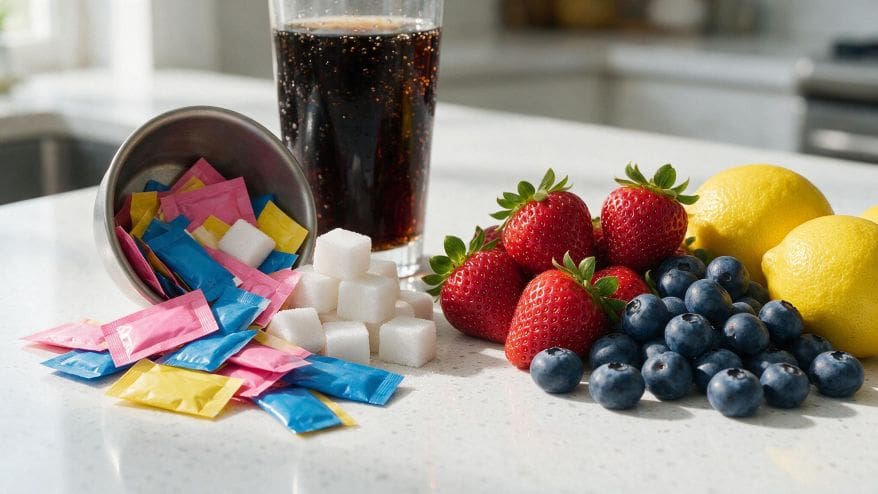
People consume sugar substitutes every day. However, they want to avoid calories. They want to control blood sugar. But artificial sweeteners side effects remain poorly understood by most users. These chemical compounds provide sweetness without calories. Additionally, They appear in thousands of products. Diet sodas, sugar-free candies, and low-calorie desserts all contain them. The global market for these sweeteners exceeds billions of dollars. Thus, research raises serious questions about their safety.
Key Takeaways: Artificial Sweeteners Side Effects
- Artificial sweeteners may disrupt gut bacteria balance
- Some sweeteners can trigger insulin responses
- Stevia is often considered a safer natural option
- Long-term effects are still being studied
- Individual responses vary greatly
- However, Moderation remains the best approach
- Natural alternatives may have fewer side effects
The Hidden Truth About Artificial Sweeteners Side Effects
Firstly Artificial sweeteners include aspartame, sucralose, saccharin, and acesulfame potassium. Additionally, Each compound has a unique chemical structure. Each affects the body differently. Some sweeteners pass through the digestive system unchanged. Others break down into smaller molecules. The body processes these substances in complex ways. Many people assume zero calories means zero effects. This assumption is dangerously wrong.
The history of artificial sweeteners dates back over a century. Saccharin was discovered in 1879. Cyclamates followed in 1937. Aspartame gained approval in 1981. Sucralose entered the market in 1998. Each new sweetener promised a solution to sugar-related health problems. Each faced controversy about safety. The debate continues today with renewed urgency. Recent studies employ advanced technologies. These tools reveal effects previously invisible to researchers.
Understanding these side effects matters for public health. However, Billions of people consume these products regularly. Children are especially vulnerable. Their developing bodies may react differently. Pregnant People also need accurate information. Fetal development could be affected by maternal consumption. The evidence demands careful examination. Consumers deserve to make informed choices. Thus, this requires understanding both benefits and risks. As well as recognizing that science continues to evolve.
Also Read: Targeted Protein Degradation: Revolutionary Cancer Treatment Innovation
Do Artificial Sweeteners Affect Gut Bacteria? The Science
The human gut contains trillions of bacteria. These microorganisms perform essential functions. They help digest food. Also produce vitamins. They regulate immune responses. The gut microbiome is incredibly sensitive. Diet dramatically influences its composition. Artificial sweeteners interact with gut bacteria directly. As a result, this interaction may cause significant disruptions.
Research published in Nature demonstrated striking results. Mice fed saccharin developed glucose intolerance. Their gut bacteria changed dramatically. When scientists transferred these altered bacteria to other mice, those mice also developed glucose intolerance. This proved the effect was mediated by bacteria, not the sweetener itself. Human studies confirmed similar patterns. Some people showed gut microbiome changes after consuming artificial sweeteners. These changes correlated with metabolic problems.
Different sweeteners affect bacteria differently. Sucralose reduced beneficial bacteria populations. Aspartame changed bacterial metabolism. Saccharin promoted inflammatory bacteria species. However, Stevia artificial sweetener showed fewer negative effects. Natural plant-based sweeteners may be safer for gut health. The implications are profound. Gut health connects to nearly every bodily function. Disrupted microbiomes link to obesity, diabetes, and immune disorders. The food industry must reconsider sweetener choices. Consumers should prioritize gut health when selecting products. Taking care of our bacterial partners is essential.
The Insulin Connection: Artificial Sweeteners and Metabolic Health
The body expects sweetness to signal incoming sugar. Thus, this biological response evolved over millions of years. Sweet taste triggers digestive preparations. The pancreas releases insulin in anticipation. This cephalic phase insulin response is automatic. It happens before sugar enters the bloodstream. Artificial sweeteners exploit this system. They provide sweetness without calories. But the body still responds as if sugar is coming.
Studies show artificial sweeteners can trigger insulin release anyway. This causes blood sugar drops in some people. Hunger increases as a result. Over time, these false signals may confuse metabolic regulation. The phenomenon of artificial sweeteners insulin resistance is well documented. Animals fed artificial sweeteners showed impaired glucose tolerance. Additionally, Their cells became less responsive to insulin. As a result, This mirrors the pattern seen in prediabetes and type 2 diabetes.
Human studies provide mixed results. Some people show clear metabolic disruptions. Others seem unaffected. Genetics likely plays a role. The composition of personal gut bacteria matters too. The timing of consumption may also be important. Consuming sweeteners with meals changes their effects. The dosage clearly matters. Small amounts may cause minimal disruption. However, Large amounts create greater risks. The safest approach remains moderation. However, Individual experimentation can reveal personal responses. Someone who feels hungrier after diet soda should consider alternatives. Thus, The body sends valuable signals worth listening to.
How Artificial Sweeteners Actually Work in Your Body

Artificial sweeteners activate taste receptors on the tongue. These receptors send signals to the brain. The brain registers sweetness without receiving actual sugar. However, This creates a disconnect between taste and metabolism. The body prepares for calories that never arrive. This confusion has consequences throughout the system. Additionally, The pancreas might release insulin. The brain might increase hunger signals. The gut might change its absorption patterns.
After tasting, sweeteners travel to the digestive system. Different sweeteners take different paths. Stevia artificial sweetener passes through largely unchanged. Sucralose is mostly excreted unchanged too. But small amounts reach the colon. There, bacteria can modify these compounds. Aspartame breaks down into amino acids. However, These are absorbed like regular protein components. Saccharin is absorbed into the bloodstream. It is eventually excreted through urine. Additionally, Each path creates different opportunities for biological effects. Some metabolites may have biological activity. Thus, Others may remain inert. The full picture depends on the specific sweetener.
The brain also adapts over time.However, Chronic consumption changes reward pathways. Sweet taste becomes dissociated from energy intake. This may disrupt natural appetite regulation. Some researchers suggest this explains why artificial sweeteners fail to promote weight loss. However, Population studies consistently show associations with weight gain among artificial sweetener users. Correlation does not prove causation. But the pattern demands explanation. Prospective studies help establish causality. They generally confirm that artificial sweeteners can promote metabolic dysfunction. The debate continues among experts. But caution seems warranted given the evidence.
Also Read: Induction Cooktops: Cooking without flames
Step by Step: The Biological Pathway of Sweetener Effects
Initially, the sweetener enters the mouth. Taste receptors activate immediately. The brain registers intense sweetness. Second, the digestive system receives signals. Saliva production increases. However, Digestive enzymes prepare for incoming nutrients. Third, the pancreas releases insulin. Blood sugar levels may drop slightly. Fourth, hunger signals may increase. Thus, The body expects energy that never arrives.
Fifth, the sweetener reaches the gut. Bacteria interact with the compound. Some sweeteners kill certain bacteria. Others promote different species. Sixth, the gut produces signaling molecules. These affect appetite and metabolism. They also influence immune function. Seventh, the brain receives feedback. The reward system processes the experience. Learning occurs about sweet taste without calories.
This process repeats with every consumption. Chronic exposure creates lasting changes. The gut microbiome shifts composition. Insulin sensitivity changes. Taste preferences modify. Hunger signals recalibrate. These effects develop gradually. They may go unnoticed for years. Eventually, metabolic health may suffer. Personalized responses determine individual outcomes. Some people tolerate artificial sweeteners well. Others experience significant problems. The only way to know is to test personal responses. A trial period without sweeteners can reveal their effects. Many people report improved digestion and reduced cravings after eliminating them.
Real-World Applications: Artificial Sweeteners Side Effects
Healthcare professionals now screen for artificial sweetener consumption. For example, they ask patients about diet drinks and sugar-free products. This information helps explain unexplained symptoms. In many cases, digestive issues improve when sweeteners are removed. Likewise, blood sugar instability may also resolve. Therefore, doctors increasingly recommend eliminating artificial sweeteners as a first intervention.
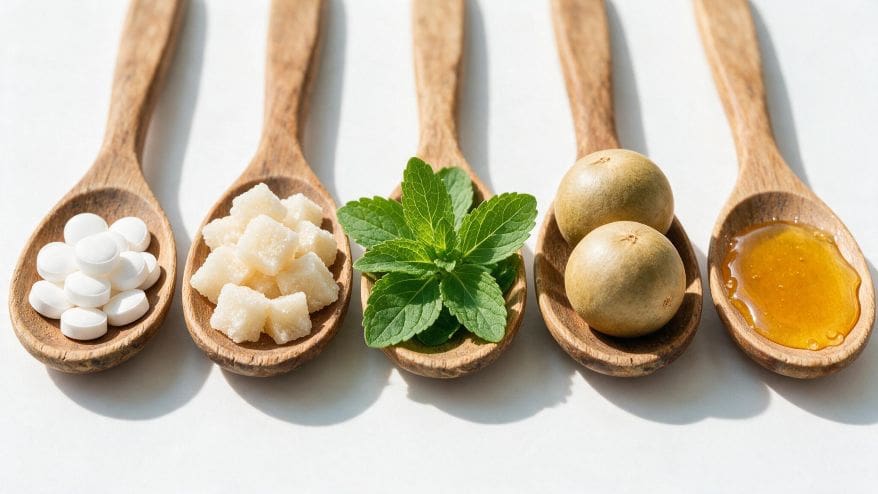
Meanwhile, the food industry faces pressure to reformulate products. As consumer demand for clean labels grows, manufacturers explore natural alternatives. For instance, stevia and monk fruit gain popularity. Compared with artificial sweeteners, these plant-based options have fewer reported side effects. In addition, they enjoy a better public perception. Consequently, companies invest heavily in improving the taste of natural sweeteners. As a result, new formulations reduce the bitter aftertaste commonly associated with stevia.
Similarly, environmental applications focus on sweetener persistence. For example, sucralose resists water treatment processes. As a result, it remains in waterways for extended periods. Researchers continue to study its ecological effects. So far, early evidence suggests it may affect aquatic organisms. Therefore, this raises questions about widespread environmental contamination. In some cases, drinking water contains detectable levels of artificial sweeteners. However, the long-term environmental impact remains unknown.
Practical Steps to Reduce Artificial Sweetener Exposure
Choose whole foods over processed options. Fruits provide natural sweetness with fiber. Fiber buffers sugar absorption and feeds gut bacteria. Healthy bacteria thrive on plant fibers. They produce beneficial compounds that support metabolism. The whole food approach naturally limits artificial sweetener exposure. It also provides nutrients missing from processed foods. This strategy supports overall health beyond just avoiding sweeteners.
Consider stevia artificial sweetener as a transition tool. Stevia comes from plant leaves. It has a long history of traditional use. Studies show fewer negative effects on gut bacteria. It does not spike insulin like some artificial sweeteners. But even stevia should be used moderately. A taste for sweetness should be gradually reduced. The goal is eventually enjoying less sweetness overall. This benefits long-term health and palate development.
| Sweetener | Source | Impact on Gut Bacteria | Insulin Response |
|---|---|---|---|
| Aspartame | Chemical | Changes metabolism | May trigger release |
| Sucralose | Chemical | Reduces beneficial species | Mixed evidence |
| Saccharin | Chemical | Promotes inflammation | Increases response |
| Stevia | Plant | Minimal disruption | No significant effect |
| Monk Fruit | Plant | Limited data available | No significant effect |
Benefits and Challenges: Artificial Sweeteners Side Effects
Benefits include zero calorie intake. Weight management becomes easier without sugar calories. Diabetic patients can enjoy sweetness without blood sugar spikes. Dental health improves because artificial sweeteners do not feed cavity-causing bacteria. Oral bacteria cannot ferment these compounds. This reduces acid production that damages enamel. The calorie-free nature helps reduce total energy intake. For people consuming high amounts of sugar, substitution may provide health improvements.
Challenges include potential metabolic disruption. Gut bacteria may suffer negative effects. Some people experience digestive symptoms. Bloating, gas, and diarrhea occur in sensitive individuals. Headaches affect some users. Mood changes have also been reported. Long-term safety remains uncertain. The studies available have limitations. Most are short-term and animal-based. Human studies are difficult and expensive. Individual variations complicate interpretation.
Addressing Common Misconceptions About Sweeteners
Many believe artificial sweeteners help with weight loss. Population studies show the opposite effect. Artificial sweetener users tend to weigh more. This correlation remains after controlling for other factors. The causation likely runs both directions. People trying to lose weight choose diet products. But the products themselves may hinder progress. The weight loss effect of artificial sweeteners is clearly not straightforward.
Some think natural equals safe with sweeteners. Stevia artificial sweetener is natural. But natural substances can still cause side effects. Poison ivy is entirely natural. The safety of a substance depends on its specific properties. Natural does not automatically mean safe or harmless. Regulatory approval processes apply equally to both. The chemical structure matters more than the source.
People often assume zero calories means zero effects. This article demonstrates that assumption is wrong. The body responds to sweeteners in multiple ways. Metabolic pathways activate. Brain chemistry changes. Gut bacteria shift. The calorie content is only one aspect. The total biological impact matters more. Consumers should consider the whole picture when choosing sweeteners.
Future Scope: Emerging Research and Innovation
Personalized nutrition promises tailored sweetener recommendations. For example, genetic testing may identify individuals at risk for negative effects. Similarly, gut microbiome analysis could predict how someone responds. As a result, this precision approach eliminates the one-size-fits-all problem. In the future, consumers may receive personalized sweetener guidance. Overall, this represents the cutting edge of nutritional science.
Meanwhile, new natural sweeteners are being discovered and developed. For instance, scientists study rare plants for sweet compounds. In addition, they modify existing natural sweeteners for better taste. Furthermore, molecular engineering creates compounds with desired properties. As a result, these innovations aim to separate sweetness from biological effects. Ultimately, the goal is sweetness without any metabolic consequences. Although this holy grail remains elusive, it appears closer with modern technology.
Additionally, bionanotechnology offers novel approaches to sweetness perception. For example, researchers develop compounds that bind taste receptors temporarily. Consequently, these create sweetness without being absorbed systemically. Instead, the sweetener remains in the mouth and then passes through. Therefore, this limits whole-body exposure significantly. So far, early trials show promise for this approach. However, safety testing will determine if these compounds reach the market.
Finally, regulatory frameworks evolve alongside scientific understanding. For example, agencies may require different safety testing protocols. In addition, long-term studies with human participants could become mandatory. Consequently, manufacturers would need to provide more comprehensive data. At the same time, consumer advocacy groups push for stricter standards. Together, these forces shape the future availability of different sweeteners. Ultimately, the market responds to both scientific evidence and consumer pressure.
What Current Research Tells Us: Artificial Sweeteners Side Effects
Insulin response studies show mixed but concerning results. Some research finds increased insulin release with sweetener consumption. Other studies show no effect. The key differences involve timing and dosage. Swallowing sweeteners with meals changes their effects. The presence of other nutrients matters. Current understanding suggests some sweeteners affect insulin. Stevia artificial sweetener generally does not. This makes stevia a preferred option for metabolic health.
Long-term epidemiological studies associate sweetener use with health problems. Large cohort studies show increased risk of type 2 diabetes. Weight gain and metabolic syndrome also correlate with sweetener consumption. These studies cannot prove causation definitively. But the consistency across different populations is notable. The precautionary principle suggests limiting intake until more is known. The food industry continues defending the safety of approved sweeteners. Independent research provides important counterbalance to industry-funded studies.
Conclusion

Initially, Artificial sweeteners side effects deserve careful consideration from every consumer. These compounds affect gut bacteria, insulin responses, and metabolic health. They interact with biology in complex ways. However, The zero-calorie promise does not eliminate biological effects. Stevia artificial sweetener offers a potentially safer alternative. It shows fewer negative impacts in current research. But even natural sweeteners should be used moderately.
The future of sweeteners involves personalization and new innovations. Genetic and microbiome testing may guide individual choices. Natural options continue improving. But for now, reducing overall sweetener consumption remains the safest approach. Train your taste buds to enjoy less sweetness. Choose whole foods over processed options. Your body will thank you for this choice.
Initially, Take action today. Read labels more carefully. Additionally, Try reducing artificial sweeteners for two weeks. Notice how you feel. Your digestion, energy, and cravings may improve. Finally, Share this information with friends and family. Informed choices lead to better health outcomes. The science continues to evolve. Stay curious and stay informed.
Frequently Asked Questions
Can artificial sweeteners cause weight gain?
Yes, research links artificial sweeteners to weight gain. They may confuse appetite regulation and increase cravings. Animal studies show clear weight gain effects. Human studies show mixed results but suggest caution. Moderation is recommended for weight management.
Are natural sweeteners like stevia safer for gut bacteria?
Current evidence suggests stevia has fewer negative effects on gut bacteria. It does not significantly alter microbiome composition. However, even natural sweeteners should be consumed in moderation. No sweetener is completely harmless in large amounts.
How long does it take for gut bacteria to recover after stopping artificial sweeteners?
Improvements often appear within two to four weeks. Full recovery depends on individual factors. Diet quality during this period matters greatly. Eating fiber-rich foods supports faster recovery. Probiotic foods may also help restore healthy bacteria.
Do Artificial sweeteners affect blood sugar in people with diabetes?
Some sweeteners can trigger insulin release. This may cause blood sugar fluctuations. However, they do not directly raise blood glucose. Diabetics should monitor their individual responses. Some people tolerate them well while others do not.
References
- Gardner, C., Wylie-Rosett, J., Gidding, S. S., Steffen, L. M., Johnson, R. K., Reader, D., & Lichtenstein, A. H. (2012). Nonnutritive sweeteners: Current use and health perspectives. Circulation, 126(4), 509-519. https://doi.org/10.1161/CIR.0b013e31825c42ee
- Debras C, Chazelas E, Srour B, Druesne-Pecollo N, Esseddik Y, Szabo de Edelenyi F, Agaësse C, De Sa A, Lutchia R, Gigandet S, Huybrechts I, Julia C, Kesse-Guyot E, Allès B, Andreeva VA, Galan P, Hercberg S, Deschasaux-Tanguy M, Touvier M. Artificial sweeteners and cancer risk: Results from the NutriNet-Santé population-based cohort study. https://doi.org/10.1371/journal.pmed.1003950
Editorial Note: This article was written by Juveriya Khan and reviewed for editorial accuracy by our editorial team. It has not yet undergone independent review by a professional.
- Author
- Latest Posts

I am an inspirational writer and emerging science blogger with a deep-rooted passion for understanding and sharing the wonders of the world around us. My journey began with a Bachelor of Science in Chemistry from AKI’s Poona College of Arts, Commerce and Science, where I developed not only a strong foundation in scientific principles but also a mindset that values curiosity, observation, and critical thinking. Studying chemistry has taught me to approach problems with logic, to look beyond the obvious, and to see patterns where others might only see complexity. These experiences have shaped the way I perceive life and influence the way I express my thoughts, both scientifically and creatively.
I have always believed that knowledge is only as powerful as the way it is shared. This belief has guided me to create content that bridges the gap between science and everyday life. I aim to simplify complex scientific ideas so they become approachable, relatable, and engaging for everyone—whether someone has a formal background in science or is simply curious about the world. Science, in my view, is not confined to textbooks and laboratories; it is a way of thinking, understanding, and connecting with the world around us. By making science accessible, I hope to inspire curiosity, ignite learning, and encourage people to see the beauty and relevance of scientific discovery in their daily lives.
Alongside my love for science, I am deeply passionate about motivational writing. I believe words carry the power to transform perspectives, encourage self-reflection, and inspire action. By combining analytical thinking with creativity, I create content that is intellectually stimulating yet emotionally resonant. Whether I am breaking down a chemical concept, exploring a scientific phenomenon, or crafting motivational narratives, my goal is to communicate ideas in a way that is clear, meaningful, and impactful.
Through my work, I strive to empower my readers – not just by helping them understand the science around them, but by inspiring them to grow, learn, and realize their full potential. Every article, post, or story I write reflects my commitment to turning knowledge into inspiration. I want to spark curiosity, encourage self-improvement, and show that learning and personal growth are deeply connected. For me, writing is not just a craft; it is a way to touch minds, connect hearts, and make ideas come alive in a way that truly resonates.