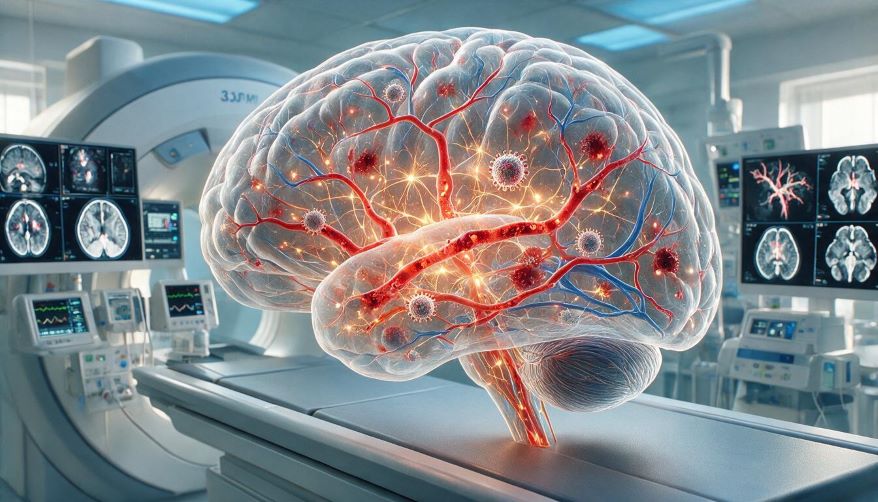
HIV stroke brain injury is more severe due to chronic inflammation from HIV-infected microglia.
HIV Stroke Brain Injury: Understanding Critical Neurological Complications
Estimated reading time: 5 minutes
People living with HIV now enjoy near-normal lifespans thanks to antiretroviral therapy. However, they face a hidden threat: stroke. Even with controlled viral loads, HIV-positive individuals suffer strokes at higher rates than the general population. Worse still, the resulting HIV stroke brain injury often leads to worse outcomes and longer recovery times.
ENTECH STEM Magazine has included this research in its list of Top 10 STEM Discoveries and Innovations of June 2026.
Key Takeaways: HIV Stroke Brain Injury
- HIV stroke brain injury is more severe due to chronic inflammation from HIV-infected microglia.
- The HMGB1 protein plays a critical role in amplifying stroke damage in HIV patients.
- The study provides the first mechanistic link between HIV brain reservoirs and worsened stroke outcomes.
- Potential therapies include HMGB1 inhibitors and blood-brain barrier stabilizers.
- HIV patients require specialized stroke prevention and management protocols.
- These findings also inform research on other neuroinflammatory diseases.
- The next step is translating these discoveries into human clinical trials.
What Is HIV Stroke Brain Injury?
To understand this condition, we must first recognize that HIV affects the brain even when medications keep the virus under control. The virus establishes a “reservoir” in brain cells called microglia. These cells act as the brain’s immune defenders. However, they remain chronically activated by HIV, producing constant low-level inflammation.
When a stroke occurs, this pre-existing inflammation amplifies the damage. The blood-brain barrier—the protective lining around brain blood vessels—is already weakened. Consequently, stroke-induced injury spreads faster and causes greater tissue death. The study demonstrates that HIV-related inflammation disrupts normal repair processes, leaving the brain more vulnerable to long-term damage.
Why This Discovery Matters
For years, researchers assumed that effective HIV treatment eliminated neurological risks. However, epidemiological data tells a different story. HIV-positive individuals have a 50-100% higher risk of ischemic stroke compared to HIV-negative peers. Moreover, they experience worse cognitive outcomes after stroke.
The Communications Biology paper provides the first detailed mechanistic explanation for this disparity. It identifies specific inflammatory pathways—particularly involving the protein HMGB1—that become hyperactive in HIV-infected brains. By blocking these pathways in animal models, researchers reduced stroke damage by nearly 40%. This represents a potential therapeutic target for protecting HIV patients from stroke-related disability.
How HIV Stroke Brain Injury Works: A Step-by-Step Explanation
Think of the brain’s immune system as a fire alarm system. In a healthy brain, the alarm only sounds during an actual emergency (like a stroke). In an HIV-infected brain, the alarm is stuck in a constant “test” mode due to chronic inflammation.
Here is the step-by-step process leading to HIV stroke brain injury:
- Chronic Activation: HIV infects microglia (brain immune cells). Even with antiretroviral therapy, these cells remain partially activated, releasing inflammatory molecules like cytokines.
- Weakened Defenses: The blood-brain barrier, which normally protects the brain, becomes leaky due to ongoing inflammation. This makes it easier for harmful immune cells from the blood to enter the brain.
- Stroke Occurs: A blood clot blocks a vessel, cutting off oxygen to brain tissue. This triggers a massive inflammatory response.
- Exaggerated Response: Because the immune system is already primed, the stroke-induced inflammation is much stronger than normal. The HMGB1 protein is released in large amounts, signaling more immune cells to attack.
- Accelerated Damage: The hyperactive immune response destroys not only the stroke-affected tissue but also surrounding healthy tissue. This phenomenon is called “bystander damage.”
- Impaired Repair: Normal repair cells (like astrocytes) are overwhelmed by the inflammation. They fail to clean up debris or rebuild blood vessels, leading to larger cavities in the brain.
Real-World Applications
Understanding HIV stroke brain injury has implications beyond neurology.
- Healthcare (Stroke Management): Doctors can now identify HIV patients as high-risk stroke candidates, using preventive measures like statins or anti-inflammatory drugs.
- Pharmacology (Drug Development): The study identifies HMGB1 inhibitors as a potential stroke therapy specifically for HIV patients. Clinical trials are being designs
- Public Health (Screening): Additionally, Cognitive screening tools can be developed to detect early brain changes in HIV patients before stroke occurs.
- Neurorehabilitation: Therapies can be tailored to address the unique recovery challenges face by HIV stroke survivors, including slower neural repair.
- Education (Medical Training): Medical curricula can incorporate this knowledge to improve stroke care for aging HIV populations.
Benefits of This Research
- Personalized Risk Assessment: HIV patients can receive targeted stroke prevention strategies based on their inflammatory profile.
- New Drug Targets: The HMGB1 pathway offers a druggable target that is specific to HIV-related stroke damage.
- Improved Outcomes: Early intervention with anti-inflammatory agents could reduce disability after stroke in HIV patients.
- Better Understanding of Neuroinflammation: Insights from this study apply to other conditions involving chronic brain inflammation, such as long COVID or multiple sclerosis.
Challenges and Limitations
- Animal Model Constraints: The study was conduct in mouse models. Human trials are need to confirm the findings.
- Timing of Intervention: Blocking inflammation must be carefully timed; too early may interfere with necessary repair processes.
- Antiretroviral Interactions: Any new stroke therapy must be tests for interactions with HIV medications.
- Heterogeneity of HIV Patients: Individual differences in viral reservoir size and immune status may affect treatment efficacy.
Future Scope
- Biomarker Development: Blood tests for HMGB1 or other inflammatory markers could predict stroke risk in HIV patients.
- Combination Therapies: Anti-HMGB1 drugs combined with standard stroke treatments may offer synergistic benefits.
- Neuroprotective Agents: Researchers are exploring drugs that strengthen the blood-brain barrier in HIV patients.
- Longitudinal Studies: Long-term tracking of HIV patients with imaging could reveal when brain vulnerability begins.
Frequently Asked Questions
Q1: Does antiretroviral therapy reduce the risk of HIV stroke brain injury?
Partially. ART controls viral replication and reduces systemic inflammation. However, brain inflammation persists in many patients due to viral reservoirs in microglia, keeping stroke risk elevated.
Q2: Can HIV stroke brain injury be prevent?
Currently, prevention focuses on managing traditional stroke risk factors (blood pressure, cholesterol) along with HIV control. Future prevention may include anti-inflammatory drugs targeting the HMGB1 pathway.
Q3: Are the stroke mechanisms different in HIV patients?
Yes. The underlying inflammation from HIV changes the brain’s response to stroke. The damage spreads faster, and repair mechanisms are impairs, leading to worse outcomes than in HIV-negative individuals.
Q4: Is this research applicable to other conditions?
Yes. The mechanisms described—chronic neuroinflammation amplifying acute injury—also apply to conditions like long COVID, multiple sclerosis, and Alzheimer’s disease.
Reference
Bu, F., Qin, X., Xu, L. et al. HIV infection exacerbates ischemic brain injury through dysregulating phagocytosis and neuroinflammatory signals in macrophages/microglia via C1ql2. Commun Biol (2026). https://doi.org/10.1038/s42003-026-10655-5
- Author
- Latest Posts

I am an inspirational writer and emerging science blogger with a deep-rooted passion for understanding and sharing the wonders of the world around us. My journey began with a Bachelor of Science in Chemistry from AKI’s Poona College of Arts, Commerce and Science, where I developed not only a strong foundation in scientific principles but also a mindset that values curiosity, observation, and critical thinking. Studying chemistry has taught me to approach problems with logic, to look beyond the obvious, and to see patterns where others might only see complexity. These experiences have shaped the way I perceive life and influence the way I express my thoughts, both scientifically and creatively.
I have always believed that knowledge is only as powerful as the way it is shared. This belief has guided me to create content that bridges the gap between science and everyday life. I aim to simplify complex scientific ideas so they become approachable, relatable, and engaging for everyone—whether someone has a formal background in science or is simply curious about the world. Science, in my view, is not confined to textbooks and laboratories; it is a way of thinking, understanding, and connecting with the world around us. By making science accessible, I hope to inspire curiosity, ignite learning, and encourage people to see the beauty and relevance of scientific discovery in their daily lives.
Alongside my love for science, I am deeply passionate about motivational writing. I believe words carry the power to transform perspectives, encourage self-reflection, and inspire action. By combining analytical thinking with creativity, I create content that is intellectually stimulating yet emotionally resonant. Whether I am breaking down a chemical concept, exploring a scientific phenomenon, or crafting motivational narratives, my goal is to communicate ideas in a way that is clear, meaningful, and impactful.
Through my work, I strive to empower my readers – not just by helping them understand the science around them, but by inspiring them to grow, learn, and realize their full potential. Every article, post, or story I write reflects my commitment to turning knowledge into inspiration. I want to spark curiosity, encourage self-improvement, and show that learning and personal growth are deeply connected. For me, writing is not just a craft; it is a way to touch minds, connect hearts, and make ideas come alive in a way that truly resonates.