A single 25 mg dose of psilocybin changed brain activity within one hour
Magic Mushroom Brain Effects Confirmed by Scientists — One Pill, One Hour, One Month of Change
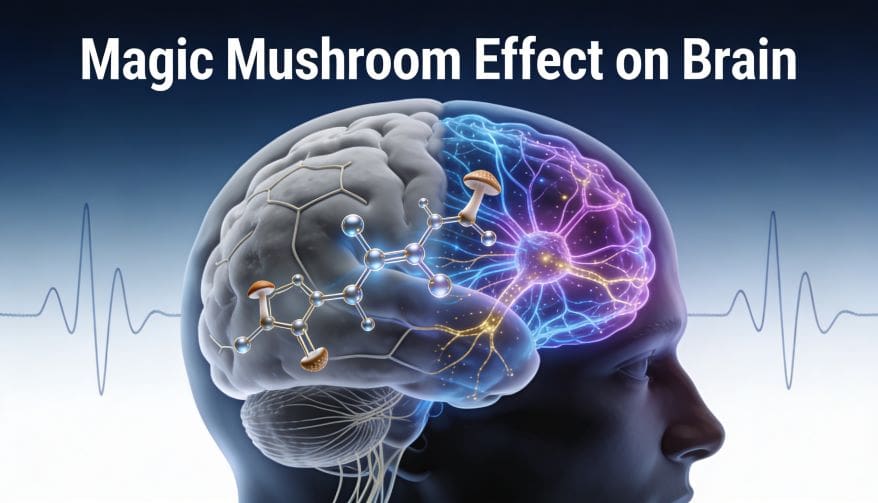
Imagine swallowing a single pill. Within one hour, your brain activity changes completely. A month later, your brain’s structure is different. You feel happier, think more clearly, and see life differently. This is not a movie plot. This actually happened in a real scientific study. Psilocybin is a naturally occurring psychedelic compound found in specific species of fungi commonly called magic mushrooms. Researchers gave 28 healthy adults their very first dose of psilocybin — a compound from magic mushrooms. The results were stunning. Scientists recorded brain changes from 1 hour to 1 month after just one dose. All things considered, this study may reshape how we treat depression and mental illness forever.
Key Takeaways
Prior to reading further, here is a quick summary of what this study found:
- Psilocybin is a naturally occurring psychedelic compound found in specific species of fungi commonly called magic mushrooms.
- A single 25 mg dose of psilocybin changed brain activity within one hour
- Brain structure changes were still visible one month later
- Participants felt greater well-being, better thinking flexibility, and more self-insight
- Brain “entropy” (a measure of complexity) predicted who would feel better after one month
- The 1 mg placebo dose had zero effect on the brain or mood
- All 28 adults had never tried a psychedelic drug before this study
What Is Psilocybin, and Why Does It Matter to You?
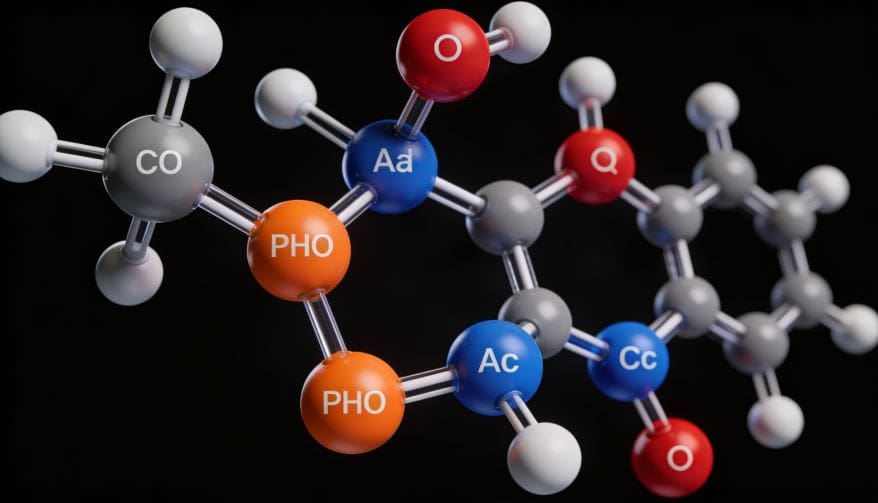
At this point, you might be asking: what exactly is psilocybin? To explain, it is a chemical compound with the formula 4-phosphoryloxy-N,N-dimethyltryptamine. It contains nitrogen, oxygen, phosphorus, and carbon. After that, your body converts it into another compound called psilocin. That is the active form.
Psilocin works by binding to serotonin receptors in your brain. Serotonin is a molecule you study in biology. It is your brain’s “feel good” chemical. To put it differently, psilocin tricks the brain into activating the same receptor as serotonin does. That is the beginning of something remarkable.
Here is what happens chemically:
- Psilocybin (inactive) → enters your body orally
- Enzymes convert it to psilocin (active form)
- Psilocin binds to 5-HT2A serotonin receptors
- This changes how brain cells talk to each other
- The result is a completely different brain state
What Did the Study Actually Find?
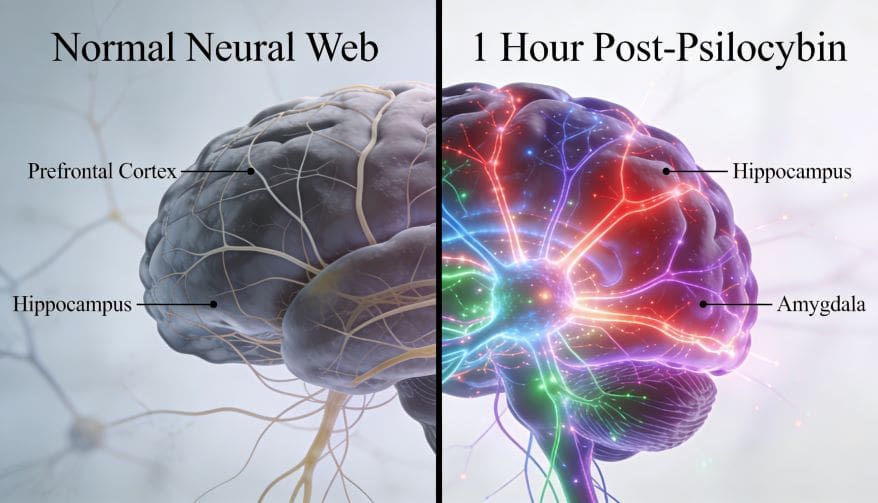
The study was published in Nature Communications in May 2026. Researchers gave 28 healthy, psychedelic-naive adults a high dose of 25 mg psilocybin and measured brain changes from one hour to one month after dosing.
The Brain on Psilocybin — Hour by Hour
To illustrate, think of your brain as a radio. Normally it plays one clear station. Psilocybin suddenly tunes it to hundreds of stations at once. Scientists measure this as “brain entropy.” Higher entropy means more complexity and more randomness in brain signals.
Significant increases in brain entropy (measured via EEG) were recorded at 1 and 2 hours after the 25 mg dose. Alpha brain wave power dropped significantly during the same period.
Here is what the EEG (brain wave monitor) showed:
- Brain entropy increased significantly at 1 hour and 2 hours after dosing
- Alpha brain waves (linked to calm, idle thinking) dropped sharply
- Gamma waves increased at 2 hours post-dose
- Theta waves decreased at 1 and 2 hours post-dose
- All these changes occurred only with 25 mg, not the 1 mg placebo
At first, these numbers may seem confusing. But to rephrase it — your brain became far more active, complex, and flexible than usual. What’s more, this brain complexity at 1–2 hours predicted how much better participants felt one month later.
One Month Later — The Brain Had Changed Structurally
This is the part that stunned researchers. Diffusion tensor imaging (DTI), done before and one month after the 25 mg psilocybin dose, revealed decreased axial diffusivity in prefrontal-subcortical white matter tracts — specifically the prefrontal cortex to striatum and prefrontal cortex to thalamus pathways.
To say nothing of the complexity, here is a simpler version:
- White matter tracts are like highways connecting brain regions
- These highways changed in structure after psilocybin
- The changes were seen in the prefrontal cortex — the part responsible for decisions, thinking, and emotions
- These structural changes were still there one full month after the single dose
- No changes occurred in the placebo group
What Improved Psychologically?
While it may be true that brain scans are exciting, the real-world results matter most. So what actually changed for these 28 people?
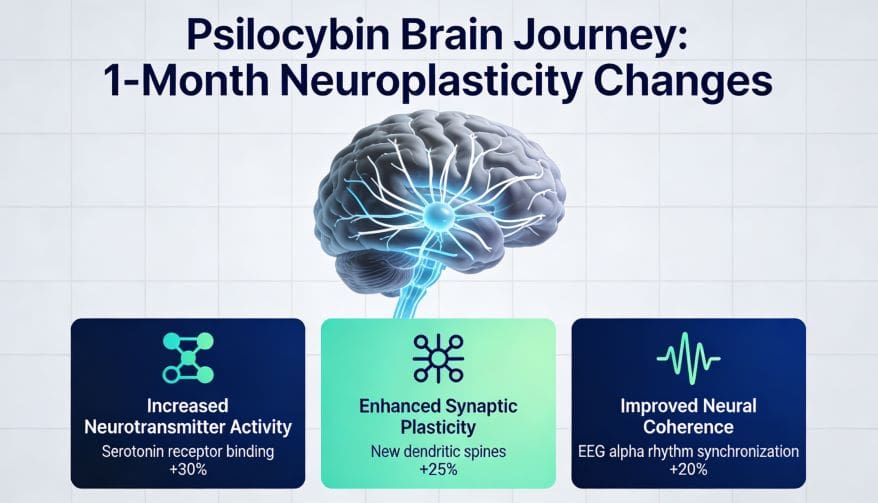
At one month post-dosing, participants showed increases in cognitive flexibility, psychological insight, and well-being. These improvements were exclusive to the 25 mg psilocybin condition.
Well-Being Went Up
Well-being scores measured using the Warwick-Edinburgh Mental Wellbeing Scale were significantly greater at two weeks and one month after the 25 mg dose compared to the placebo condition.
To enumerate, here is what improved:
- Overall well-being — participants felt genuinely happier
- Psychological insight — they understood themselves better
- Cognitive flexibility — they could shift between ideas faster
- These improvements lasted at least one full month
- No improvements were seen after the 1 mg placebo dose
The “Insight-to-Happiness” Chain
This finding is one of the most exciting. Acute brain entropy predicted next-day psychological insight, which in turn predicted improved well-being at one month. The overall predictive strength of the model was greatest when psychological insight was included as a mediator.
To summarize, here is the chain:
Psilocybin → Higher Brain Entropy (1–2 hrs) → More Insight (next day) → Better Well-Being (1 month later)
Above all, this chain suggests the experience itself — not just the drug — matters for healing.
Real-World Applications
Why This Matters for Mental Health Treatment
At the present time, depression affects over 280 million people globally (World Health Organization, 2023). Many patients do not respond to existing antidepressants. So far, most treatments try to fix brain chemistry using daily pills. Psilocybin works differently — it could reset the brain with just one dose.
Clinical trials have assessed psilocybin therapy for wide-ranging conditions including treatment-resistant depression, anxiety in cancer patients, and alcohol use disorder.
Here is a list of conditions psilocybin is being studied for:
- Treatment-resistant depression — when other antidepressants have failed
- Anxiety — particularly in people with life-threatening illness
- Alcohol use disorder — reducing heavy drinking significantly
- PTSD — post-traumatic stress disorder (ongoing research)
- OCD — obsessive-compulsive disorder (early-stage trials)
Also Read: Quantum Battery Charging
Frequently Asked Questions
Q1. Is psilocybin legal?
At this time, psilocybin is a controlled substance in most countries, including India. However, researchers obtain special licenses to study it. In the USA, it has received “Breakthrough Therapy” status from the FDA for depression. It is studied only in clinical settings.
Q2. Is this study safe? Did participants get harmed?
The study was approved by the London-Surrey Research Ethics Committee. All 28 participants gave written informed consent. The study was closely supervised by trained professionals. No serious adverse events were reported among participants.
Q3. What is DTI (Diffusion Tensor Imaging)?
DTI is an advanced type of MRI scan. It measures how water molecules move along white matter tracts — the brain’s nerve fiber highways. Changes in DTI signals can indicate structural changes in brain tissue. In this study, DTI revealed that psilocybin caused physical changes in the prefrontal regions of the brain.
Reference
- Carhart-Harris, R. L., Lyons, T., Spriggs, M., Kerkelä, L., Rosas, F. E., Roseman, L., Mediano, P. A. M., Timmermann, C., Oestreich, L., Pagni, B. A., Zeifman, R. J., Hampshire, A., Trender, W., Douglass, H. M., Girn, M., Godfrey, K., Kettner, H., Sharif, F., Espasiano, L., … Erritzoe, D. (2026). Human brain changes after first psilocybin use. Nature Communications, 17, Article 3977. https://doi.org/10.1038/s41467-026-71962-3
- Cha, S., Bell, L., & Williams, C. M. (2024). The Relationship between Mushroom Intake and Cognitive Performance: An Epidemiological Study in the European Investigation of Cancer-Norfolk Cohort (EPIC-Norfolk). Nutrients, 16(3), 353. https://doi.org/10.3390/nu16030353
- Author
- Latest Posts

I am an inspirational writer and emerging science blogger with a deep-rooted passion for understanding and sharing the wonders of the world around us. My journey began with a Bachelor of Science in Chemistry from AKI’s Poona College of Arts, Commerce and Science, where I developed not only a strong foundation in scientific principles but also a mindset that values curiosity, observation, and critical thinking. Studying chemistry has taught me to approach problems with logic, to look beyond the obvious, and to see patterns where others might only see complexity. These experiences have shaped the way I perceive life and influence the way I express my thoughts, both scientifically and creatively.
I have always believed that knowledge is only as powerful as the way it is shared. This belief has guided me to create content that bridges the gap between science and everyday life. I aim to simplify complex scientific ideas so they become approachable, relatable, and engaging for everyone—whether someone has a formal background in science or is simply curious about the world. Science, in my view, is not confined to textbooks and laboratories; it is a way of thinking, understanding, and connecting with the world around us. By making science accessible, I hope to inspire curiosity, ignite learning, and encourage people to see the beauty and relevance of scientific discovery in their daily lives.
Alongside my love for science, I am deeply passionate about motivational writing. I believe words carry the power to transform perspectives, encourage self-reflection, and inspire action. By combining analytical thinking with creativity, I create content that is intellectually stimulating yet emotionally resonant. Whether I am breaking down a chemical concept, exploring a scientific phenomenon, or crafting motivational narratives, my goal is to communicate ideas in a way that is clear, meaningful, and impactful.
Through my work, I strive to empower my readers – not just by helping them understand the science around them, but by inspiring them to grow, learn, and realize their full potential. Every article, post, or story I write reflects my commitment to turning knowledge into inspiration. I want to spark curiosity, encourage self-improvement, and show that learning and personal growth are deeply connected. For me, writing is not just a craft; it is a way to touch minds, connect hearts, and make ideas come alive in a way that truly resonates.




Thanks for finally writing about > Magic Mushroom Effect on Brain Lasts 1 Full Month
< Loved it!