Learning why certain conditions produce more singlet or triplet oxygen reveals the inner workings of these critical systems.
Reactive Oxygen Species Explained: Singlet vs. Triplet Oxygen, Superoxide, and the Chemistry Behind Batteries and Health
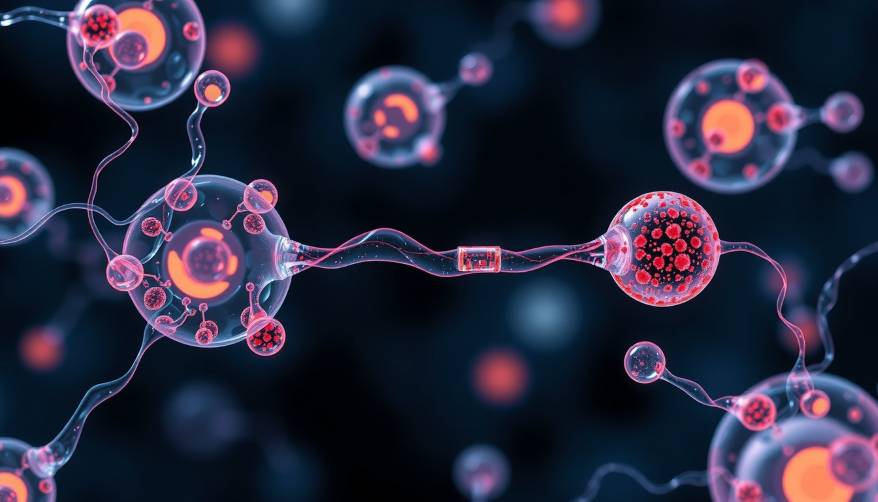
Oxygen is the molecule that keeps us alive — but it has a restless side. The same element we breathe also drives metal-air batteries, fights infections, and ages our cells. Everything depends on the form oxygen takes. A landmark 2025 study in Nature by Mondal and colleagues has finally Reactive oxygen species explained one of the most important steps: why superoxide, a charged form of oxygen, converts into either a gentle triplet or an aggressive singlet form. The answer lies in Marcus theory, the physics of electron transfer.
However, In this guide you will learn what reactive oxygen species (ROS) are, how singlet and triplet oxygen differ, why batteries degrade, and how our cells balance oxygen’s helpful and harmful sides.
Key Takeaways: Reactive Oxygen Species Explained
- Oxygen exists in multiple reactive forms; the stable triplet is gentle, while the excited singlet form is aggressive.
- Additionally, Superoxide is the critical bridge between O2 and other oxides, and its fate decides which oxygen form emerges.
- Marcus kinetics — driving force and reorganization energy — determine whether singlet or triplet oxygen is produced.
- Moreover, In batteries, singlet oxygen is a leading cause of degradation; the new kinetics research enables targeted suppression.
- In biology, ROS are dual-natured: essential signals at low levels, destructive agents when unbalanced.
Also Read: Complete Guide to Biochemistry
What Are Reactive Oxygen Species?
Reactive oxygen species (ROS) are chemically reactive molecules derived from oxygen. They form continuously during metabolism, in combustion, and inside electrochemical devices such as batteries. Because they carry unpaired electrons or excited-state energy, they react readily with other molecules — sometimes by design, sometimes with destructive consequences.
| Species | Formula | Reactivity | Where it matters |
| Triplet oxygen (ground state) | 3O2 | Low (stable) | Respiration, combustion |
| Singlet oxygen (excited state) | 1O2 | High | Photodynamic therapy, battery degradation, cell signaling |
| Superoxide | O2•− | Moderate–high | Mitochondria, battery cathodes |
| Hydroxyl radical | •OH | Extreme | Radiation damage, aging |
| Hydrogen peroxide | H2O2 | Moderate | Immune defense, disinfection |
Singlet vs. Triplet Oxygen: Two Faces of the Same Element
Triplet oxygen (3O2) is the ground state — the stable form in the air we breathe. Its two outermost electrons are unpaired and spin-parallel, while most organic molecules exist in singlet states. Consequently, this spin mismatch makes direct reactions “spin-forbidden,” which is why oxygen is a powerful oxidant yet reacts slowly with our bodies at room temperature.
Singlet oxygen (1O2) is an excited state in which one electron’s spin has flipped. Moreover, it carries roughly 94 kJ of excess energy per mole and is strongly electrophilic, attacking carbon–carbon double bonds in unsaturated fats, proteins, and DNA within microseconds. Thus, this is the molecule responsible for the oxidative damage associates with aging and with the degradation of battery components.
Superoxide: The Reactive Bridge
Superoxide (O2•−) forms when an oxygen molecule gains a single electron. In biology, mitochondria leak electrons during respiration, producing superoxide continuously. In batteries, the oxygen reduction reaction at the cathode passes through superoxide as a key intermediate.
Superoxide is a free radical with one unpaired electron, and it sits between molecular oxygen and the more oxidized species like hydrogen peroxide. Its most important fate is disproportionation: two superoxide molecules react to give hydrogen peroxide and oxygen. The central question — and the heart of the new research — is whether the oxygen released in that step is the benign triplet or the damaging singlet form.
Marcus Kinetics: Why Reaction Speed Decides the Product
Marcus theory, developed by Nobel laureate Rudolph Marcus, describes how fast electrons jump between molecules. In particular, the rate depends on two quantities: the driving force (the free-energy change of the reaction) and the reorganization energy (how much the surrounding molecules must rearrange). Consequently, plotting rate against driving force produces a distinctive inverted parabola — the “Marcus inverted region.”
The 2025 Nature study by Mondal, Nguyen, Hauschild, and Freunberger applies this framework to superoxide oxidation and shows that the paths to triplet oxygen and singlet oxygen follow separate kinetic curves. Moreover, depending on the available driving force, one path or the other dominates. Therefore, this is a practical breakthrough: scientists can now predict — and in principle steer — which oxygen species forms, simply by controlling the energy landscape at the reaction site. Batteries: The Fight Against Singlet-Oxygen Degradation
Metal-air batteries (lithium-air, zinc-air) promise several times the energy density of conventional cells because one electrode is simply oxygen drawn from the air. Their weakness is the aggressive chemistry that oxygen creates at the cathode. Earlier work by Freunberger’s group (Mahne et al., 2017, Nature Energy) established that singlet oxygen is a major parasitic species in lithium–oxygen batteries, attacking organic electrolytes, carbon additives, and binders. The result: carbonate side products, gas evolution, capacity fade — and, in extreme cases, safety incidents.
The new kinetics knowledge gives engineers a concrete lever. By tuning the driving force at the electrode/electrolyte interface, designing catalysts that push superoxide down the triplet path, and adding singlet-oxygen quenchers (molecules that absorb 1O2 before it reacts), manufacturers can suppress singlet-oxygen production at its source — leading to batteries that last longer and charge more safely.
Also Read: Supercharge Your Smoothies? How Buddy Bacteria are Revolutionizing Green Superfoods!
Biology: Cell Signaling and Oxidative Stress
Reactive oxygen species are not merely damage-causing byproducts. Instead, cells deliberately produce them: immune cells fire a “respiratory burst” of ROS to kill pathogens, while low doses of ROS act as signaling molecules that regulate growth, differentiation, and metabolism — a phenomenon called hormesis.
Problems begin when ROS production outstrips the cell’s antioxidant defenses (glutathione, superoxide dismutase, catalase, vitamins C and E). This imbalance — oxidative stress — damages lipids, proteins, and DNA, and is implicated in aging, neurodegeneration (Alzheimer’s and Parkinson’s diseases), cardiovascular disease, and cancer.
Understanding exactly when singlet oxygen emerges from superoxide (the new Nature insight) helps medical researchers design interventions that tune ROS signaling without blocking its beneficial roles — therapies aimed at balancing, not abolishing, oxygen’s reactive forms.
Frequently Asked Questions: Reactive oxygen species explained
Q1. What is the difference between singlet and triplet oxygen?
Triplet oxygen (3O2) is the stable ground state we breathe; singlet oxygen (1O2) is an excited, highly reactive form that attacks organic molecules. The 2025 Nature study shows the two emerge from superoxide via different Marcus-kinetics pathways.
Q2. How is singlet oxygen produced from superoxide?
When two superoxide molecules disproportionate, the oxygen released can be either triplet or singlet. Which form dominates is controlled by the driving force of the electron transfer, as quantified by Marcus theory.
Q3. Why does singlet oxygen damage batteries?
Singlet oxygen is highly reactive and attacks organic electrolytes and carbon components inside metal-air batteries, creating side products that reduce capacity and shorten cycle life.
Q4. Are reactive oxygen species always harmful?
No. At low levels they are essential signaling molecules and immune weapons. Harm arises only when ROS levels exceed antioxidant defenses, causing oxidative stress.
Q5. What is Marcus theory?
A theory of electron-transfer rates, developed by Rudolph Marcus (Nobel Prize in Chemistry, 1992). Specifically, it links reaction speed to the driving force and reorganization energy of the electron jump.
References
1. Mondal, S., Nguyen, H. T. K., Hauschild, R., & Freunberger, S. A. (2025). Marcus kinetics control singlet and triplet oxygen evolving from superoxide. Nature. https://doi.org/10.1038/s41586-025-09587-7
2. Mahne, N., et al. (2017). Singlet oxygen generation as a major cause for parasitic reactions during cycling of aprotic lithium–oxygen batteries. Nature Energy, 2, 17036.
- Author
- Latest Posts

I’m a web developer and science writer with a Master’s degree in Computer Applications (MCA) from Pune University.
I work in tech, building websites and staying updated with the latest developments. I also love writing about physics, chemistry, technology, robotics, mathematics, and breakthrough innovations. My passion is breaking down complex scientific topics into simple, easy-to-understand stories.
My goal is to help everyone stay informed about the exciting changes happening in science and technology. I believe understanding science shouldn’t be complicated—it should be accessible to all.
- Author
- Latest Posts
I’m a web developer and science writer with a Master’s degree in Computer Applications (MCA) from Pune University.
I work in tech, building websites and staying updated with the latest developments. I also love writing about physics, chemistry, technology, robotics, mathematics, and breakthrough innovations. My passion is breaking down complex scientific topics into simple, easy-to-understand stories.
My goal is to help everyone stay informed about the exciting changes happening in science and technology. I believe understanding science shouldn’t be complicated—it should be accessible to all.
- Author
- Latest Posts

I am an inspirational writer and emerging science blogger with a deep-rooted passion for understanding and sharing the wonders of the world around us. My journey began with a Bachelor of Science in Chemistry from AKI’s Poona College of Arts, Commerce and Science, where I developed not only a strong foundation in scientific principles but also a mindset that values curiosity, observation, and critical thinking. Studying chemistry has taught me to approach problems with logic, to look beyond the obvious, and to see patterns where others might only see complexity. These experiences have shaped the way I perceive life and influence the way I express my thoughts, both scientifically and creatively.
I have always believed that knowledge is only as powerful as the way it is shared. This belief has guided me to create content that bridges the gap between science and everyday life. I aim to simplify complex scientific ideas so they become approachable, relatable, and engaging for everyone—whether someone has a formal background in science or is simply curious about the world. Science, in my view, is not confined to textbooks and laboratories; it is a way of thinking, understanding, and connecting with the world around us. By making science accessible, I hope to inspire curiosity, ignite learning, and encourage people to see the beauty and relevance of scientific discovery in their daily lives.
Alongside my love for science, I am deeply passionate about motivational writing. I believe words carry the power to transform perspectives, encourage self-reflection, and inspire action. By combining analytical thinking with creativity, I create content that is intellectually stimulating yet emotionally resonant. Whether I am breaking down a chemical concept, exploring a scientific phenomenon, or crafting motivational narratives, my goal is to communicate ideas in a way that is clear, meaningful, and impactful.
Through my work, I strive to empower my readers – not just by helping them understand the science around them, but by inspiring them to grow, learn, and realize their full potential. Every article, post, or story I write reflects my commitment to turning knowledge into inspiration. I want to spark curiosity, encourage self-improvement, and show that learning and personal growth are deeply connected. For me, writing is not just a craft; it is a way to touch minds, connect hearts, and make ideas come alive in a way that truly resonates.