Explore the convenience of self darkening sunglasses for optimal eye protection and comfort in varying light conditions.
Self Darkening Sunglasses: Real-Time Chemistry Experiment On Face

Estimated reading time: 5 minutes
Imagine stepping outside on a bright day. Your glasses darken automatically. You walk back indoors — and they clear. No batteries. Nor app, and Not even a switch. Self darkening Sunglasses is just chemistry, silently doing its job every single time.
Key Takeaways: Self darkening Sunglasses
- Photochromic lenses use UV light to trigger a reversible chemical reaction that darkens the lens.
- Two main chemical systems — silver halides (glass lenses) and naphthopyrans (plastic lenses) — power this effect.
- The darkening is fully reversible. Moreover, Remove UV, and the lens clears in minutes.
- Additionally, This is real, observable chemistry happening on your face every time you step outside.
Self Darkening Sunglasses
These are photochromic lenses, also called transition lenses. At first, they seem almost magical. In reality, they are one of the most elegant demonstrations of reversible chemistry you will ever wear. Prior to understanding how they work, it helps to ask: what exactly is UV light doing here?
What Is UV Light, Really?

Firstly, Sunlight carries electromagnetic radiation across many wavelengths. However, Visible light (what our eyes detect) sits between about 380–700 nanometres (nm). Ultraviolet, or UV, radiation sits just below 380 nm — shorter wavelengths, higher energy. However, That extra energy is what drives the chemistry in your lenses.
| Indoors | No UV | Molecules in their open-ring form. Lens is clear and transparent. |
| Outdoors | UV Present | UV triggers ring closure. Molecules absorb visible light. Lens goes dark. |
The Chemistry Behind Self Darkening Sunglasses — A Reversible Reaction
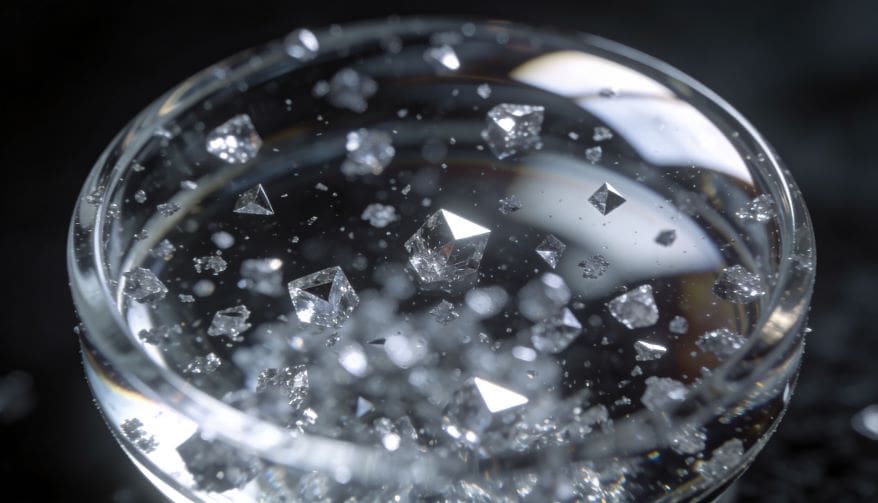
However, At the heart of every photochromic lens is a reversible chemical reaction. Unlike burning wood (which is permanent), the molecules in these lenses of self darkening Sunglasses can switch back and forth between two states, essentially forever.
Glass Lenses: Silver Halides
Older glass-based photochromic lenses use silver halide crystals, typically silver chloride (AgCl). When UV hits these crystals, they split. Silver ions (Ag⁺) gain electrons and become tiny metallic silver clusters. As a result, These clusters absorb visible light — making the lens look dark.
AgCl + UV photon ⇌ Ag⁰ (dark clusters) + Cl⁰
The ⇌ arrow means the reaction goes both ways. Remove UV → the reaction reverses → lens clears.
After that, remove the UV source, and the reaction reverses naturally. firstly, The silver clusters recombine with chlorine. The crystals re-form. As a result, The lens of self darkening Sunglasses becomes clear again.
Plastic Lenses: Organic Molecules (Naphthopyrans)
Most modern plastic lenses of self darkening Sunglasses use organic photochromic molecules — a family called naphthopyrans (or similar spiropyrans and oxazines). However, These molecules have a ring-shaped structure at their core. In normal light, the ring stays closed. The molecule absorbs only UV — so it looks clear to your eye.
When UV light hits the lens, the energy breaks a single chemical bond. However, The ring snaps open. This open-ring form has a completely different electron structure. As a result, It now absorbs wavelengths in the visible spectrum — which means you perceive it as dark grey or brown.
As a result, remove the UV source, and the open-ring form is unstable. It spontaneously snaps back to its closed-ring state. Additionally, The lens clears. This full cycle can repeat thousands of times with no significant loss in performance.
Also Read: How do Noise Cancelling Headphones works
Two Systems, One Idea — A Comparison
To illustrate both systems side by side, here is a comparison table. While it may be true that both types use UV light, they differ significantly in their chemical approach.
| Feature | Silver Halide (Glass) | Naphthopyran (Plastic) |
|---|---|---|
| Chemical type | Inorganic crystal | Organic molecule |
| Trigger | UV light (photons break bonds) | UV light (bond cleavage) |
| Dark state | Metallic silver clusters | Open-ring conjugated form |
| Reversal driver | Thermal (heat) recombination | Thermal ring-closure |
| Lens material | Glass | Polycarbonate/plastic |
| Lifespan of reaction | Very high (inorganic) | High (~50,000+ cycles) |
| Works behind car glass? | Partially | Mostly no (UV filtered) |
Why Don’t They Darken Inside a Car?

This is a great real-world catch. Car windshields block most UV radiation. As a result, your photochromic lenses stay clear even in bright sunshine while you’re driving. The chemistry simply has no trigger. Above all, this is not a flaw — it is proof of how specifically UV-sensitive these molecules are.
- Warmer temperatures slow the clearing process — at high temperatures, the reverse reaction actually competes with the forward one, meaning lenses may not darken as much on very hot days. Colder weather makes lenses darker and slower to clear. This is a well-documented limitation of naphthopyran systems.
- Photochromic molecules are embedded, not coated —However, in plastic lenses, the active molecules are dissolved throughout the lens material at a concentration of just a few percent by weight, ensuring even distribution and long-term durability without surface wear.
All in all, every time your glasses adapt to the sun, you are seeing thermodynamics, photochemistry, and molecular design working in perfect harmony.
That is not just an engineering achievement. That is chemistry you can wear.
Additionally, to stay updated with the latest developments in STEM research, visit ENTECH Online. Basically, this is our digital magazine for science, technology, engineering, and mathematics. Further, at ENTECH Online, you’ll find a wealth of information.
Reference:
- Bouas-Laurent, H., & Dürr, H. (2001). Organic photochromism. Pure and Applied Chemistry, 73(4), 639–665. https://doi.org/10.1351/pac200173040639
- Author
- Latest Posts

I am an inspirational writer and emerging science blogger with a deep-rooted passion for understanding and sharing the wonders of the world around us. My journey began with a Bachelor of Science in Chemistry from AKI’s Poona College of Arts, Commerce and Science, where I developed not only a strong foundation in scientific principles but also a mindset that values curiosity, observation, and critical thinking. Studying chemistry has taught me to approach problems with logic, to look beyond the obvious, and to see patterns where others might only see complexity. These experiences have shaped the way I perceive life and influence the way I express my thoughts, both scientifically and creatively.
I have always believed that knowledge is only as powerful as the way it is shared. This belief has guided me to create content that bridges the gap between science and everyday life. I aim to simplify complex scientific ideas so they become approachable, relatable, and engaging for everyone—whether someone has a formal background in science or is simply curious about the world. Science, in my view, is not confined to textbooks and laboratories; it is a way of thinking, understanding, and connecting with the world around us. By making science accessible, I hope to inspire curiosity, ignite learning, and encourage people to see the beauty and relevance of scientific discovery in their daily lives.
Alongside my love for science, I am deeply passionate about motivational writing. I believe words carry the power to transform perspectives, encourage self-reflection, and inspire action. By combining analytical thinking with creativity, I create content that is intellectually stimulating yet emotionally resonant. Whether I am breaking down a chemical concept, exploring a scientific phenomenon, or crafting motivational narratives, my goal is to communicate ideas in a way that is clear, meaningful, and impactful.
Through my work, I strive to empower my readers – not just by helping them understand the science around them, but by inspiring them to grow, learn, and realize their full potential. Every article, post, or story I write reflects my commitment to turning knowledge into inspiration. I want to spark curiosity, encourage self-improvement, and show that learning and personal growth are deeply connected. For me, writing is not just a craft; it is a way to touch minds, connect hearts, and make ideas come alive in a way that truly resonates.