The human heart structure is a simple, powerful pump. It has four rooms: two top chambers called atria and two bottom chambers called ventricles. The right side gets blood low in oxygen from the body.…
Human Heart: Structure, Function, and Importance
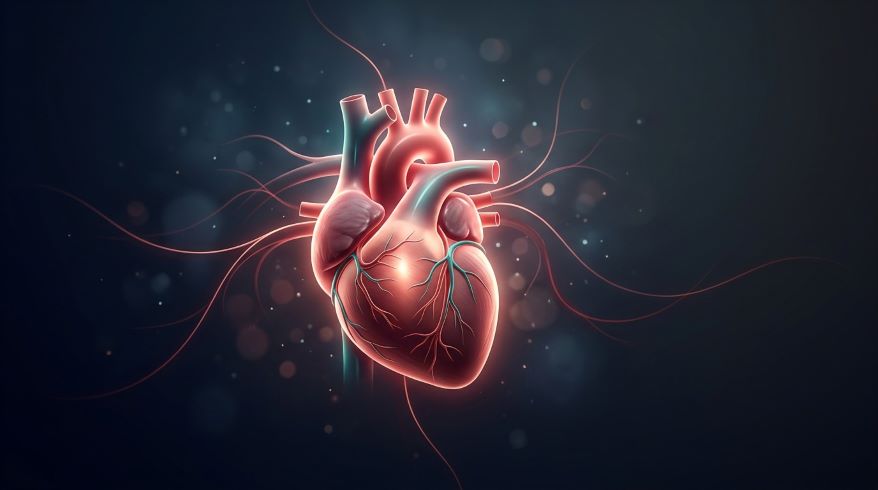
The human heart structure is a simple, powerful pump. It has four rooms: two top chambers called atria and two bottom chambers called ventricles. The right side gets blood low in oxygen from the body. It pumps this blood to the lungs to get oxygen. The left side gets fresh oxygen-rich blood from the lungs. It pumps this blood out to the whole body. Valves between the chambers act like doors to keep blood moving the right way. The heart’s main job is to beat nonstop to push blood through blood vessels. This delivers food and oxygen to all cells and carries away waste. This is the core function of the heart. The structure of the heart makes this simple task possible.
Key Takeaways: Human Heart Structure
The human heart structure is simple but vital. First, it has four rooms: two top atria and two bottom ventricles. The right side gets blood low in oxygen from the body. Then, it pumps this blood to the lungs for fresh oxygen. Next, the left side gets this new oxygen-rich blood from the lungs. After that, it pumps this blood out to the whole body. Also, valves between the chambers act like doors to keep blood moving the right way. Most importantly, the heart beats nonstop to push blood through vessels. As a result, this delivers food and oxygen to all cells. In addition, it carries away waste. So, the key point is that the human heart structure and its simple pumping function keep us alive.
Human Heart Structure: Atria, Ventricles, Valves
The human heart structure has four main parts: two atria and two ventricles. First, the right atrium takes in blood low in oxygen. It sends this blood down to the right ventricle. Next, the right ventricle pumps that blood to the lungs. Then, fresh oxygen-rich blood comes back to the left atrium. After that, the left atrium sends the blood down to the left ventricle. Finally, the left ventricle pumps it out to the whole body.
Valves sit between these parts. These valves act like small doors. They open to let blood pass. Then, they close to stop blood from flowing back. This keeps blood moving the right way. In short, the atria take blood in, and the ventricles push blood out. The valves make sure blood only goes one way. This simple four-room structure is the key to how the heart works.
Human Heart Structure: Septum, Arteries, Veins
The human heart structure has a wall called the septum. This wall sits in the middle. It splits the heart into a left side and a right side. This keeps oxygen-rich blood separate from oxygen-poor blood. That is a key job. Next, arteries carry blood away from the heart. For example, the aorta is a big artery. It takes fresh blood to the body. Also, the pulmonary artery takes old blood to the lungs. Veins do the opposite job. They bring blood back to the heart. For instance, the vena cava brings low-oxygen blood from the body to the right side. Likewise, the pulmonary veins bring fresh blood from the lungs to the left side. In short, the septum divides, arteries carry blood out, and veins bring blood back. This simple network makes the heart work well.
Human Heart Blood Flow
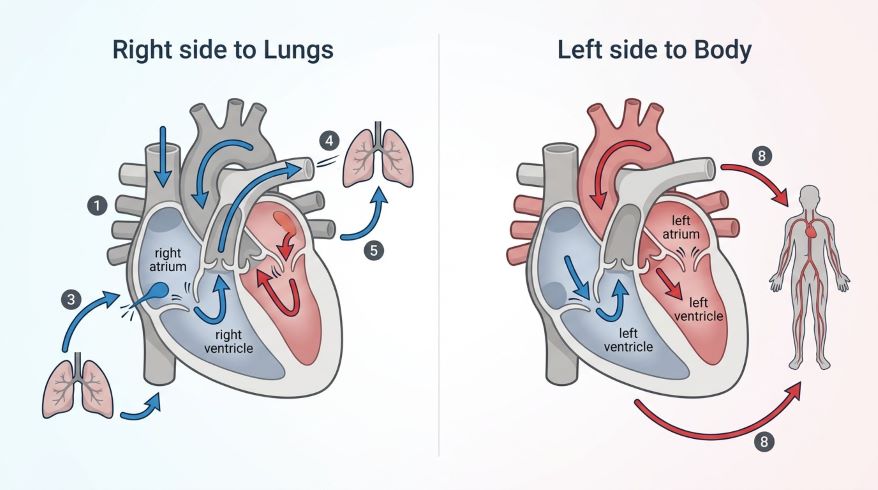
First, blood low in oxygen comes from the body. It enters the right atrium. Next, the right atrium pushes this blood into the right ventricle. Then, the right ventricle pumps the blood out to the lungs. The lungs add oxygen to the blood.
After that, the fresh oxygen-rich blood comes back to the heart. It enters the left atrium. Then, the left atrium pushes this blood into the left ventricle. Finally, the left ventricle pumps the blood out to the whole body.
Valves open and close at each step. They stop blood from flowing the wrong way. In short, blood moves from the right side to the lungs, then to the left side, and then out to the body. This simple one-way flow is the core job of the human heart structure.
Role of the Heart in Circulation
The main role of the heart is to keep blood moving. This is called circulation. The human heart structure acts as a strong pump. It pushes blood through a closed loop of tubes. These tubes are blood vessels. First, the right side pumps blood to the lungs. This is called pulmonary circulation. The lungs add oxygen and remove waste gas. Next, the left side pumps fresh blood to the rest of the body. This is called systemic circulation. The blood gives food and oxygen to all cells. It also picks up waste. Then, the blood comes back to the heart to start again. This cycle never stops. In short, the heart is the driver of circulation. It pushes blood to the lungs for gas exchange and then pushes it to the body for delivery. Without the human heart structure, no blood moves and no body works.
Electrical System of the Heart
First, the electrical system of the heart controls each beat. It is like a tiny spark that starts in the right atrium. This spark is called the SA node. Next, the spark spreads across both atria. As a result, the atria squeeze and push blood into the ventricles. Then, the spark reaches the AV node. This node slows the signal down a bit. After that, the spark travels down special wires to the ventricles. Consequently, the ventricles squeeze from the bottom up. This pushes blood out to the lungs and the body.
In short, the human heart structure uses this electrical spark to set the pace. First, the spark fires. Then, the heart chambers squeeze in the right order. As a result, blood moves the right way. Without this system, the heart cannot pump well. So, the electrical system is key to keeping the human heart structure working each second.
Frequently Asked Questions
How many chambers does the human heart have?
The human heart structure has four chambers. First, there are two top chambers. They are called the right atrium and the left atrium. These act like small waiting rooms. They take blood in as it arrives. Next, there are two bottom chambers. They are called the right ventricle and the left ventricle. These act like strong pumps. They push blood out to the body and lungs.
What are the four chambers of the heart?
First, the human heart structure has four chambers. This is a key fact. To start, there are two top chambers called atria. Next, there are two bottom chambers called ventricles. More specifically, the right atrium sits on the top right. Then, the right ventricle sits below it. On the left side, the left atrium sits on top. Finally, the left ventricle sits below it.
What is the function of the heart valves?
First, the heart valves have one main job. They keep blood moving the right way. To start, the human heart structure has four valves. These valves act like small doors. For example, the tricuspid valve sits on the right side. Meanwhile, the mitral valve sits on the left side. In addition, two more valves are called the pulmonary and aortic valves.
References
Kajstura, J., Hosoda, T., Bearzi, C., Rota, M., Maestroni, S., Urbanek, K., Leri, A., & Anversa, P. (2008). The human heart: a self-renewing organ. Clinical and translational science, 1(1), 80–86. https://doi.org/10.1111/j.1752-8062.2008.00030.x
Litviňuková, M., Talavera-López, C., Maatz, H. et al. Cells of the adult human heart. Nature 588, 466–472 (2020). https://doi.org/10.1038/s41586-020-2797-4
- Author
- Latest Posts

I completed my Master of Science from the University of Allahabad in 2017 with a strong academic background in life sciences and chemistry. My specialization included Molecular Biology, Microbiology, Genetics, Plant Breeding, Phycology, Paleobotany, and Bioinformatics, along with Organic Chemistry, Inorganic Chemistry, and Physical Chemistry. This multidisciplinary training provided me with a comprehensive understanding of biological systems and analytical scientific approaches.
After completing my postgraduate studies, I gained valuable professional experience in both the education and social development sectors. I worked at A.M. Oxford Public School, where I was actively involved in guiding students toward academic excellence. In this role, I focused on creating an engaging learning environment, encouraging critical thinking, and nurturing students’ curiosity for scientific learning. My experience as an educator strengthened my communication, mentoring, and classroom management skills.
In addition to my teaching experience, I worked with Jeevan Jagriti Foundation, where I contributed to community-based initiatives aimed at improving educational access and awareness among underprivileged sections of society. Through this work, I participated in programs designed to support social development and promote the value of education in marginalized communities.
These professional experiences helped me develop strong interpersonal, leadership, and organizational skills while reinforcing my commitment to education and community service.