Identify early Type 2 Diabetes symptoms like fatigue and blurred vision. Catching them early can change your health.
Type 2 Diabetes Symptoms: What Should You Watch For?
Estimated reading time: 9 minutes
Type 2 diabetes symptoms can be easy to miss. In fact, they may develop slowly over months or even years. Some people have only mild symptoms, while others have no noticeable symptoms at all.
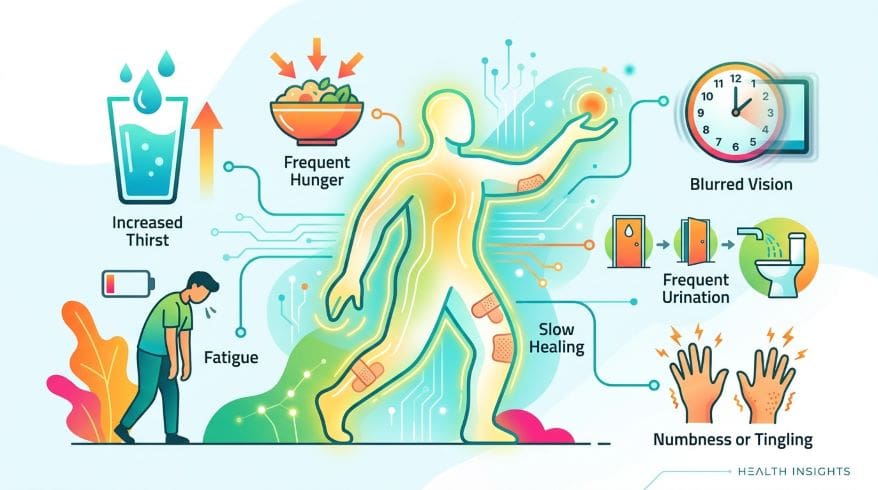
However, certain changes in diabetes and metabolic health deserve attention. For example, unusual thirst, frequent urination, unexplained weight loss, tiredness, blurred vision, and slow-healing sores can occur with diabetes. Therefore, knowing these warning signs can help you recognize when something may not be right. This guide explains important type 2 diabetes symptoms, including early and silent symptoms, emergency warning signs, and when to talk to an adult.
Key Takeaway
- The most important type 2 diabetes symptoms to recognize include increased thirst, frequent urination, increased hunger, fatigue, unexplained weight loss, blurred vision, tingling or numbness, and slow-healing sores.
- However, type 2 diabetes can also be silent. Some people have very mild symptoms, while others have none.
- Therefore, do not rely on symptoms alone to determine whether you have diabetes. If symptoms are persistent, unusual or occurring together, talk with a healthcare professional.
- If severe symptoms such as confusion, fainting, trouble breathing or repeated vomiting occur, seek urgent medical care.
Early Type 2 Diabetes Symptoms
Early symptoms may be subtle. As a result, people often mistake them for stress, lack of sleep, dehydration or normal tiredness.

1. Increased Thirst
Feeling unusually thirsty can be an early sign of diabetes. You may notice that you are drinking much more water than usual. You might also feel that your thirst returns soon after drinking. Increased thirst can occur when high blood glucose contributes to increased urination and fluid loss.
2. Frequent Urination
Another common symptom is needing to urinate more often
- use the bathroom more frequently during the day
- wake up at night to urinate
- notice a sudden change from your normal pattern.
- Frequent urination and increased thirst often occur together.
3. Feeling Very Tired
Persistent fatigue is another possible symptom. This is more than simply feeling tired after a busy day. You may feel drained even after sleeping or resting. Because fatigue has many possible causes, it should not automatically be assumed to mean diabetes. However, when it occurs together with increased thirst or urination, it is worth discussing with a healthcare professional.
4. Increased Hunger
Some people with diabetes feel unusually hungry, even after eating. This increased hunger can happen alongside other symptoms such as thirst, frequent urination and fatigue. Increased hunger can occur when your body cannot use glucose effectively for energy. As a result, your cells may signal that they need more fuel, even after you eat. Although hunger has many possible causes, persistent or intense appetite—especially with thirst, frequent urination, or weight loss—deserves medical attention.
5. Unexplained Weight Loss
Losing weight without trying can be a warning sign. For example, your clothes may become looser even though you have not changed your diet or exercise routine. Unexplained weight loss can have many causes. Nevertheless, it is important to discuss unexpected or continuing weight loss with a healthcare professional.
6. Blurred Vision
Blurred vision can occur when blood glucose levels change.You may notice that your vision becomes temporarily blurry or that focusing is more difficult. However, blurred vision should not automatically be blamed on diabetes. New or sudden vision changes deserve medical attention, particularly if they are severe or persistent.
7. Tingling or Numbness
Tingling, burning or numbness in the hands or feet can occur in people with diabetes. For example, you may feel:
- pins and needles
- reduced sensation
- burning
- unusual sensitivity
These symptoms can also have other causes. Therefore, persistent or worsening numbness should be evaluated by a healthcare professional.
8. Cuts or Sores That Heal Slowly
A small cut that takes longer than expected to heal can be another warning sign. You may notice that minor wounds remain open, irritated or slow to improve. Slow-healing sores are included among recognized diabetes symptoms.
Silent Symptoms of Type 2 Diabetes
One of the most important facts about type 2 diabetes symptoms is that they may be absent or very mild. NIDDK explains that symptoms can develop slowly over several years. In addition, some people have no symptoms at all.
What does “silent” mean?
“Silent” does not mean that diabetes has no effects on the body. Instead, it means that a person may not notice obvious symptoms.
For example, someone may gradually:
- become thirstier
- urinate more often
- feel more tired
- experience occasional blurred vision
- notice slow-healing sores
Because these changes can develop gradually, they may seem normal.
Why are silent symptoms easy to miss?
Many everyday problems can cause similar feelings. For example, tiredness may result from poor sleep. Thirst may happen after exercise or hot weather. Blurred vision may have an eye-related cause. Therefore, one symptom by itself does not prove diabetes. The important point is to notice persistent or unusual changes, especially when several symptoms appear together.
Type 2 Diabetes Symptoms May Be Discovered Through Other Health Problems
Sometimes, people learn they have type 2 diabetes after developing symptoms related to diabetes-associated health problems. NIDDK notes that some people may discover diabetes after experiencing problems such as vision loss, chest pain, sexual problems, or nerve-related symptoms. For that reason, ongoing or unexplained symptoms should not simply be ignored.
Emergency Warning Signs
Most type 2 diabetes symptoms develop gradually. However, very high blood glucose or serious diabetes-related problems can cause severe symptoms. Some warning signs require urgent medical attention.
Seek urgent medical help if you experience:
- confusion or a major change in alertness
- fainting or loss of consciousness
- trouble breathing
- repeated vomiting
- severe weakness
- severe dehydration
- fruity-smelling breath together with other serious symptoms
- sudden chest pain or pressure
- sudden weakness or numbness on one side of the body
- sudden difficulty speaking
- sudden severe vision problems
Some of these symptoms can occur with serious high-blood-glucose emergencies. DKA is more common in type 1 diabetes, but it can also occur in some people with type 2 diabetes. Symptoms can include severe tiredness, trouble breathing, fruity-smelling breath, fainting, abdominal pain, nausea or vomiting.
Also, chest pain, sudden weakness, speech difficulty or sudden vision problems can indicate a heart attack or stroke. These symptoms require emergency medical attention rather than waiting for a routine appointment.
Type 2 Diabetes Symptoms Checklist
Use this checklist to notice changes in your health. It is not a diagnostic test.
Common Type 2 Diabetes Symptoms
- I am much thirstier than usual.
- I urinate more often than usual.
- I wake during the night to urinate more often.
- I feel unusually tired or weak.
- I feel unusually hungry.
- I have unexplained weight loss.
- My vision has become blurry.
- I have tingling or numbness in my hands or feet.
- Cuts or sores take longer to heal.
- I have repeated infections.
- I have persistent dry or itchy skin.
- I have noticed other unusual changes in my health.
If you checked several boxes, do not assume that you have diabetes. Instead, share your symptoms with a healthcare professional. Similar symptoms can have many different causes.
You do not need to figure out what is causing the symptoms by yourself.
What causes diabetes Diabetes develops when the body cannot produce enough insulin or cannot use insulin effectively. In type 1, the immune system attacks insulin-producing cells. In type 2, genetics, excess body fat, inactivity, and aging can increase risk. Pregnancy and other medical conditions may also contribute.
For adults, talk with a doctor or other qualified healthcare professional if symptoms are:
- persistent
- getting worse
- occurring in combination
- affecting your daily activities
- accompanied by unexplained weight loss
- accompanied by repeated infections
- associated with vision changes
- associated with numbness or tingling
Most importantly, seek urgent medical care for severe symptoms such as confusion, fainting, difficulty breathing or repeated vomiting.
A healthcare professional can review your symptoms, medical history and other information and decide whether diabetes testing or another evaluation is appropriate.For information about what happens after symptoms raise concern for diabetes, read ENTECH’s type 2 diabetes diagnosis and blood-test guide.
conclusion Type 2 Diabetes Symptoms
Knowing the signs of type 2 diabetes can help you get tested and treated sooner. Watch for feeling very thirsty, urinating often, feeling more hungry than usual, feeling tired, blurry vision, and cuts or sores that heal slowly. Some people have mild symptoms or none at all, so talk with your doctor about your risk and whether you should get tested.
Frequently asked Questions
What are common symptoms of type 2 diabetes?
Common symptoms include increased thirst, frequent urination, increased hunger, tiredness, blurred vision, and
healing sores. However, some people notice few or no symptoms at first. Therefore, regular screening remains important, especially when risk factors such as family history or higher weight exist.
Can type 2 diabetes cause blurred vision?
Yes, type 2 diabetes can cause blurred vision when high blood sugar changes fluid levels in the eye. As a result, focusing may become difficult. However, sudden or severe vision changes require prompt medical attention. Contact a clinician for evaluation and appropriate treatment.
When should I talk to a clinician?
Talk to a clinician if you develop persistent thirst, frequent urination, unexplained weight loss, unusual tiredness, or blurred vision. In addition, seek prompt care for vomiting, confusion, breathing difficulties, or extreme weakness, because these symptoms may signal a serious blood-sugar problem.
Can people have diabetes without symptoms?
Yes, type 2 diabetes can develop without noticeable symptoms. Consequently, people may have high blood sugar for years before diagnosis. Routine screening can identify the condition earlier, particularly in adults with higher weight, high blood pressure, family history, or other recognized risk factors.
References Type 2 diabetes signs
- National Institute of Diabetes and Digestive and Kidney Diseases (NIDDK). Type 2 Diabetes.
https://www.niddk.nih.gov/health-information/diabetes/overview/what-is-diabetes/type-2-diabetes - National Institute of Diabetes and Digestive and Kidney Diseases (NIDDK).Symptoms & Causes of Diabetes.https://www.niddk.nih.gov/health-information/diabetes/overview/symptoms-causes
- Useful for common diabetes symptoms, slow-developing type 2 diabetes symptoms, infections, numbness, vision problems, and other warning signs. Centers for Disease Control and Prevention (CDC).Symptoms of Diabetes.https://www.cdc.gov/diabetes/signs-symptoms/index.html
- Covers frequent urination, increased thirst and hunger, unexplained weight loss, fatigue, blurry vision, infections, slow-healing wounds, dark skin patches, and numbness or tingling. World Health Organization (WHO).Diabetes.https://www.who.int/news-room/fact-sheets/detail/diabetes
- Supports the statement that type 2 diabetes symptoms can be mild and may take several years to become noticeable. NIDDK.Diabetes Tests & Diagnosis. https://www.niddk.nih.gov/health-information/diabetes/overview/tests-diagnosis
- Provides an accessible NIH fact sheet covering diabetes, symptoms, types of diabetes, and diagnosis. National Institute of Child Health and Human Development (NICHD).What are the symptoms of diabetes? https://www.nichd.nih.gov/health/topics/diabetes/conditioninfo/symptoms
Editorial Note: This article was written by Ramya Dobbala and reviewed for editorial accuracy by our editorial team. It has not yet undergone independent review by a professional.
- Author
- Latest Posts

Ramya Dobbala is a pharmacist and science communicator dedicated to bridging the gap between complex pharmaceutical research and public understanding. A 2024 B.Pharmacy graduate, Ramya has a strong foundational background in formulation science, having spearheaded research into the evaluation and formulation of anti-acne creams. Her work focused on optimizing topical delivery systems to enhance treatment efficacy and skin health.
Transitioning from the laboratory to the forefront of scientific discourse, she now leverages her technical expertise to translate intricate healthcare concepts into accessible, engaging content. As an author and communicator, Ramya is passionate about empowering audiences with evidence-based insights, particularly in the realms of dermatology and pharmaceutical innovation.