There are many interesting things in the field of chemistry. These things are what make life and science possible.
Versatility of Silicon and Carbon Compounds: Well Explained
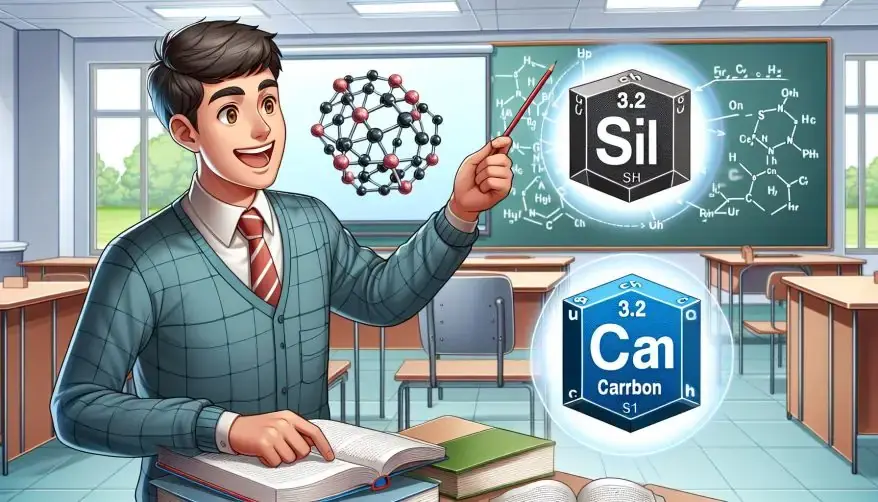
There are many interesting things in the field of chemistry. These things are what make life and science possible. Carbon and silicon are two of these large and important elements. They are unique because they can easily join with other elements. With their many skills, they can do a lot of different things. Silicon and carbon are both parts of a lot of molecules and elemental mixtures. So these chemicals have effects in many places. Technology affects the world around us and is involved in the newest technology. Thus, this study takes a close look at compounds made of silicon and carbon. It describes what they’re like. It also looks at what people do with them. The piece also talks about what these compounds might become in the future.
Exploring the Basics of Silicon Compounds
Common Silicon Compounds in Nature
Silicon is a material that is very strong and easy to find. We don’t find it in its pure form very often. Silicon usually joins with oxygen. SiO2 is made when these things come together. Some people also call it quartz. Quartz is a rock that is very tough. It’s spread out in the Earth’s crust in many places.
Additionally, silicon is a very important part of the world. Silica is where you can find it. Compounds that are silicates have silicon, oxygen, and metals in them. These elements make up rocks and minerals around us.People find silicates in many beautiful stones. They also use silicates as an important part of strong building materials. The lithosphere is the name for the top layer of the Earth. These chemicals help make it up. Silicones are artificial things. They come from molecules of silicon. Silicones are used to make things like seals and lubricants. Sealants are used to stop leaks and close up holes. Things don’t stick together as much when they have lubricants on them. People pick silicones since they are bendable and don’t soak up water.
Applications of Silicon in Technology
Silicon is a really important thing in the tech world. It also has special properties that allow it to carry electricity. The semiconducting parts really made a difference. Because of this, they helped make integrated circuits and transistors. In particular, transistors and integrated circuits are very small parts that keep electronics running. As a result, this invention began the age of technology. Silicon plates are also the building blocks of computer chips. Because of this, people consider them very important in the modern world. Scientists call the material silicon, and they cut it into thin pieces called silicon wafers. Engineers also use silicon to build electronic systems, and they design these circuits to make computer chips.
Silicon is useful for more than just putting gadgets together. It is also very important in solar technology. Silicon-based solar panels turn light from the sun into power. The name for this process is conversion. Using sunlight to make power is one way to support green energy options. Green energy is better for the earth. The substance can handle a lot of heat. Plus, it keeps rust away. Why is it important? Because it helps make glass and pottery that are strong. These things are used for many things. They are used to make food and spaceships.

Unveiling the Nature of Carbon Compounds
Diversity of Organic Compounds
Carbon is, in fact, the building block of all living things and is at the heart of organic science. It can also form strong bonds with other elements thanks to its four-way bond structure. Because of this, it can make a lot of different chemicals. Hydrocarbons, alcohols, and acids are some examples of these substances. Water and carbon are what make up hydrocarbons. Alcohols also have atoms that make up a -OH group. Acids, on the other hand, taste sour and can burn metals very quickly.
Carbon atoms are at the center of organic substances. They look like many different things.Carbon molecules make up methane. In natural gas, you can find this simple molecule. Carbon and hydrogen molecules are made up of hydrocarbons. Compounds of carbon and silicon are very different. You can think of polymers as long chains of molecules. Plastics are made up of polymers. It’s amazing how different these carbon molecules are. An aromatic molecule is a chemical that is like benzene. They add variety to things made from plants. There are many places where these chemicals are important. They are used in medicine and the oil business.
Role of Carbon in Biological Systems
Carbon is an important part of all living things. This is a very important part of the big chemicals that life needs. Molecules like carbs, proteins, fats, and DNA/RNA are some examples. Life’s plans are written in DNA. This shows how important carbon is in genetic material. DNA stores information by using carbon to make its backbone..
Carbon compounds not only give things shape, they also help the body’s metabolism work. As an example, ATP gives cells their power. It starts biological processes with its carbon structures. Photosynthesis can’t happen without carbon dioxide. It is turned into oxygen by natural processes in this process. Through the work of plants, this change makes life possible.

Comparative Analysis: Silicon vs. Carbon
Structural Differences and Similarities
Silicon and carbon belong to the same group in the periodic table. However, they have different structural properties. These differences are interesting to compare. Carbon can create flexible double and triple bonds. This ability lets carbon form complex molecular structures. Silicon acts differently. It mostly forms single bonds. This leads to simpler chains in its structures. Carbon and silicon compounds, due to these differences, have unique properties that make them useful in various applications.
When we examine organic structures, we see that carbon usually forms rings and networks. Silicon, on the other hand, connects in a simpler way. However, both carbon and silicon can form chains. These chains create organosilicon compounds. These compounds combine carbon and silicon. They provide both flexibility and strength. This makes them useful in medicine and industry.
Reactivity and Chemical Behavior
The way elements behave chemically lets us compare them. Carbon responds quickly. In other words, it can be a part of big effects. Burning is a very important response. Carbon joins with air when something burns. This mix makes energy. Chemists make polymers, which is another important process. Molecules link together to form long chains called polymers. Manufacturers use these chains to create many different products, like plastics. Silicon doesn’t mix with other things very easily. It does this because it links strongly with oxygen. Single bonds are the name for these strong ties. Solids called silicates have these strong bonds.
Silicon can change chemically even though these things are different. Let’s say we want to add halogens and organic groups to it. Iodine, chlorine, fluorine, and bromine are halogens. Carbon and hydrogen atoms make up organic groups. Silicon can do a lot now that these things have changed. So, these ways help make materials that are more complicated. These materials also have some unique qualities. The methods also use both organic and inorganic science. Organic chemistry studies substances made of carbon. Scientists link carbon atoms in different ways to form these substances. Inorganic chemistry, on the other hand, studies substances that don’t contain carbon. These chemicals don’t have carbon atoms as their main building block.

Innovations and Potential Applications
Future of Silicon-based Materials
The study keeps going forward. This makes us think of new ways to use silicon. Nanotechnology is one of these new ideas. It builds tiny machines and buildings. Silicon nanowires are one example. These are silicon lines that are very, very thin. They can make technology better. Nanowires made of silicon could help make sensors and energy storage better. More computing power comes from silicon gadgets that are smaller. That also cuts down on energy use. Scientists are always coming up with new carbon and silicon materials as their research goes on. These new combinations open up new chances. They can make technology and the way we use energy better.
Silicon photonics is another area to look into. Light signals are used in this technology on bases made of semiconductors. A semiconductor is a substance that can change how electricity flows. Using light signs uses less energy than electricity. It’s now easier to send info thanks to this change. Because of this, tools for communication work better. More people want faster tech that is better for the environment. These attempts look like they will have a big impact on industries.
Carbon Compounds in Emerging Technologies
Carbon and silicon materials are being used in new technologies in a lot of different ways. One kind of carbon is graphene. It’s only one atom thick. It’s very thin now. Graphene is really strong. It also conducts electricity well, which means that electricity can easily move through it. Graphene can be used to help make batteries. Batteries store electricity and power electronics. Graphene is also used to make flexible screens for phones and other gadgets. It’s also possible to mix graphene with other things. The products are better and last longer because of this.

Carbon nanotubes are very interesting things. In fact, when stretched, they are very strong. Because of this, this strength connects building development with electronics. Carbon nanotubes have the power to make big changes. Carbon is also a very flexible material. This means it can be used in a lot of different ways. It will keep making you think of new things. Carbon and silicon compounds will help make new answers as technology gets better.
Environmental and Health Implications
Impact of Silicon on the Environment
We need to give careful thought to how using carbon and silicon materials affects the world around us. At first glance, silicon dioxide might seem safe. It’s something that people often find in nature. Getting silicon out of silicon dust, on the other hand, is bad for the environment. Often, this process hurts natural areas. A lot of materials are also used.
We need to find long-term solutions to these issues. Besides that, we need to recycle well. We need to understand silicon’s part in green tech. Solar panels are good for the earth. But they need to safely get rid of their silicon parts. This helps keep the environment clean. Silicon is what is used to make solar cells. Not taking care of it properly can hurt the earth.
Carbon Compounds and Their Effect on Health
To the other hand, carbon and silicon compounds aren’t great for the atmosphere. Solid fuels are made of carbon, and they give off carbon gases when burned. The Earth’s atmosphere is full of greenhouse gases that keep heat in. The weather changes because of this process. We can solve this problem by using different kinds of power. When these fuels are burned, they give off less carbon dioxide. This helps keep the world from getting worse.
It’s not all good or bad for your health. Carbon is used to make some drugs that save lives. However, being near chemicals that are bad for us can be bad for our health. Hydrocarbons are made up of carbon and hydrogen.
It’s important to keep health and the world safe while also coming up with new ideas. We need to be careful when we use and throw away these things.
Scientists discuss compounds made of silicon and carbon. It talks about their main features. It also tells us how to use them. The piece talks about what these chemicals might do in the future. Silicon and carbon are both made of matter. On the periodic table, they are in the same group. A chart is what the periodic table is. It sorts elements by the qualities they have. Si and carbon are not the same, even though they are in the same group. Because of this difference, each part has unique chances to work in science and business. They have a big effect on people all over the world because of this.
FAQ’s
1. What are the main differences between silicon and carbon compounds?
Answer:
- Bonding: Carbon forms strong double and triple bonds, allowing complex organic molecules (e.g., DNA, plastics). Silicon mostly forms single bonds, leading to simpler structures (e.g., silicates).
- Reactivity: Carbon is highly reactive (e.g., combustion, polymerization), while silicon bonds strongly with oxygen, making it less reactive.
- Occurrence: Carbon is central to organic life, whereas silicon dominates inorganic geology (e.g., quartz, sand).
2. How are silicon compounds used in technology?
Answer:
- Electronics: Silicon wafers are the foundation of computer chips and transistors.
- Solar Energy: Silicon-based solar panels convert sunlight into electricity.
- Industrial Materials: Silicones (waterproof seals, lubricants) and silicates (construction materials) are widely used.
3. Why is carbon called the “building block of life”?
Answer:
- Biological Molecules: Carbon forms the backbone of DNA, proteins, carbohydrates, and fats.
- Versatility: Its ability to bond with multiple elements (H, O, N) enables diverse organic compounds essential for metabolism and genetics.
- Energy Cycle: Carbon dioxide (CO₂) drives photosynthesis, sustaining ecosystems.
References
- Bhattacharya, S., and John, S. (2020). Photonic crystal light trapping: Beyond 30% conversion efficiency for silicon photovoltaics. APL Photonics, 5(2). https://doi.org/10.1063/1.5128664
- Vassoler, A., Coppo, G.C., Servino, R.N. et al. Carbon stocks of coastal macroalgal beds in the SW Atlantic. Carbon Res. 4, 37 (2025). https://doi.org/10.1007/s44246-025-00208-6
- Lin, Z., Shen, S., Cheng, Z., Lai, C. L., & Chen, S. (2025). Carbon and silicon, coexist or compete? A survey on human-AI interactions in agent-based modeling and simulation.https://doi.org/10.48550/arXiv.2502.18145
- Kurniawan, R., Kautsar, S., Wahyuni, R.N.T. et al. Assessing economic and social determinants of carbon emissions towards sustainable development in West Java, Indonesia. Carbon Res. 4, 34 (2025). https://doi.org/10.1007/s44246-025-00200-0
Additionally, to stay updated with the latest developments in STEM research, visit ENTECH Online. Basically, this is our digital magazine for science, technology, engineering, and mathematics. Furthermore, at ENTECH Online, you’ll find a wealth of information.
- Author
- Latest Posts

Charudatta Pathak was a student at St. Aloysius High School in Bhusawal, established in 1874, making it one of India’s oldest convent institutions. He earned his bachelor’s degree in mechanical engineering from SSVPS College of Engineering, Dhule in 1995, demonstrating exceptional academic achievement. Thereafter, he launched his career as a CNC programmer in a toolroom. He has utilized FANUC, Deckel, Maho, and Mikron controllers to operate 2-axis and 3-axis machines for the fabrication of jigs, fixtures, dies, and molds. He commenced his career as an academic in 1996, when he assumed the role of lecturer at SSVPS College of Engineering, Dhule. Additionally, he earned his post-graduate degree in CAD/CAM from L. D. College of Engineering, Ahmedabad, in 2000, and then acquired a Ph.D. from COEP in 2011 while concurrently engaged in teaching. Until 2023, he occupied many academic roles, including lecturer, assistant professor, professor, dean, principal, director, and vice chancellor at both public and private universities throughout India. From 2008 to 2010, he served as the project lead in the CAE department of a European multinational firm. During his 28-year professional tenure, he identified a need for dependable books targeted at students in grades 8 to 12, particularly for nascent career planning. He founded ENTECH Digital Magazine, a free monthly publication available on entechonline.com and magzter.com. Teens with a strong interest in Science, Technology, Engineering, and Mathematics (STEM) who aspire to pursue careers in these fields may find ENTECH Digital Magazine beneficial.