Anti-inflammatory skincare is evolving from symptom management to mechanism-based molecular targeting.
Anti-Inflammatory Skincare: Innovations in Dermatological Science

The skin is not just a passive barrier; it is a dynamic organ constantly responding to environmental stress, pathogens, and internal imbalances. Chronic inflammation lies at the root of many common skin conditions—acne, rosacea, eczema, and premature aging. For years, topical treatments have offered temporary relief, but a new wave of biotechnological innovation is changing how we approach anti-inflammatory skincare altogether.
ENTECH STEM Magazine has included this research in its list of Top 10 STEM Discoveries and Innovations of June 2026.
Key Takeaways: Anti-inflammatory Skincare
- Anti-inflammatory skincare is evolving from symptom management to mechanism-based molecular targeting.
- The NF-κB pathway is a central regulator of skin inflammation and a prime target for new treatments.
- Lipid nanoparticles improve the delivery and stability of natural anti-inflammatory compounds.
- Real-world applications span dermatology, cosmetics, occupational health, and education.
- Challenges include scalability, regulatory hurdles, and cost, but solutions are actively develop.
- Future trends include personalized skincare, AI-driven discovery, and sustainable compound sourcing.
Why Anti-Inflammatory Skincare Matters
The Inflammatory Cascade in Skin
Inflammation is the body’s defense mechanism. When skin cells detect irritants—UV radiation, pollution, allergens, or microbes—they release signaling molecules called cytokines. These molecules attract immune cells to the site, causing redness, swelling, and heat. While acute inflammation helps repair damage, chronic inflammation leads to tissue breakdown, collagen degradation, and visible signs of aging.
Limitations of Traditional Approaches
Conventional anti-inflammatory skincare often relies on corticosteroids or non-steroidal anti-inflammatory drugs (NSAIDs). These treatments can be effective in the short term, but they frequently cause side effects like skin thinning, hormonal disruption, or reduced immune response. Moreover, they treat symptoms rather than addressing the underlying cellular signaling.
Anti-inflammatory Skincare: A Step-by-Step Explanation
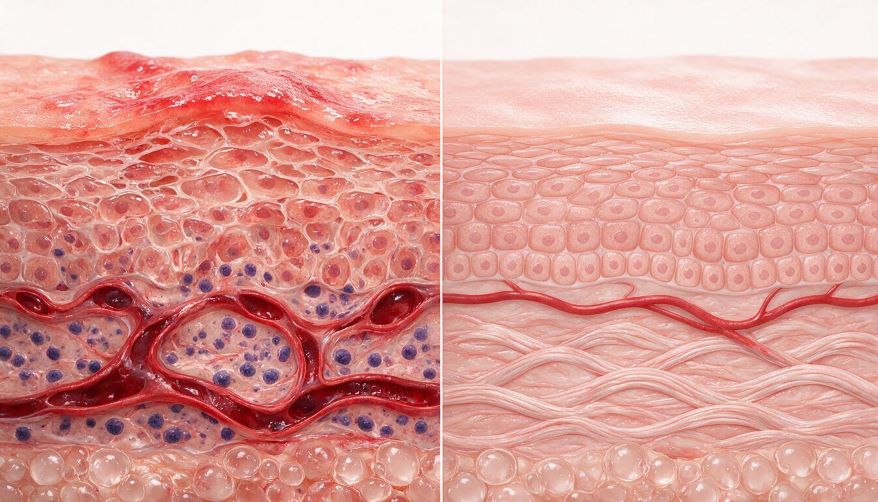
Step 1: Identifying Key Molecular Targets
The study focuses on specific enzymes and receptors involved in the inflammatory response. One critical target is the NF-κB pathway, a protein complex that acts as a master switch for inflammation. When activated, NF-κB triggers the production of pro-inflammatory cytokines like IL-6 and TNF-α.
Step 2: Designing Bioactive Compounds
Researchers screened natural and synthetic compounds for their ability to inhibit NF-κB activation. They identified plant-derived polyphenols—such as resveratrol from grapes and curcumin from turmeric—as potent modulators. These molecules bind to specific sites on the NF-κB complex, preventing it from entering the cell nucleus and turning on inflammatory genes.
Step 3: Enhancing Delivery with Nanotechnology
Here is the innovative twist. Many anti-inflammatory compounds are poorly absorbs by the skin. To overcome this, the research team developed lipid-based nanoparticles that encapsulate the active ingredients. Thus, these particles are small enough to penetrate the stratum corneum and release their payload directly into the deeper epidermis.
Step 4: Testing Efficacy in Cell Models
The encapsulated compounds were tested on human keratinocyte cell lines exposes to inflammatory triggers. Thus, Results showed a significant reduction in cytokine levels—up to 70% in some cases—without damaging healthy cells.
Real-World Applications Across Industries
Healthcare and Dermatology: Clinicians can prescribe topical formulations that reduce inflammation in patients with psoriasis, eczema, or contact dermatitis. However, The targeted delivery system minimizes systemic side effects, making long-term management safer.
Cosmetic Science and Product Development: Skincare brands can incorporate these nanoformulations into serums, moisturizers, and sunscreens. Thus, Products offer visible anti-aging benefits by reducing low-grade chronic inflammation that accelerates wrinkle formation.
Pharmaceutical Research: Drug companies can use this delivery platform to repurpose existing anti-inflammatory drugs for topical use, expanding their therapeutic applications beyond oral or injectable routes.
Environmental and Occupational Health: Additionally, Workers exposed to chemical irritants or UV radiation can use preventive skincare products that buffer inflammatory responses, reducing the risk of occupational dermatitis.
Education and Biotechnology Training: Moreover, Universities and research institutes can adopt these models as teaching tools for undergraduate and graduate courses in drug delivery, molecular biology, and cosmetology.
Benefits of Biotech-Driven Anti-Inflammatory Skincare
- Precision targeting: Nanoparticles deliver active ingredients directly to inflamed cells, reducing waste and improving efficacy.
- Reduced side effects: By avoiding systemic absorption, the risk of hormonal disruption or liver toxicity is minimized.
- Natural compound utilization: Plant-based polyphenols offer antioxidant and anti-inflammatory properties without synthetic chemicals.
- Long-term safety: Cell-based testing indicates no cytotoxicity, supporting extended use for chronic conditions.
- Versatility: The platform can be adapt for different compounds, from vitamins to peptides, enabling multi-functional skincare.
Challenges and Limitations
Despite the promising results, several hurdles remain. First, scalability is a concern—producing lipid nanoparticles consistently at commercial scale requires specialize equipment and quality control. Second, skin barrier variability means that individuals with compromised skin (e.g., eczema patients) may absorb nanoparticles differently, potentially leading to irritation. Third, regulatory approval for new cosmetic ingredients is a lengthy process, especially when nanotechnology is involved. Finally, cost may be higher than traditional formulations, limiting accessibility for some consumers. Researchers are actively working on these issues, but they highlight the need for cautious optimism.
Future Scope and Emerging Trends
The field of anti-inflammatory skincare is poise for significant evolution. One emerging trend is personalized formulations based on an individual’s genetic profile or skin microbiome composition. Companies like Base and Atolla are already exploring DNA-based skincare, and integrating nano-delivery systems could make these personalized products more effective.
Another innovation is the use of AI-driven screening to identify new anti-inflammatory compounds from vast chemical libraries. Machine learning algorithms can predict how molecules interact with the NF-κB pathway, accelerating discovery and reducing reliance on animal testing.
Additionally, sustainable sourcing of bioactive compounds is gaining attention. Fermentation-based production of polyphenols using engineered yeast or bacteria offers a renewable, environmentally friendly alternative to plant extraction.
Frequently Asked Questions
What is the primary cause of skin inflammation?
Skin inflammation is triggers by environmental stressors like UV radiation, pollution, allergens, and pathogens. These factors activate immune pathways, particularly the NF-κB signaling cascade, leading to redness, swelling, and tissue damage.
How do nanoparticles improve anti-inflammatory skincare?
Nanoparticles encapsulate active ingredients, protecting them from degradation and enhancing penetration through the outer skin barrier. This allows for targeted delivery to inflamed cells, increasing efficacy and reducing side effects.
Are natural anti-inflammatory compounds safe for all skin types?
Most plant-derived polyphenols are well-tolerated, but individual sensitivity varies. Patch testing is recommended, especially for those with sensitive or compromised skin. The nanoencapsulation process can also reduce irritation by controlling release rates.
What is the future outlook for biotech skincare?
The field is moving toward personalized formulations based on genetics and microbiome analysis. AI-driven compound screening and sustainable production methods are also expect to drive innovation, making treatments safer, more effective, and accessible.
Reference
Delgado, F., Blanco-Vieites, M., Álvarez-Gil, M., Casado-Bañares, V., & Rodríguez, E. (2026). Anti-Inflammatory Activity of a Phycocyanin–Protein Complex in THP-1 Cells: Implications for Dermocosmetic Applications. BioTech, 15(2), 45. https://doi.org/10.3390/biotech15020045
- Author
- Latest Posts

I am an inspirational writer and emerging science blogger with a deep-rooted passion for understanding and sharing the wonders of the world around us. My journey began with a Bachelor of Science in Chemistry from AKI’s Poona College of Arts, Commerce and Science, where I developed not only a strong foundation in scientific principles but also a mindset that values curiosity, observation, and critical thinking. Studying chemistry has taught me to approach problems with logic, to look beyond the obvious, and to see patterns where others might only see complexity. These experiences have shaped the way I perceive life and influence the way I express my thoughts, both scientifically and creatively.
I have always believed that knowledge is only as powerful as the way it is shared. This belief has guided me to create content that bridges the gap between science and everyday life. I aim to simplify complex scientific ideas so they become approachable, relatable, and engaging for everyone—whether someone has a formal background in science or is simply curious about the world. Science, in my view, is not confined to textbooks and laboratories; it is a way of thinking, understanding, and connecting with the world around us. By making science accessible, I hope to inspire curiosity, ignite learning, and encourage people to see the beauty and relevance of scientific discovery in their daily lives.
Alongside my love for science, I am deeply passionate about motivational writing. I believe words carry the power to transform perspectives, encourage self-reflection, and inspire action. By combining analytical thinking with creativity, I create content that is intellectually stimulating yet emotionally resonant. Whether I am breaking down a chemical concept, exploring a scientific phenomenon, or crafting motivational narratives, my goal is to communicate ideas in a way that is clear, meaningful, and impactful.
Through my work, I strive to empower my readers – not just by helping them understand the science around them, but by inspiring them to grow, learn, and realize their full potential. Every article, post, or story I write reflects my commitment to turning knowledge into inspiration. I want to spark curiosity, encourage self-improvement, and show that learning and personal growth are deeply connected. For me, writing is not just a craft; it is a way to touch minds, connect hearts, and make ideas come alive in a way that truly resonates.