The innovation of Coconut husk valorization to remove ciprofloxacin is the process of taking waste products or residues from one economic process and giving them value by turning them into useful materials. This specifically refers…
Valorization of Coconut Husk for Ciprofloxacin Removal from Water
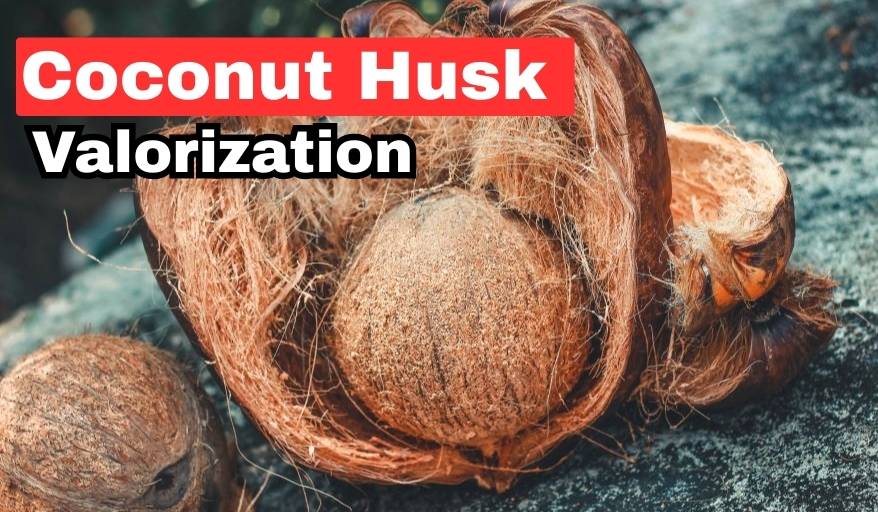
The innovation of Coconut husk valorization to remove ciprofloxacin is the process of taking waste products or residues from one economic process and giving them value by turning them into useful materials. This specifically refers to waste valorization—the use of a technology called pyrolysis to transform agricultural waste, like coconut husks and sesame stalks, or invasive weeds like Prosopis juliflora, into valuable substances like biochar, bio-oil, and pyrogas. This innovation of Coconut husk valorization to remove ciprofloxacin “turning waste into treasure” approach addresses environmental pollution while creating sustainable resources for energy and health.
Olagunju, E. O., & Alexander, M. (2025) have conducted study and Published it under the Title “Valorization of Coconut Husk for Mitigating Antimicrobial Resistance: Mechanistic Insights into Ciprofloxacin Removal from Water ” in December 2025.
ENTECH STEM Magazine has included this research in its list of the Top 10 Chemistry Discoveries and Innovations of 2025.
Practical Usage Areas Coconut Husk Valorization to Remove Ciprofloxacin
As a result, This innovation (Coconut husk valorization to remove ciprofloxacin) has several practical applications that could impact our daily lives:
Water Purification
Biochar can act as a powerful filter to remove nutrients, pathogens, and emerging pollutants like ciprofloxacin (an antibiotic) from household wastewater.
Energy Storage
By modifying biochar with chemicals, it can be turns into activated carbon used in supercapacitors. Which are devices that store electricity for use in power grids and electronics.
Sustainable Agriculture
Biochar that is loaded with nutrients from wastewater can be reused as a soil conditioner or slow-release fertilizer to help crops grow better without needing expensive chemical fertilizers.
Health and Hygiene
The liquid byproduct of this process, known as the bio-oil aqueous phase (BOAP). Which can be use as an eco-friendly disinfectant to kill dangerous hospital-associated bacteria.
Also read: What are haloalkanes and Haloarenes explained
Commercialization Prospectus
Additionally, this innovation(Coconut husk valorization to remove ciprofloxacin) is in the stage between laboratory research and large-scale industrial use. While much of the research is describe as be in its infancy and limited to laboratory scales, recent studies have begun to prove it is economically ready for the market.
Techno-economic assessments show that a large plant could produce these materials at a profit, with a payback time on the initial investment of roughly 3 to 5 years. Additionally, startups like “ENVIROHIL Solutions” are already form in technology business incubators to bring these solutions to the real world. However, widespread commercial use still requires better standardized protocols and environmental permits from local governments.
Also Read: Salvionic Acid B Inhibits Arecoline Promoted Oral Cancer
Educational Research and Career Opportunities
Students interested in this field (Coconut husk valorization to remove ciprofloxacin) can pursue several exciting career paths in future research:
Biochar Functionalization
Designing specific “recipes” for biochar to target different types of pollution or to make even more efficient battery components.
Mitigating Antimicrobial Resistance
Investigating how biochar can remove antibiotic-resistant genes (ARGs) from the environment. Which is a major global health threat.
Hydrothermal Carbonization (HTC)
Developing “wet” carbonization methods that are more energy-efficient and cost-effective than traditional heating.
Life Cycle Assessment (LCA)
Working as environmental consultants to measure the “cradle-to-grave” impact of new products to ensure they truly help the planet.
Biomedical Development
Creating hospital-grade sanitizers and disinfectants from plant-based waste residues.
By exploring these areas(Coconut husk valorization to remove ciprofloxacin) , future scientists and engineers can help create a circular economy where waste is never truly thrown away but is instead used to power and clean our world.
Reference
Olagunju, E. O., & Alexander, M. (2025). Valorization of Coconut Husk for Mitigating Antimicrobial Resistance: Mechanistic Insights into Ciprofloxacin Removal from Water. Chemistry, 7(6), 199. https://doi.org/10.3390/chemistry7060199
Additionally, to stay updated with the latest developments in STEM research, visit ENTECH Online. Basically, this is our digital magazine for science, technology, engineering, and mathematics. Also, at ENTECH Online, you’ll find a wealth of information.
- Author
- Latest Posts

I am an inspirational writer and emerging science blogger with a deep-rooted passion for understanding and sharing the wonders of the world around us. My journey began with a Bachelor of Science in Chemistry from AKI’s Poona College of Arts, Commerce and Science, where I developed not only a strong foundation in scientific principles but also a mindset that values curiosity, observation, and critical thinking. Studying chemistry has taught me to approach problems with logic, to look beyond the obvious, and to see patterns where others might only see complexity. These experiences have shaped the way I perceive life and influence the way I express my thoughts, both scientifically and creatively.
I have always believed that knowledge is only as powerful as the way it is shared. This belief has guided me to create content that bridges the gap between science and everyday life. I aim to simplify complex scientific ideas so they become approachable, relatable, and engaging for everyone—whether someone has a formal background in science or is simply curious about the world. Science, in my view, is not confined to textbooks and laboratories; it is a way of thinking, understanding, and connecting with the world around us. By making science accessible, I hope to inspire curiosity, ignite learning, and encourage people to see the beauty and relevance of scientific discovery in their daily lives.
Alongside my love for science, I am deeply passionate about motivational writing. I believe words carry the power to transform perspectives, encourage self-reflection, and inspire action. By combining analytical thinking with creativity, I create content that is intellectually stimulating yet emotionally resonant. Whether I am breaking down a chemical concept, exploring a scientific phenomenon, or crafting motivational narratives, my goal is to communicate ideas in a way that is clear, meaningful, and impactful.
Through my work, I strive to empower my readers – not just by helping them understand the science around them, but by inspiring them to grow, learn, and realize their full potential. Every article, post, or story I write reflects my commitment to turning knowledge into inspiration. I want to spark curiosity, encourage self-improvement, and show that learning and personal growth are deeply connected. For me, writing is not just a craft; it is a way to touch minds, connect hearts, and make ideas come alive in a way that truly resonates.