GPT Rosalind AI model speeds up drug discovery using biological data.
OpenAI’s GPT-Rosalind Is Changing Drug Discovery

Estimated reading time: 4 minutes
Making a new drug takes up to 15 years. Scientists go through millions of data points by hand. At the same time, 9 out of 10 drugs still fail in trials. Above all, biology is hard to study. So, AI may be the answer. On April 17, 2026, OpenAI launched GPT-Rosalind — its first AI model for life science research. The GPT Rosalind AI model reads genes, proteins, and biological data. As a result, it may change how we find new medicines.
Key Takeaways
- GPT-Rosalind is OpenAI’s first AI model built for life science.
- It beat 95% of human experts in a gene-reading test.
- It can connect to 50+ science tools and databases.
- Only a few big companies can use it right now.
What Is GPT-Rosalind AI model?
GPT-Rosalind AI model is not a normal AI chat tool. Instead, it is made for biology research. It can read and study genes, proteins, and molecules. In like fashion, it links data from 50+ science databases. This makes it very useful for early drug research work. After all, one scientist alone cannot read that much data. OpenAI (2026) calls it a model “built to support research across biology, drug discovery, and medicine.”
Why Is It After Rosalind Franklin?
Rosalind Franklin was a British scientist who used X-rays to study matter. Her work helped show what DNA looks like. At first, she did not get full credit for this. As a result, OpenAI chose to name the model after her.
How Does GPT-Rosalind Perform?
The test results are very good. In a trial with Dyno Therapeutics, the model beat 95% of human experts. It read gene sequences and guessed how they work. To put it simply, it did better than most trained scientists. What’s more, it scored in the top 84% for creating new gene sequences. These results show it can find key patterns that normal AI tools miss.
Who Can Access GPT-Rosalind Right Now?
At this time, very few groups can use it. OpenAI runs a Trusted Access program to keep it safe. Seeing that this AI can change biology, this step makes sense. Only approved US research groups can apply. Early partners include:
- Amgen — applying it to accelerate medicine delivery
- Moderna — using it to translate complex data into experimental workflows
- Thermo Fisher Scientific — connecting it to lab infrastructure
- Allen Institute — using it to make data alignment more consistent
After that review, these groups must also follow strict safety rules.
Why Should You Care About GPT-Rosalind AI model?
If you study biology or chemistry in school, this is big news for you. In fact, biology and AI are now two of the top fields to work in. At this point, AI tools are part of how new drugs are found. So, if you learn how genes and proteins work, you will have real job skills. All in all, GPT-Rosalind shows where science jobs are going — and it is a great sign.
Want to Practice Bioinformatics Like GPT Rosalind?
If you want to build skills in computational biology, you can start practicing real problems online. Platforms like Rosalind offer hands-on challenges in DNA, RNA, and protein analysis.
These exercises help you learn how scientists work with biological data—the same type of data used by AI models like GPT Rosalind.
By solving problems step by step, you can understand:
- sequence alignment
- gene translation
- basic algorithmic thinking in biology
Frequently Ask Questions (FAQs) about GPT-Rosalind AI model
Is GPT-Rosalind available to students or the public?
No. At this time, it is only available to qualified enterprise users in the US through a research preview
What tasks can GPT-Rosalind perform?
It reasons across biological data, synthesizes scientific literature, plans experiments, and interprets genomic sequences.
Will it replace scientists?
No. OpenAI says it is built to assist researchers and speed up their work, not replace human judgment.
Why is the access so restricted?
Provided that AI can potentially modify biological structures, OpenAI uses a Trusted Access model to prevent misuse.
References:
- OpenAI. (2026). Introducing GPT-Rosalind for life sciences research. https://openai.com/index/introducing-gpt-rosalind/
- OpenAI Help Center. (2026). Introducing GPT-Rosalind for life sciences research. https://help.openai.com/en/articles/20001193-introducing-gpt-rosalind-for-life-sciences-research
This article was written by Ayushi Shukla and reviewed for editorial accuracy by our editorial team. It has not yet undergone independent review by a professional.
- Author
- Latest Posts
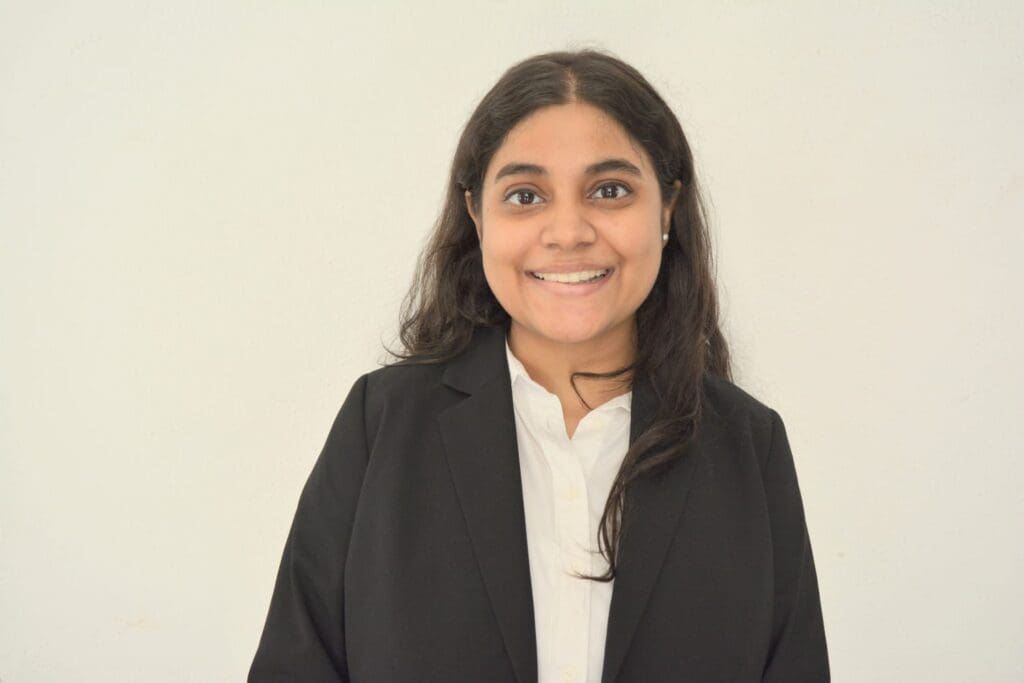
Ayushi Shukla is a biotechnologist and science communicator specializing in the intersection of genomic data and public health. Previously, she served as a Core Member and R&D Lead at the HealthTech venture Eat Wisely Bro, where she spearheaded research initiatives and translated emerging medical data into product strategy. She holds an M.Sc. in Biotechnology from the TERI School of Advanced Studies, where her research at The Energy and Resources Institute (TERI), New Delhi, focused on Environmental Biotechnology and Bioremediation.
As a Research Scholar at TERI, Ayushi developed a plant growth-promoting bacterial consortium for high-salinity agricultural conditions, managing daily laboratory procedures and molecular workflows. Her technical portfolio on GitHub demonstrates her dry lab expertise, featuring end-to-end bioinfomatics pipelines for RNA-Seq analysis, Phylogenetic modeling, and a functional prototype for Mycobacterium tuberculosis Genomic Surveillance & Dashboard.
Her clinical foundation includes advanced training in Somatic NGS and Precision Oncology from the Cancer Research Centre at Tata Memorial Centre, and a professional certification in Good Clinical Practice (GLP) from the NIDA Clinical Trials Network. Ayushi bridges the gap between raw genomic data and student-friendly narratives to help the next generation of scientist understand the transformative power of modern biology.