Somalia Plant Discovery Brings Melhania orriana Into Focus
Somalia Plant Discovery Reveals New Melhania orriana Species

A new plant discovery was found in Somalia. Its name is Melhania orriana. It is part of the mallow family. This plant has bright yellow flowers. It grows in hot, dry land. The plant is small but strong. It can live with very little water. Scientists saw that it has soft hairs on its leaves. The flower shape is like a cup. This makes it stand out from other plants. The discovery is important. Studying this plant discovery in Somalia helps us learn more about plants in Africa. It shows that nature still has new things to teach us.
Key Takeaways: Somalia Plant Discovery
- A new plant species was found in Somalia. This highlights the ongoing plant discovery in Somalia.
- Its name is Melhania orriana.
- It is part of the mallow plant group.
- The plant has bright yellow flowers.
- It grows in hot, dry, and rocky soil.
- It is a small plant with soft hairs on its leaves.
- Its flower parts are in groups of five.
- The plant looks like other plants in its group.
- But it has its own unique traits.
- The discovery helps us learn more about plants in this area.
- It shows that new plants are still being found today.
Taxonomic Classification of Melhania orriana
First, scientists placed the new plant species into a big group. This group is called the mallow family, or Malvaceae. Next, they put it into a smaller group called Dombeyoideae. Then, they placed it into a genus named Melhania. Finally, they gave it a new species name: Melhania orriana. Thus the full name of the plant is Melhania orriana. This name helps us know exactly which plant it is. Furthermore, it shows how the plant is related to other plants. For example, it shares traits with other Melhania plants. In short, this taxonomic work further illuminates plant discovery from Somalia and provides the plant a clear place in nature.
Natural Habitat and Geographic Distribution
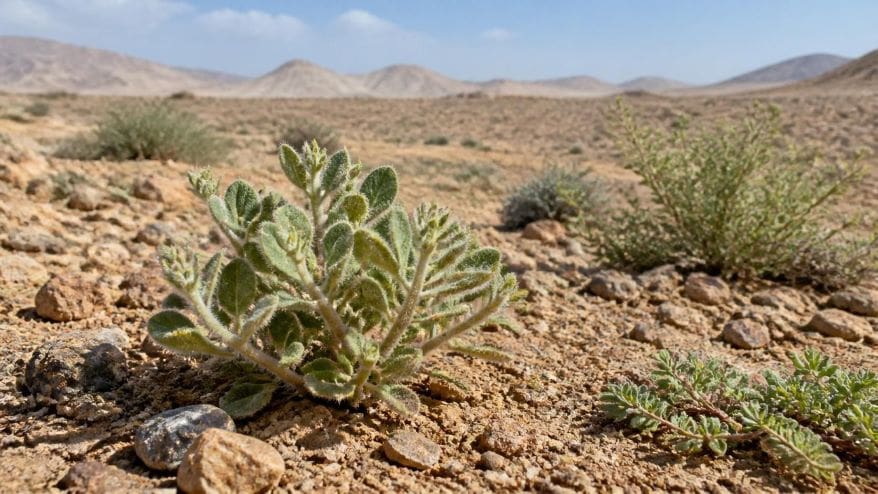
First, this new plant lives only in Somalia. Specifically, it grows in a dry and rocky area. The soil there is sandy and drains water very fast. Also, the weather is hot and receives very little rain. Thus the plant must be strong to survive. As a result, it has small leaves and soft hairs to save water. Moreover, it often grows near other small bushes and low plants. In addition, scientists found it in only a few places. This means its geographic range is small. Therefore, it is a rare plant. In short, Melhania orriana is a tough plant that lives in a harsh, dry part of Somalia. Ultimately, such rare distribution highlights how unique a Somalia plant discovery can be for science.
Methods Used to Identify the New Species
Scientists collected plant samples from the field. They carefully picked leaves, flowers, and stems. Then, they dried and pressed the samples. This step helped them study the plant later. Next, they used a microscope to look at the small parts. For example, they checked the shape of the hairs on the leaves. They also counted the number of flower parts.
Conservation Significance and Future Research
This new plant species is important to protect. It grows only in a small part of Somalia. So, its home range is very limited. Additionally, its habitat faces threats. For example, goats and sheep may eat the plants. Furthermore, dry weather and land use changes can harm it. As a result, the plant may be at risk. Therefore, scientists need to study it more. In the future, researchers should count how many plants still live. They should also watch for changes in its habitat. Moreover, they can learn how the plant grows and reproduces. Future conservation plans will rely on what we have learned from the discovery of Melhania orriana in Somalia. This will help create a plan to save it. In short, we must act now to protect Melhania orriana. More research will help us keep it safe for the future.
Why New Plant Species Discoveries Matter for Global Botany
Finding a new plant species, like Melhania orriana, is relevant for many reasons. First, it adds to our list of known plants. This helps us understand how many plants live on Earth. Second, each new plant has unique traits. For example, it may have special hairs or flower shapes. These traits can teach us how plants adapt to dry, hot places. Third, new plants can hold secrets for medicine or farming. Scientists may study them for new uses later. Furthermore, every new species tells a story about its home. It shows us how life survives in harsh environments like Somalia. Each plant discovery in Somalia adds tremendous value to global botany. Moreover, discovering new plants helps protect nature. When we know a plant exists, we can work to save it. In short, each new plant is a piece of a big puzzle. Melhania orriana is one more piece that helps us see the full picture of life on Earth.
Frequently Asked Questions: Somalia Plant Discovery
What is Melhania orriana?
Melhania orriana is a new flowering plant. It belongs to the mallow family. Its smaller group is called Dombeyoideae. This plant grows only in Somalia. It lives in the central and southern parts of the country. A botanist named Laurence J. Dorr described it in 2025. He gave it its official name.
Where is Melhania orriana found?
This plant lives only in central and southern Somalia. It grows in low areas. The ground is only 50 to 125 meters above sea level. The soil is deep and sandy. It also grows on fixed dunes. The plant shares its home with acacia and Dichrostachys bushes.
How does Melhania orriana differ from Melhania stipulosa?
Although the two new plant species appear similar, M. orriana has crenulate to sinuate leaf margins, clusters of 2–4 flowers, and distinct ovate epicalyx bracts. It also occupies low-elevation sandy habitats, unlike M. stipulosa, which grows in high-elevation rocky environments.
Reference
Dorr, L. J. (2025). Melhania orriana (Malvaceae, Dombeyoideae), a new species from Somalia. PhytoKeys, 263, 129–133. https://doi.org/10.3897/phytokeys.263.16343
- Author
- Latest Posts

I completed my Master of Science from the University of Allahabad in 2017 with a strong academic background in life sciences and chemistry. My specialization included Molecular Biology, Microbiology, Genetics, Plant Breeding, Phycology, Paleobotany, and Bioinformatics, along with Organic Chemistry, Inorganic Chemistry, and Physical Chemistry. This multidisciplinary training provided me with a comprehensive understanding of biological systems and analytical scientific approaches.
After completing my postgraduate studies, I gained valuable professional experience in both the education and social development sectors. I worked at A.M. Oxford Public School, where I was actively involved in guiding students toward academic excellence. In this role, I focused on creating an engaging learning environment, encouraging critical thinking, and nurturing students’ curiosity for scientific learning. My experience as an educator strengthened my communication, mentoring, and classroom management skills.
In addition to my teaching experience, I worked with Jeevan Jagriti Foundation, where I contributed to community-based initiatives aimed at improving educational access and awareness among underprivileged sections of society. Through this work, I participated in programs designed to support social development and promote the value of education in marginalized communities.
These professional experiences helped me develop strong interpersonal, leadership, and organizational skills while reinforcing my commitment to education and community service.