High-Entropy Lanthanoid Oxide Catalyst Cuts the Heat for Oxidative Coupling of Methane
A five-metal oxide turns methane into ethane and ethylene at a lower temperature and holds its performance for 240 hours.
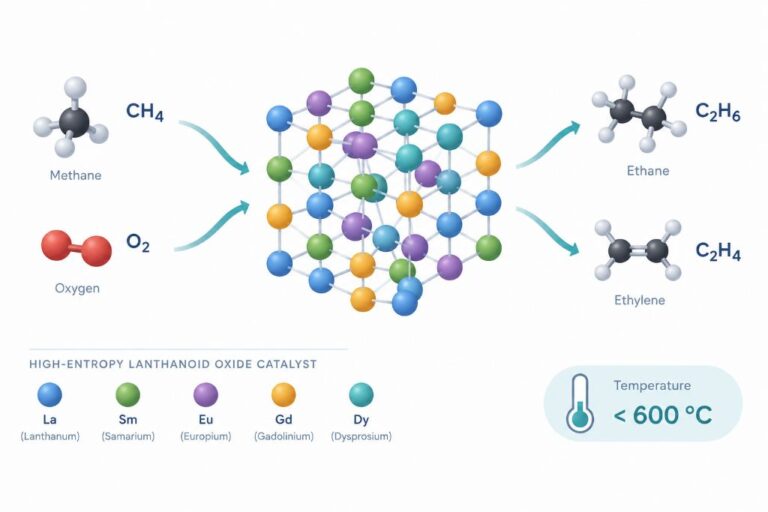
High-Entropy Lanthanoid Oxide Catalyst Cuts the Heat for Oxidative Coupling of Methane
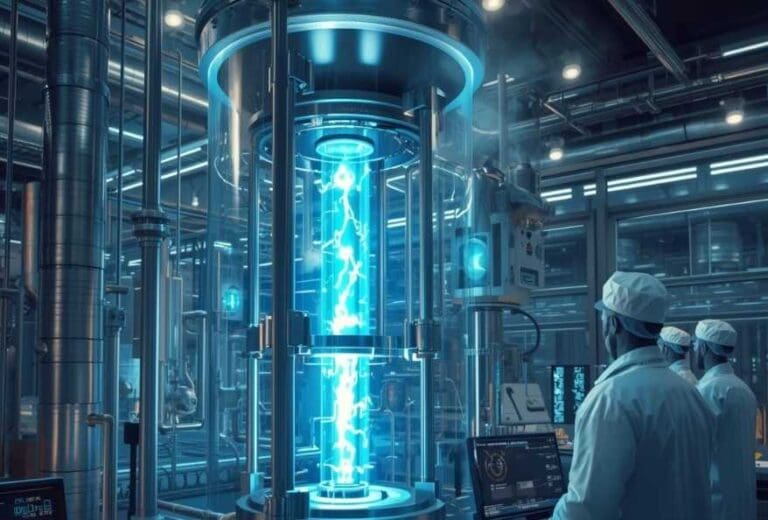
Plasma Reactor Turns Oilfield Gas Into Valuable Chemicals

Understanding High Purity Piping: Key Requirements of ASME B31.3

Reimagining Chemical Engineering Education in the 21st Century
Chemical Engineering is a branch of engineering that applies principles of chemistry, physics, mathematics and biology to transform raw materials into useful products. It focuses on designing, developing, operating and improving industrial processes. These processes support the production of fuels, medicines, food products, chemicals, polymers, fertilisers and advanced materials.
Chemical engineering plays an important role in industries such as pharmaceuticals, energy, manufacturing, food processing, agriculture and environmental management. At ENTECH STEM Magazine, this category brings together educational articles, technical insights and industry developments related to chemical engineering. It helps students, aspiring engineers and technology enthusiasts understand how chemical processes work and how engineers develop technologies for large-scale production.
Chemical engineering combines several scientific and engineering disciplines. Engineers study how materials and energy move through industrial systems, how chemical reactions take place and how different processes can be controlled and improved.
Some important areas of chemical engineering include:
Chemical process engineering focuses on designing and improving processes that convert raw materials into useful products. It involves studying material and energy balances, process flow diagrams, equipment requirements and operating conditions.
Engineers use these principles to plan production systems and improve industrial efficiency. They also evaluate how different stages of a process work together, from raw material preparation to final product recovery.
Thermodynamics studies the relationship between heat, work, energy and matter. It helps engineers understand how energy behaves during chemical and physical processes.
Chemical engineering thermodynamics is important in designing equipment such as heat exchangers, compressors, turbines and separation systems. It also helps engineers evaluate phase changes, energy requirements and the feasibility of industrial processes.
Heat transfer studies how thermal energy moves between materials and systems. Mass transfer examines how substances move from one location or phase to another.
These concepts are essential in industrial equipment such as heat exchangers, evaporators, distillation columns and drying systems. Engineers use heat and mass transfer principles to improve process performance, energy efficiency and product quality.
Fluid mechanics examines how liquids and gases behave when they move through pipes, channels, pumps and industrial equipment.
Transport phenomena brings together the study of momentum, heat and mass transfer. It helps engineers understand how materials move, mix and exchange energy within industrial systems.
These principles are important in designing pipelines, reactors, filtration systems and other process equipment.
Chemical reaction engineering focuses on understanding and controlling chemical reactions in industrial environments. It combines reaction kinetics, thermodynamics and reactor design to determine how reactions can be carried out efficiently.
Chemical engineers study factors such as temperature, pressure, catalysts and reaction rates. They use this knowledge to design and evaluate reactors used in chemical manufacturing, pharmaceuticals, energy production and other industries.
Industrial production often involves separating useful substances from mixtures. Separation processes include distillation, filtration, extraction, crystallisation and membrane separation.
Process control focuses on monitoring and regulating industrial operations. Sensors, instruments and automated control systems help maintain suitable operating conditions and improve process consistency.
Together, these areas support reliable and efficient industrial production.
Chemical engineering contributes to the manufacturing of products and materials used in everyday life. Its applications extend across several industries.
Therefore, chemical engineering connects scientific knowledge with many industrial activities that support modern society.
Chemical engineering continues to evolve through advances in automation, materials science, computing and sustainable manufacturing.
Some important developments include:
Furthermore, digital technologies and automation are changing how engineers monitor, analyse and manage industrial operations.
Chemical engineering offers several educational pathways for students interested in chemistry, physics, mathematics and industrial technology. Students can explore undergraduate and postgraduate programmes in chemical engineering and related specialisations.
Important subjects include engineering mathematics, chemical engineering thermodynamics, fluid mechanics, heat transfer, mass transfer, chemical reaction engineering, process control and process equipment design.
Practical learning is equally important. Laboratory experiments, engineering projects, internships and exposure to process simulation software help students understand how theoretical concepts apply to industrial processes.
Career opportunities exist across chemical manufacturing companies, pharmaceutical organisations, energy companies, food processing industries, research laboratories and environmental engineering organisations. Depending on their qualifications and experience, graduates may explore roles in process engineering, production engineering, plant design, quality assurance, research and development, process safety and environmental management.
Students can also specialise in areas such as polymer engineering, petroleum engineering, biochemical engineering, materials engineering and sustainable process technology.
Chemical engineering demonstrates how scientific principles can solve practical industrial challenges. It connects chemistry, physics, mathematics, biology and engineering to develop processes that support manufacturing, energy production, healthcare and environmental sustainability.
Through this category, ENTECH STEM Magazine brings together educational articles, technical explanations, industry insights and career-related resources on chemical engineering. Readers can explore industrial processes, thermodynamics, reaction engineering, separation technologies, process design and emerging engineering innovations.
Whether you are a student considering chemical engineering as a career, an aspiring engineer interested in industrial technologies or a technology enthusiast curious about how everyday products are manufactured, explore our collection of chemical engineering articles and discover how this field contributes to modern industry.