Human Anatomy: Structure, Function, and Interconnected Body Systems
Human Anatomy: Exploring the Organisation of the Human Body

Estimated reading time: 9 minutes
When I first studied plants, I learned how roots, stems, and leaves form an interconnected system. The human anatomy works much the same way. Your body is a living structure built from billions of cells organised into tissues, organs, and systems. Unlike a plant, you move, think, and adapt. Understanding your own biology helps you appreciate health choices. Human anatomy refers to the physical structure of the body. It describes what parts exist and where they are located. Physiology explains how those parts work. For example, the heart’s anatomy includes four chambers. Its physiology involves pumping blood. This article explores your body’s blueprint. You will learn about 11 organ systems. You will discover how bones, muscles, nerves, and glands interact. By the end, you will see your body as a coordinated living machine. Let us start with the basics.
Key Takeaways: Human Anatomy
- Human anatomy studies body structures from cells to systems.
- Eleven organ systems work together to maintain life.
- The skeletal system has 206 bones at adulthood.
- Three muscle types enable movement and function.
- The nervous and endocrine systems regulate all activities.
- Each system relies on others for survival.
What Is Human Anatomy? Building Blocks of Life
Human anatomy is the science of studying the structures of the human body. In contrast, physiology focuses on how these structures function. In other words, anatomy asks, “What is there?” whereas physiology asks, “How does it work?” Although they are different, both fields are closely related and often overlap.
To understand human anatomy more clearly, it is important to consider the different levels of organisation within the body. At the most basic level, the cell is the smallest unit of life. Next, cells group together to form tissues. Then, tissues combine to create organs, and finally, organs work together as organ systems. Thus, this hierarchy helps define the structure and organisation of the human body.
The 11 Organ Systems at a Glance
| ystem | Key Organs | Primary Function |
|---|---|---|
| Skeletal | Bones, cartilage, joints | Support, protection, movement |
| Muscular | Skeletal, smooth, cardiac muscles | Movement, posture, heat production |
| Nervous | Brain, spinal cord, nerves | Control, communication, response |
| Endocrine | Glands (thyroid, pituitary) | Hormone regulation, homeostasis |
| Cardiovascular | Heart, blood vessels | Transport oxygen, nutrients |
| Respiratory | Lungs, trachea, diaphragm | Gas exchange |
| Digestive | Stomach, intestines, liver | Nutrient breakdown, absorption |
| Reproductive | Ovaries, testes, uterus | Reproduction, hormone production |
| Urinary | Kidneys, bladder, ureters | Waste removal, fluid balance |
| Lymphatic | Lymph nodes, spleen, tonsils | Immunity, fluid balance |
| Integumentary | Skin, hair, nails | Protection, temperature regulation |
Skeletal System: Your Body’s Framework
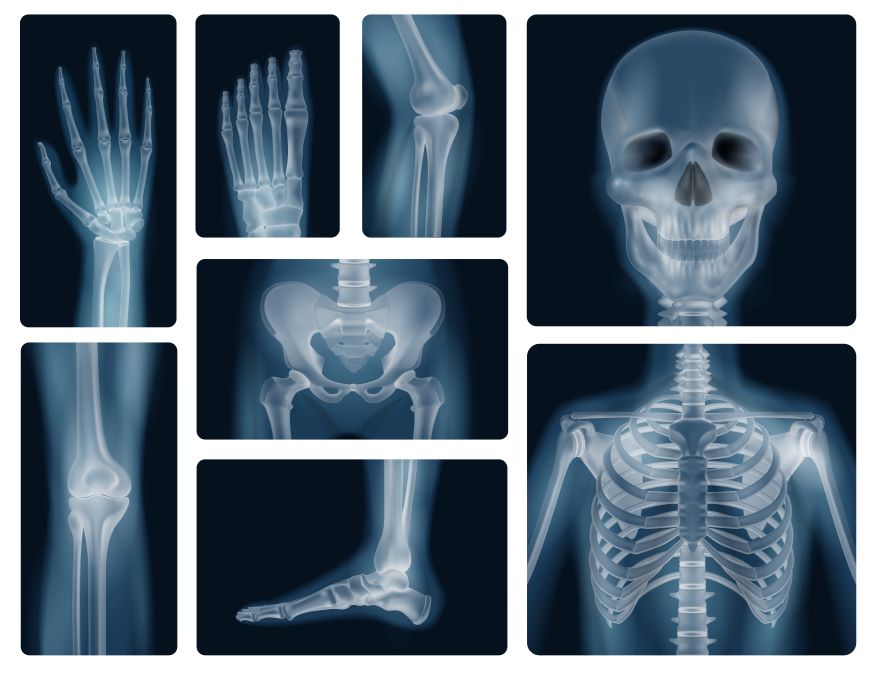
On studying human anatomy, the skeletal system provides structure, support, and protection for the human body. In total, an adult human has 206 bones, whereas a newborn has approximately 270 bones. As a person grows, some of these bones gradually fuse together. Importantly, bones are living tissues that continuously change and adapt. In addition, they store essential minerals, such as calcium, and produce blood cells.
Axial vs. Appendicular Skeleton
The human skeleton is broadly divided into two major parts: the axial skeleton and the appendicular skeleton.
- Axial skeleton: First, the axial skeleton consists of approximately 80 bones, including the skull, vertebral column, and rib cage. Together, these structures protect vital organs such as the brain, spinal cord, heart, and lungs.
- Appendicular skeleton: In contrast, the appendicular skeleton contains 126 bones, including those of the arms, legs, shoulders, and pelvis. Consequently, it plays a major role in movement and allows the body to perform a wide range of activities.
Muscular System: Powering Movement
On studying human anatomy, the muscular system includes more than 600 muscles, each contributing to movement, stability, and essential body functions. Generally, muscles are classified into three main types: skeletal, smooth, and cardiac muscles. Although these muscle types differ in structure and control, each serves a specific and important purpose.
Three Muscle Types
- Skeletal muscle: First, skeletal muscles are attached to bones and are under voluntary control. As a result, they enable movements such as walking, running, lifting, and other physical activities.
- Smooth muscle: In contrast, smooth muscles are found in the walls of hollow organs and are controlled involuntarily. For example, they regulate processes such as digestion and blood flow.
- Cardiac muscle: Finally, cardiac muscle is found only in the heart and is also involuntary. Therefore, it contracts continuously to pump blood throughout the body.
Nervous System: Your Body’s Communication Network
On studying human anatomy, the nervous system controls rapid responses and coordinates many essential functions throughout the body. Broadly, it is divided into two main parts: the central nervous system (CNS) and the peripheral nervous system (PNS). First, the CNS consists of the brain and spinal cord, which process and interpret information. In contrast, the PNS includes nerves distributed throughout the body and connects the CNS with organs, muscles, and other tissues. At the cellular level, the basic functional unit of the nervous system is the neurone, which consists of dendrites, a cell body, and an axon. Specifically, dendrites receive signals, whereas the axon transmits signals to other cells. Furthermore, synapses are small gaps between neurones through which chemical messengers called neurotransmitters transmit signals, thereby enabling communication between nerve cells.
Endocrine System: Chemical Messengers
On studying human anatomy, the endocrine system uses hormones as chemical messengers to communicate and coordinate various functions throughout the body. Specifically, endocrine glands release these hormones into the bloodstream, allowing them to travel to specific target cells and tissues. As a result, hormones regulate important processes such as growth, metabolism, reproduction, and mood. Furthermore, hormonal communication is controlled through feedback mechanisms that help maintain balance within the body. For example, negative feedback counteracts a change to restore normal conditions, as seen when insulin lowers elevated blood glucose levels. In contrast, positive feedback amplifies a physiological response, such as the release of oxytocin during childbirth, which strengthens uterine contractions.
Cardiovascular System: The Transport Highway
On studying human anatomy, the cardiovascular system circulates blood throughout the body and plays a vital role in delivering oxygen and nutrients to tissues while removing waste products. At the centre of this system, the heart acts as a powerful pump, while blood vessels form a closed network that transports blood throughout the body. Specifically, the heart contains four chambers that work together to maintain continuous circulation. First, the right atrium receives deoxygenated blood from the body, and then, the right ventricle pumps this blood to the lungs. Meanwhile, the left atrium receives oxygenated blood from the lungs, after which the left ventricle pumps it throughout the body. Furthermore, circulation occurs through two interconnected pathways.
Respiratory System: Breathing for Life
On studying human anatomy, the respiratory system enables gas exchange and, therefore, plays a vital role in supplying the body with oxygen while removing carbon dioxide. First, when you inhale, oxygen-rich air enters the lungs; in contrast, when you exhale, carbon dioxide is expelled from the body. Among the major organs of this system, the lungs are the primary sites responsible for gas exchange. More specifically, the lungs contain millions of tiny air sacs called alveoli, where the exchange of gases takes place. Because alveoli have extremely thin walls and are surrounded by tiny blood vessels, oxygen can readily diffuse from the air into the bloodstream, while carbon dioxide diffuses from the blood into the alveoli. Furthermore, this process occurs because of differences in concentration, known as concentration gradients.
Digestive System: Fuel Processing
On studying human anatomy, the digestive system breaks down food into nutrients and, as a result, provides the body with the substances it needs for energy, growth, and repair. First, the digestive process begins in the mouth, where food is chewed and mixed with saliva; at the same time, the enzyme amylase in saliva begins the digestion of starches. Next, the partially digested food moves through the oesophagus, which transports it to the stomach. Then, in the stomach, acids and digestive enzymes further break down food into smaller components. Afterward, the food enters the small intestine, where most digestion and nutrient absorption take place. In contrast, the large intestine primarily absorbs water and helps form and eliminate waste.
Reproductive System: Continuation of Species
In studying human anatomy, the reproductive system enables sexual reproduction and differs anatomically and functionally between males and females. Although the reproductive systems of males and females have distinct structures, both are responsible for producing specialised reproductive cells called gametes. In males, the testes produce sperm and the hormone testosterone; subsequently, sperm are stored and matured in the epididymis. Next, the vas deferens transports sperm toward the reproductive tract, while the penis delivers sperm during sexual reproduction. In females, the ovaries produce eggs as well as the hormones oestrogen and progesterone.
Urinary System: Waste Management
In studying human anatomy, the urinary system removes wastes from blood. It maintains fluid and electrolyte balance.
Nephron Structure
Each kidney contains about 1 million nephrons. These are functional units. Each nephron has a glomerulus and tubules.
Filtration, Reabsorption, Secretion:
- Filtration: Blood filters at the glomerulus. Water, ions, and wastes enter the tubule.
- Reabsorption: Essential substances return to blood. Glucose, amino acids, and some water.
- Secretion: Additional wastes enter the tubule. Hydrogen ions, drugs.
Fluid balance is critical. The kidneys adjust urine concentration. Antidiuretic hormone (ADH) controls water reabsorption. Aldosterone regulates sodium. This system works with the cardiovascular system to maintain blood pressure.
Lymphatic & Immune System: Body Defence
The lymphatic and immune systems work together to protect the body against infection while also helping maintain fluid balance. First, the lymphatic system collects excess fluid from body tissues and returns it to the bloodstream. In addition, it supports immune defence by transporting lymph and immune cells throughout the body. For example, lymph nodes filter lymph fluid and contain specialised immune cells that help detect and respond to harmful microorganisms. Similarly, the spleen filters the blood and removes old or damaged red blood cells while contributing to immune responses. Furthermore, the immune system can be broadly divided into innate and adaptive immunity.
Frequently Asked Questions: Human Anatomy
What is human anatomy?
It is the study of the structure and organisation of the human body. Further, it involves the identification and description of the various parts and systems that make up the body, including bones, muscles, organs, and tissues
Why is it important to learn about anatomy?
Learning about human body is important because it helps us understand how our bodies work and how to take care of them. Also, it helps us understand how diseases and injuries affect the body and how they can be treated.
What are some surprising facts about the human body?
The human heart beats approximately 100,000 times each day, tirelessly pumping blood throughout the body. Similarly, your brain has an incredible capacity to store up to 256 exabytes of data, showcasing its remarkable complexity.
References
- Basic Human Anatomy – Lesson 1. https://brooksidepress.org/Products/anatomy/Notes/Anatomy_1_Lecture_Notes.pdf
- Introduction to the human body | SEER training. (n.d.). https://training.seer.cancer.gov/anatomy/body/
- Lagarde, S. (2024, January 1). Chapter 1. Body structure. Pressbooks. https://louis.pressbooks.pub/humananatomyandphysiology1/chapter/1-body-structure/
Editorial Note: This article was written by Neha Adikane and reviewed for editorial accuracy by our editorial team. It has not yet undergone independent review by a professional.
- Author
- Latest Posts

Neha Adikane holds a Master’s degree in Environmental Science from Pune University, bringing a unique blend of scientific expertise and creative writing skills to her craft. She specializes in creating engaging, insightful, and impactful content across various niches. With a passion for translating complex ideas into simple, relatable narratives, she excels at crafting blogs, articles, website content, and social media posts that captivate readers and drive engagement. Neha’s background in environmental science adds depth to her writing, allowing her to effectively cover topics related to sustainability, eco-awareness, and scientific innovations.
- Author
- Latest Posts

I completed my Master of Science from the University of Allahabad in 2017 with a strong academic background in life sciences and chemistry. My specialization included Molecular Biology, Microbiology, Genetics, Plant Breeding, Phycology, Paleobotany, and Bioinformatics, along with Organic Chemistry, Inorganic Chemistry, and Physical Chemistry. This multidisciplinary training provided me with a comprehensive understanding of biological systems and analytical scientific approaches.
After completing my postgraduate studies, I gained valuable professional experience in both the education and social development sectors. I worked at A.M. Oxford Public School, where I was actively involved in guiding students toward academic excellence. In this role, I focused on creating an engaging learning environment, encouraging critical thinking, and nurturing students’ curiosity for scientific learning. My experience as an educator strengthened my communication, mentoring, and classroom management skills.
In addition to my teaching experience, I worked with Jeevan Jagriti Foundation, where I contributed to community-based initiatives aimed at improving educational access and awareness among underprivileged sections of society. Through this work, I participated in programs designed to support social development and promote the value of education in marginalized communities.
These professional experiences helped me develop strong interpersonal, leadership, and organizational skills while reinforcing my commitment to education and community service.




I like this.
Thanks for your comment, keep visiting entechonline.com for more articles related to your interests.
💯 💯
Thanks for your comment, keep visiting entechonline.com for more articles related to your interests.
I am really excited for more articles like this.
Thanks for your comment, keep visiting entechonline.com for more articles related to your interests.
This article is very useful for me.
Thanks for your comment, keep visiting entechonline.com for more articles related to your interests.
I really appreciate the work you are doing for students.
Nice work 👍
The content was really good…
Thanks for your comment, keep visiting entechonline.com for more articles related to your interests.
I am a teacher and i like the overall magzine specially the articles . It’s a very nice way to get knowledge.
Thanks for your comment, keep visiting entechonline.com for more articles related to your interests.
👏👍