The DESI instrument completed the largest 3D universe map ever created, mapping over 47 million galaxies and quasars.
Scientists Just Finished the Largest 3D Universe Map Ever
The Dark Energy Spectroscopic Instrument (DESI) has just achieved a remarkable milestone. On April 15, 2026, it successfully completed the largest 3D map of the universe ever created. Located on the Mayall Telescope in Arizona, this advanced instrument has been working tirelessly to chart the cosmos. As a result, scientists now have an unprecedented view of millions of galaxies across space. Moreover, this achievement marks a major step forward in understanding how the universe has evolved over time.
Key Takeaways of Largest 3D Universe Map
- The DESI instrument completed the largest 3D universe map ever created, mapping over 47 million galaxies and quasars.
- Scientists finished the five-year survey ahead of schedule with more data than expected.
- The map helps researchers study dark energy, as a result makes up about 70% of our universe.
- DESI will continue observations until 2028, expanding the map by 20%.
- Careers in astronomy require strong foundations in physics, mathematics, as well as computer science.
- Additionally, Over 900 researchers from 70+ institutions worked together on this global project.
How Does DESI Work?
DESI measures “spectra” from distant objects. A spectrum shows light split into different colors. By and large, this reveals an object’s position, speed, and chemical makeup.
Moreover, Every 20 minutes, DESI locks onto new targets. Within 2 minutes, it’s ready to observe 5,000 new objects. This efficiency helped the team finish ahead of schedule.
Moreover, DESI has 5,000 fiber-optic “eyes” that capture light from distant objects. At the same time, robotic positioners align these fibers with incredible precision. Each fiber is accurate to within 10 microns. That’s thinner than a human hair.
The original plan was to map 34 million galaxies and quasars. As a matter of fact, DESI mapped over 47 million of them instead. What’s more, it also captured data on 20 million stars in our Milky Way.
Here’s a simple breakdown of DESI’s achievements:
| Metric | Original Goal | Actual Result |
| Galaxies & Quasars Mapped | 34 million | 47+ million |
| Stars Observed | Not specified | 20 million |
| Survey Duration | 5 years | Completed early |
| Sky Coverage | 14,000 sq. degrees | Expanding to 17,000 |
Largest 3D Universe Map Redefining or Understanding of Universe
The Mystery of Dark Energy
Dark energy is one of the biggest mysteries in physics. As a result, It makes up about 70% of our universe. Scientists know it causes the universe to expand faster. At this point, no one fully understands what it is.
At first, Largest 3D Universe Map helps researchers trace dark energy’s effects. They can compare how galaxies clustered billions of years ago versus today. This comparison eventually reveals how dark energy behaved over time.
A Surprising Discovery of Largest 3D Universe Map
Prior to DESI’s findings, scientists thought dark energy was constant. They called it the “cosmological constant.” All of a sudden, DESI data suggested something different.
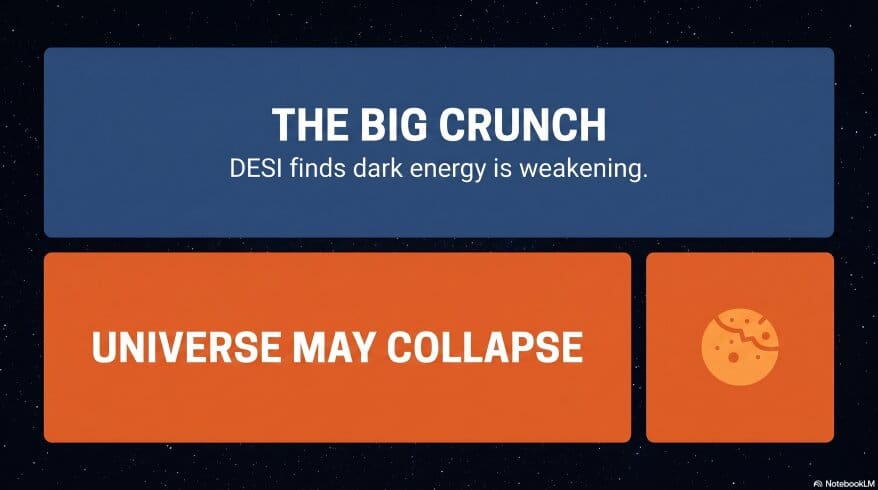
The results hint that dark energy might change over time. If confirmed, this would transform our understanding of the universe. It would also affect predictions about the universe’s fate.
To illustrate, imagine the universe is a balloon. Dark energy is the air filling it. Scientists thought air entered at a steady rate. Now, evidence suggests the rate might vary.
What Comes Next?
DESI will keep observing until 2028. The team will expand the map by about 20%. They’ll study areas closer to the Milky Way’s plane. They’ll also look further south in the sky.
In essence, more data means better answers. However, the full five-year results will arrive in 2027. Scientists expect to measure dark energy with much greater precision.
Career Paths in Astronomy and Cosmology
So far, we’ve talked about the science. Now let’s discuss careers in this exciting field. The DESI project additionally shows how diverse these opportunities are.
Types of Careers in Space Science
- Research Scientist/Astrophysicist
- At first, Studies galaxies, stars, as well as cosmic phenomena
- Works at universities or national laboratories
- Additionally, Requires a PhD in physics or astronomy
- Instrument Engineer
- Firstly, Designs and builds scientific instruments like DESI
- Creates hardware and software for telescopes
- Needs strong engineering as well as programming skills
- Data Scientist
- Firstly, Analyzes massive datasets from telescopes
- Uses machine learning and statistics
- Works with supercomputers at facilities like NERSC
- Telescope Operator/Observer
- Manages nightly telescope operations
- Monitors instrument performance
- Additionally, Troubleshoots technical issues in real-time
- Science Communicator
- Explains complex discoveries to the public
- Writes press releases and educational content
- Works for labs, museums, or media organizations
The Global Collaboration Behind DESI
At first, DESI brings together over 900 researchers from 70+ institutions worldwide. This includes 300 PhD students. However, the project of Largest 3D Universe Map is managed by Berkeley Lab in California. However, funding comes from the U.S. Department of Energy and National Science Foundation.
To put it differently, big science requires big teams. No single person could build or operate DESI alone. However, Collaboration is essential for projects of this scale.
Skills Employers Look For
| Skill | Why It Matters |
| Physics Knowledge | Understanding cosmic phenomena |
| Programming (Python, C++) | Analyzing data and controlling instruments |
| Mathematics | Building models and calculations |
| Problem-Solving | Fixing unexpected issues |
| Communication | Sharing results with teams and public |
| Teamwork | Working in large international groups |
What Made DESI So Efficient?
Summing up, several factors contributed to DESI’s success:
- Dynamic observing strategy: Exposure times adjust based on conditions
- Fast reconfiguration: Ready for new targets within 2 minutes
- Robust hardware: The instrument runs for days without alerts
- Dedicated team: Experts available around the clock
- Innovative software: Optimizes telescope pointing automatically
Conclusion: Largest 3D Universe Map
All things considered, DESI’s largest 3D universe map is a major achievement. It represents years of hard work by hundreds of scientists. The data will help us understand dark energy better.
For students interested in astronomy, this is an exciting time. Projects like DESI need fresh perspectives and new talent. By studying physics, math, and computer science, you can join this field.
At this point, The universe holds countless mysteries waiting to be explored. With the right preparation, you could help solve them. Your journey into space science can start today.
Also read: Blue Origin’s New Glenn Launch April 2026 Shock: Science Success, Mission Failure
FAQs about Largest 3D Universe Map
1. What is DESI?
The Dark Energy Spectroscopic Instrument (DESI) is a powerful scientific tool mounted on a telescope that maps galaxies to study the structure as well as expansion of the universe.
2. Why is the 3D universe map important?
It helps scientists understand how the universe has expanded over billions of years and additionally provides clues about dark energy, the force driving that expansion.
3. How many galaxies did DESI map?
DESI mapped over 47 million galaxies and quasars, by making it the largest 3D map of the universe ever created.
4. What is dark energy?
Dark energy is a mysterious force that makes up about 70% of the universe as well as causes it to expand faster over time.
References
- Berkeley Lab News Center. (2026, April 15). DESI completes planned 3D map of the universe and continues exploring. Lawrence Berkeley National Laboratory. https://newscenter.lbl.gov/2026/04/15/desi-completes-planned-3d-map-of-the-universe-and-continues-exploring/
- DESI Collaboration. (2026, April 15). DESI reaches mapping milestone, surpassing expectations. Dark Energy Spectroscopic Instrument. https://www.desi.lbl.gov/2026/04/15/desi-reaches-mapping-milestone-surpassing-expectations/
- Author
- Latest Posts

I am an inspirational writer and emerging science blogger with a deep-rooted passion for understanding and sharing the wonders of the world around us. My journey began with a Bachelor of Science in Chemistry from AKI’s Poona College of Arts, Commerce and Science, where I developed not only a strong foundation in scientific principles but also a mindset that values curiosity, observation, and critical thinking. Studying chemistry has taught me to approach problems with logic, to look beyond the obvious, and to see patterns where others might only see complexity. These experiences have shaped the way I perceive life and influence the way I express my thoughts, both scientifically and creatively.
I have always believed that knowledge is only as powerful as the way it is shared. This belief has guided me to create content that bridges the gap between science and everyday life. I aim to simplify complex scientific ideas so they become approachable, relatable, and engaging for everyone—whether someone has a formal background in science or is simply curious about the world. Science, in my view, is not confined to textbooks and laboratories; it is a way of thinking, understanding, and connecting with the world around us. By making science accessible, I hope to inspire curiosity, ignite learning, and encourage people to see the beauty and relevance of scientific discovery in their daily lives.
Alongside my love for science, I am deeply passionate about motivational writing. I believe words carry the power to transform perspectives, encourage self-reflection, and inspire action. By combining analytical thinking with creativity, I create content that is intellectually stimulating yet emotionally resonant. Whether I am breaking down a chemical concept, exploring a scientific phenomenon, or crafting motivational narratives, my goal is to communicate ideas in a way that is clear, meaningful, and impactful.
Through my work, I strive to empower my readers – not just by helping them understand the science around them, but by inspiring them to grow, learn, and realize their full potential. Every article, post, or story I write reflects my commitment to turning knowledge into inspiration. I want to spark curiosity, encourage self-improvement, and show that learning and personal growth are deeply connected. For me, writing is not just a craft; it is a way to touch minds, connect hearts, and make ideas come alive in a way that truly resonates.